

Your acrylic displays offer a clear, shatter-resistant view of your baked goods. These displays are durable, but international shipping creates risks. Proper packaging protects displays from damage.
A systematic process ensures your valuable assets arrive ready for use. It prevents costly damage and delays, keeping your brand presentation flawless worldwide.
ESSENTIAL SURFACE PROTECTION
The first step in packaging is to protect the display’s pristine surface. Scratches, scuffs, and residue can ruin the crystal-clear look of your acrylic. You can prevent this damage with two key layers of defense.
APPLYING PROTECTIVE FILM
You should first apply a low-tack protective film directly to the acrylic. This film acts as a second skin, shielding the display from fine scratches and abrasions. Before you begin, always test the film on a small, hidden area to ensure it removes cleanly without leaving residue.
For a bubble-free application, you can use the material-to-film method:
- Secure a sheet of protective film to a clean work table with the adhesive side facing up.
- Carefully place one edge of your acrylic display onto the film.
- Slowly lower the rest of the display onto the film. Flexing the acrylic slightly helps push air out as you go.
- Use a clean paint roller to apply firm pressure, ensuring the film bonds completely, especially along the edges.
Note: For large orders, you can use a laminating machine. This tool applies film to both sides of a display at the same time, saving you valuable time.
WRAPPING WITH SOFT MATERIALS
After applying the film, you need to wrap the entire display in a soft, cushioning material. This layer absorbs minor impacts and prevents the display from rubbing against other packaging components. While bubble wrap is common, polyethylene (PE) foam offers superior protection for valuable acrylics.
| Feature | PE Foam Wrap | Bubble Wrap |
|---|---|---|
| Protection Type | Excellent for surface protection and shock absorption. | Good for general cushioning and filling empty space. |
| Best Use Case | Heavy or fragile items needing high shock absorption. | Lightweight items that are not easily broken. |
| Key Advantage | Superior shock absorption and consistent surface protection. | Cost-effective and flexible for general use. |
PE foam is more resistant to punctures and provides a more reliable cushion. Wrap the display firmly to prevent the material from shifting during transit.
HOW PACKAGING PROTECTS DISPLAYS FROM SHOCK
Surface protection is only the first step. Your packages face significant forces during transit. Drops, vibrations, and impacts can easily damage an acrylic display without proper shock absorption. Effective packaging protects displays from these hazards.
International shipping, especially by sea, exposes your cargo to constant motion. The forces are measured in Gs, where 1 G is the force of gravity.
| Mode of Transport | Acceleration Forwards | Acceleration Backwards | Acceleration Sideways |
|---|---|---|---|
| Sea Baltic Sea | 0.3 g | 0.3 g | 0.5 g |
| Sea North Sea | 0.3 g | 0.3 g | 0.7 g |
| Sea Unrestricted | 0.4 g | 0.4 g | 0.8 g |
These forces combine with gravity and dynamic shifts, creating a challenging environment for any package.
SELECTING THE RIGHT CUSHIONING
You must choose cushioning that can absorb these impacts. The right foam acts as a shock absorber, protecting the display inside. The two most common choices are Polyurethane (PU) and Polyethylene (PE) foam.
| Feature | Polyurethane (PU) Foam | Polyethylene (PE) Foam |
|---|---|---|
| Cell Structure | Softer, open-cell | Firm, closed-cell |
| Shock Absorption | Absorbs and distributes energy broadly | Repels shock with a quick rebound |
| Best Use Case | Lighter, delicate items needing crash protection | Heavier items needing firm support and vibration dampening |
To select the right foam density, you need to consider your display’s weight and fragility. Heavier displays require higher-density foam to prevent the cushion from compressing too much during an impact.
The Two-Inch Rule: A simple and effective guideline is to maintain at least two inches of dense cushioning between your display and the outer box wall on all sides. This space creates a crucial buffer zone.
The potential drop height also influences your choice. Heavier packages are typically dropped from lower heights.
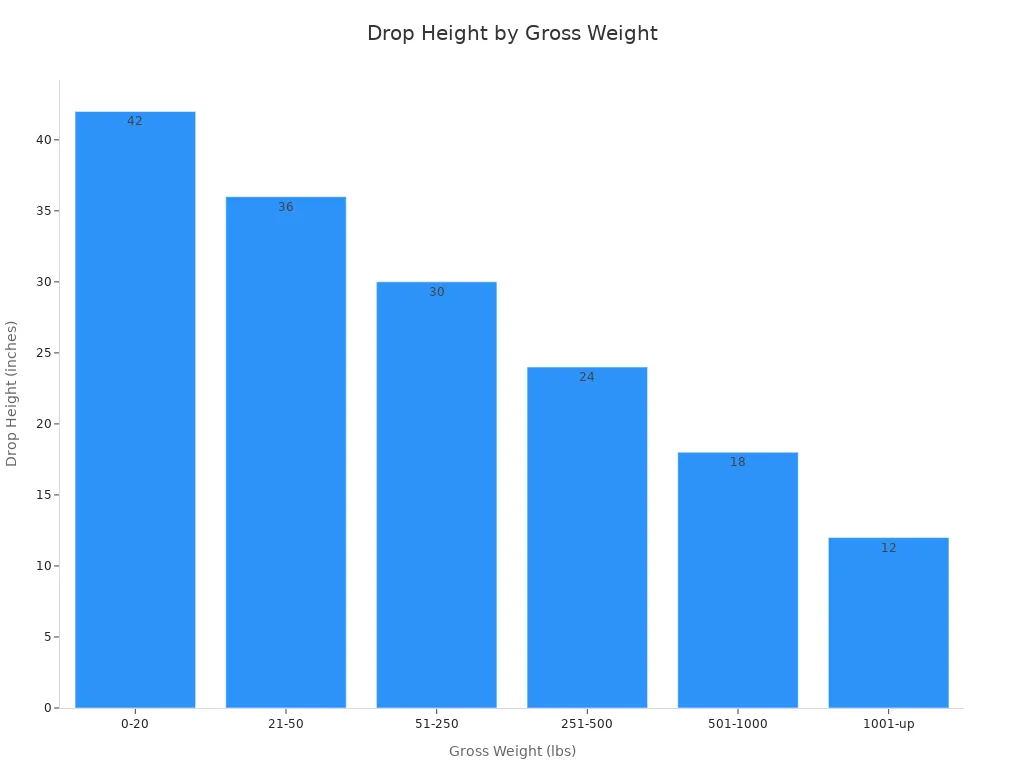
Industry standards from organizations like ISTA and ASTM provide procedures for testing your packaging’s performance. These tests simulate real-world shipping hazards.
- ISTA 1G: Tests packaged products up to 150 lbs.
- ASTM D4169: A standard for performance testing of shipping containers.
- ASTM D5276: A standard for free-fall drop testing.
Following these professional standards ensures your packaging protects displays effectively.
USING CUSTOM-FIT INSERTS
Generic fillers like bubble wrap or packing peanuts are not enough for valuable acrylic displays. They allow items to shift, which can lead to damage. Custom-fit foam inserts offer far superior protection.
Custom inserts are engineered to the exact shape of your display. This precise fit offers several key advantages:
- Immobilization: The display is held securely in place, preventing movement from multi-directional impacts.
- Superior Shock Absorption: The foam is designed to cradle the product, absorbing and distributing forces away from fragile areas.
- Durability: High-quality foam inserts are designed for longevity and can often be reused.
- Professional Appearance: They provide a clean, professional look that enhances your brand’s image upon unboxing.
Using Computer Numerical Control (CNC) machines, manufacturers create inserts that perfectly match your product’s contours. This method is essential for irregularly shaped or delicate items. It eliminates the need for extra wrapping and saves time during packing. While custom inserts may seem like an added cost, they are a smart investment. They reduce damage, prevent costly replacements, and uphold your brand’s reputation for quality.
SELECTING THE OUTER CONTAINER
Your custom foam inserts protect the display from shock, but they need a strong outer shell. The outer container is your primary defense against the pressures of global shipping. It shields your display from punctures, compression, and moisture. You have two excellent options depending on your display’s size, weight, and fragility: the double-boxing method and custom wood crates.
THE DOUBLE-BOXING METHOD
The double-boxing method is the industry standard for shipping valuable items like acrylic displays. You place your product in an inner box, then place that box inside a larger, sturdier outer box. This technique creates a “crush zone” that significantly improves protection. The outer layer absorbs initial impacts, while the inner layer provides a second line of defense against vibration and shock. This method also adds a barrier against punctures and moisture, especially if you wrap the inner box in plastic.
To execute this method correctly, you must pay attention to both boxes and the space between them.
1. The Inner Box Your inner box should fit snugly around the foam-cushioned display. It adds another layer of structural support and keeps the custom inserts contained.
2. The Outer Box The outer box does the heavy lifting. You should use a new, high-quality, double-walled corrugated box. The strength of these boxes is measured in two key ways:
- Edge Crush Test (ECT): This measures the box’s stacking strength. A higher ECT means it can handle more weight stacked on top of it. A 32 ECT rating is suitable for shipments under 30 lbs, while a 44 ECT or higher is better for heavier items.
- Mullen Burst Test: This measures the box’s ability to resist a puncture from internal or external forces. A 200# rating is a good all-purpose standard for shipping.
For international freight, your boxes must meet global standards. Major carriers like UPS and FedEx require packaging to comply with specific testing procedures. Look for boxes that meet these international benchmarks:
- ISO 3037: Defines the method for testing edgewise crush resistance.
- TAPPI T 811: Provides the procedure for the Edge Crush Test.
- ISTA 3A: A test procedure for packaged products for parcel delivery.
- FEFCO Standard 8: A European standard for determining ECT.
3. The Cushioning Between Boxes The space between the inner and outer box is crucial. You must fill this void to prevent the inner box from shifting.
The 2-3 Inch Rule: Always maintain two to three inches of space on all six sides between the inner and outer box. Fill this gap completely with cushioning material like foam, packing peanuts, or bubble wrap to absorb shock and prevent movement.
USING WOOD CRAFT CASES
For extremely large, heavy, or uniquely fragile displays, a corrugated box may not be enough. In these situations, you should upgrade to a custom wooden crate. Wood offers superior rigidity and protection against the most severe shipping hazards.
You can use this table to decide if a wooden crate is right for your shipment:
| Condition | Use a Wooden Crate ✅ | Use a Corrugated Box ✅ |
|---|---|---|
| Weight & Size | Very heavy or large displays that are difficult to move manually. | Lighter, smaller displays. |
| Fragility | Extremely delicate or complex displays needing maximum protection. | Standard displays with good internal cushioning. |
| Durability | Offers high protection from damage and is suitable for rough transit. | Can be damaged by moisture or heavy impacts. |
| Reusability | Highly durable and can be reused for multiple trips. | Best for a single trip. |
When shipping internationally, your wooden crates must comply with ISPM 15. This global standard prevents the spread of pests through wood packaging.
- The wood must undergo Heat Treatment (HT), where its core is heated to at least 56°C (133°F) for a minimum of 30 minutes.
- This process kills any pests without using chemicals.
- After treatment, the crate is stamped on at least two opposite sides with an official mark that includes the IPPC logo, country code, and treatment code (HT).
🪵 Attention! A crate without the ISPM 15 stamp will be rejected or destroyed by customs officials in most countries. Always verify your crate supplier provides certified, stamped wood.
Finally, you must secure the display inside the crate. Simply placing it inside is not enough. You can use internal bracing techniques like foam blocking to fill empty spaces or custom-cut wooden cleats that hold the display perfectly in place. These methods prevent any movement, ensuring your display arrives in the same condition it left.
FINALIZING FOR GLOBAL LOGISTICS

Your display is now cushioned and boxed, but the final steps are crucial for a successful journey. Proper finalization ensures your package is secure, clearly understood by handlers, and efficient to store. This last stage of preparation is where effective packaging protects displays from logistical errors and damage.
SECURE SEALING AND REINFORCEMENT
You must seal your outer container correctly to prevent it from opening during transit. Use the H-taping method for the best results. Apply strong, pressure-sensitive tape across the center seam and then along both edge seams, forming the letter “H”. This reinforces all major stress points. Beyond tape, securing your shipment involves preparing your documents.
Documentation errors are a primary cause of customs delays. You should create a “Customs Binder” with both physical and cloud-based copies of all paperwork. This includes commercial invoices, packing lists, and a certificate of origin.
APPLYING HANDLING LABELS
Clear communication with handlers is essential. You can use universally recognized pictorial labels to overcome language barriers. The ISO 780 standard provides symbols that everyone understands.
- 🍷 Fragile: A broken wine glass tells handlers the contents are delicate.
- ⬆️ This Way Up: Two arrows pointing up show the correct package orientation.
- 🙌 Handle With Care: Hands cradling a box signal that it needs gentle treatment.
STREAMLINING FOR STORAGE EFFICIENCY
Your packaging design affects storage and shipping costs. Boxes that stack well save valuable space in warehouses and containers. You should use sturdy, double-walled corrugated boxes that pass a box compression test. This test proves a box can handle the weight of other packages stacked on top of it without collapsing. Remember, even with a strong box, individual padding for each display is necessary to prevent cracks from the pressure of stacking. Thoughtful packaging protects displays while also optimizing your logistical footprint.
Your success in global shipping comes down to a systematic approach. Effective packaging protects displays by following four key steps.
- Surface Protection: Shield the acrylic from scratches.
- Shock Absorption: Cushion the display against impacts.
- Rigid Container: Use a strong outer box or crate.
- Finalization: Seal and label your package correctly.
This process is an investment that ensures your brand presentation remains flawless worldwide. By mastering these logistics, you guarantee your displays arrive ready for business, creating a positive customer experience from the moment of unboxing.
FAQ
Can I reuse my packaging?
Yes, you can reuse high-quality packaging. Custom foam inserts and wooden crates are very durable. Reusing them saves you money on future shipments. It also reduces waste, which helps the environment.
What if my display has an odd shape?
You should use custom-fit foam inserts for odd-shaped displays. Manufacturers use CNC machines to cut foam that perfectly matches your product’s shape. This process holds the display securely and prevents any movement during shipping.
Is bubble wrap good enough for international shipping?
Bubble wrap is not the best choice for heavy acrylic displays. It does not offer enough shock absorption for long journeys. You should use polyethylene (PE) foam instead. PE foam provides superior protection against impacts and vibrations.
Why is the ISPM 15 stamp so important?
The ISPM 15 stamp proves your wooden crate meets international pest-control standards. Customs officials in most countries will reject or destroy any crate without this official mark. You must verify your supplier provides certified wood.

 English
  Français
  Русский
  Deutsch
  Español
  Português
  日本語
日本語