
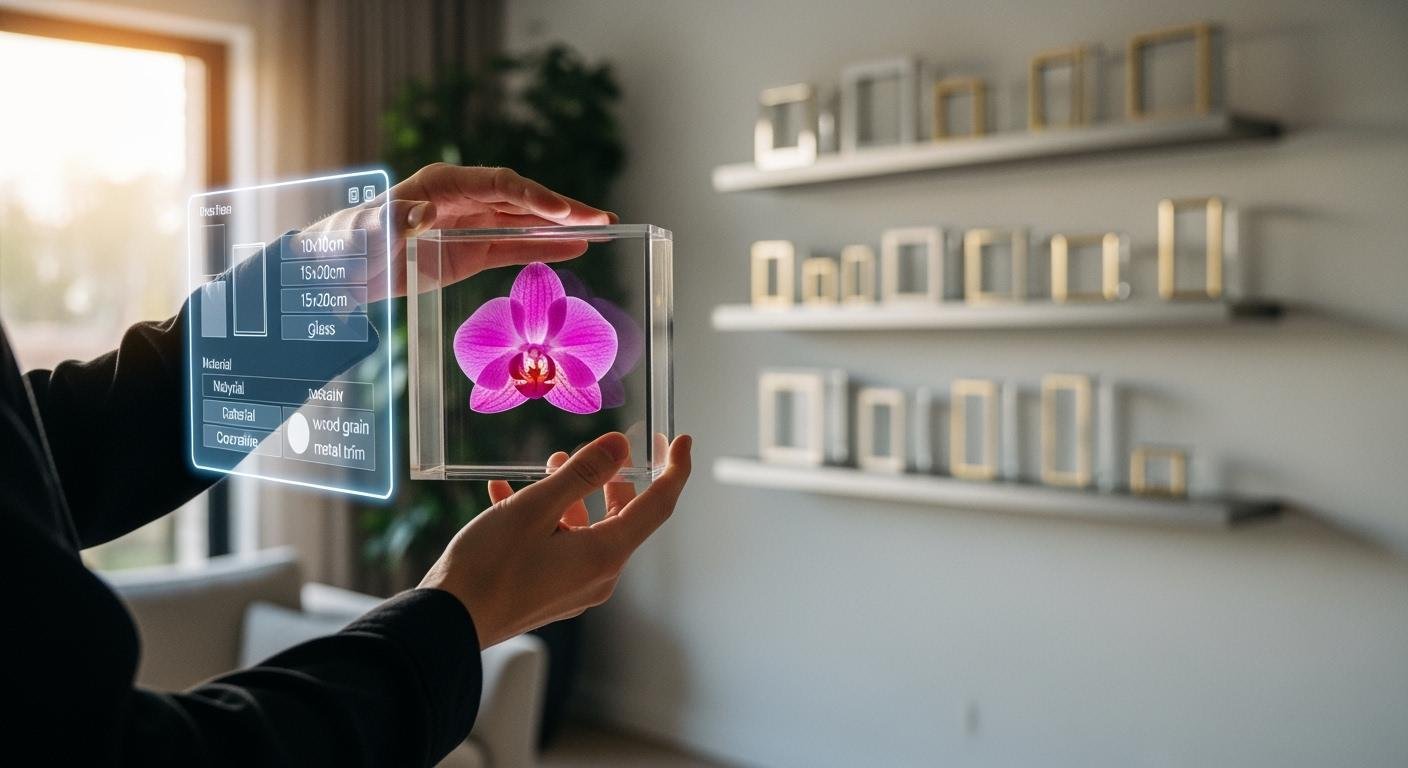
When you choose acrylic box frame options for your artwork, you’ll make four key decisions. These choices involve:
- Accurate measurement
- Acrylic material selection
- Frame depth and style
- Mounting and backing method
The acrylic market is booming, with a projected 13.8% annual growth rate from 2026, driven by modern decor trends. This guide provides the essential knowledge you need to confidently select a frame that both protects and elevates your art.
First Steps to Choose an Acrylic Box Frame
Accurate measurements are the foundation to successfully choose an acrylic box frame. A small error here can lead to a frame that doesn’t fit. You should start by getting the precise dimensions of your piece.
Measure Your 2D vs. 3D Artwork
Your measurement process depends on the type of artwork you have. For flat, 2D pieces like prints or photos, you will measure the height and width. For 3D objects like sculptures or memorabilia, you need three measurements.
Pro Tip for 3D Objects:
- Measure the height, width, and depth at the object’s widest, tallest, and deepest points.
- Add at least a quarter-inch of space on all sides. This ensures the object does not touch the acrylic.
- For delicate items, consider adding 1–2 inches of clearance for better protection and visual balance.
A common mistake is measuring only once. You should measure your artwork three times to confirm your numbers. This simple step helps you avoid costly errors.
Calculate Final Frame Dimensions
Once you have your artwork’s dimensions, you can calculate the internal size of your frame. The formula is simple. You add your desired clearance space to your artwork’s measurements.
Artwork Dimension + (Clearance x 2) = Final Internal Frame Dimension
For example, if your object is 6 inches high and you want a 1-inch clearance, your internal frame height will be 8 inches (6″ object + 1″ top clearance + 1″ bottom clearance). You apply this same logic to the width and depth. If you are framing a 2D professional artwork with a mat, remember to add the mat’s width to your calculations. A 2-inch mat border will add 4 inches to the frame’s total height and width. Always tell your framer if your provided dimensions are for the inside or outside of the box.
How to Choose Acrylic for Your Frame
Your next step is to learn how to choose acrylic for your frame. The material you select, also known as acrylic glazing, directly impacts your artwork’s longevity and visual appeal. The right acrylic glazing provides essential protection and enhances your display.
Standard vs. UV Protective Acrylic
You must first decide on the level of UV protection you need. Harmful UV light causes colors to fade over time. While standard plexiglass offers good protection, a specialized acrylic glazing provides superior defense against UV damage. This is a key part of how to choose acrylic for your frame.
UV Protection Levels 🛡️ The amount of UV radiation blocked varies by glazing type. More UV protection means better preservation for your art.
Acrylic Type UV Radiation Blocked Standard Acrylic ~90% or more UV-Protective Acrylic 98-99%
For irreplaceable or valuable pieces, investing in a glazing with 98-99% UV protection is a wise choice. This level of UV defense ensures your art remains vibrant for years.
Anti-Glare and Museum Grade Options
You should also consider the lighting where you will hang your frame. Bright rooms can cause distracting reflections on the glazing. To solve this, you can use non-glare acrylic. This type of acrylic glazing uses a special surface to scatter light, which softens reflections and reduces glare. This makes viewing your art easier from any angle. A non-glare acrylic is an excellent choice for a crystal-clear display in well-lit spaces. Museum-grade glazing combines maximum UV protection with the benefits of non-glare acrylic. This option offers the best protection and a crystal-clear display for your most treasured items. Using non-glare acrylic is a great way to improve your viewing experience.
Key Factors When Choosing Acrylic
To summarize, here are the key factors when choosing acrylic. Your decision depends on your specific needs for protection and appearance. Consider the thickness of the plexiglass. Thicker plexiglass provides greater durability and strength, but it also increases the weight. However, acrylic is about 50% lighter than glass, making it easier to handle and install.
When you choose acrylic glazing, think about these three points:
- UV Exposure: How much light will your art receive? Choose your UV protection level accordingly.
- Room Lighting: Will you hang it in a bright area? A non-glare acrylic might be necessary.
- Durability Needs: Is the piece heavy or in a high-traffic area? A thicker acrylic offers more robust protection.
Considering these key factors when choosing acrylic will help you choose acrylic box frame glazing that perfectly suits your artwork and environment.
Determine Frame Depth and Style

After choosing your acrylic, you will decide on the frame’s depth and style. The right choice will complement your artwork, not compete with it. You should also consider how the frame’s color and design will match the decor of the room where you plan to hang it.
Select Frame Depth for Visual Impact
The depth of your acrylic frame does more than just house your object; it creates a visual statement. A deeper profile adds weight and presence, turning a simple print into a gallery-level piece. The depth you select can change how people perceive the artwork.
| Depth | Visual Impact | Best For |
|---|---|---|
| 1.2 inches | A subtle, refined look | Tender or delicate images |
| 2.4 inches | A dramatic, bold statement | Emotional or professional portraits |
You can also use depth to create a dramatic shadow box display. This technique adds dimension and makes your keepsakes look more dynamic.
- Use foam spacers to lift photos or paper items.
- Place small risers under heavier objects.
- Overlap materials like fabric or cards to build texture.
- Angle some objects to create natural shadows.
Full Box vs. Floater-Style Frame
You have two main style options when you choose acrylic box frame designs: a full box or a floater-style frame. A full, five-sided box completely encloses your piece. The artwork attaches to a solid backer, offering full protection.
A floater-style frame creates the illusion that your art is floating. A small gap separates the artwork from the frame’s inner edge. This modern style is perfect for certain types of art.
A floater-style display is ideal for:
- Gallery-wrapped canvases
- Cradled wood panels
- Artwork with finished or painted edges
- Abstract or minimalist art
This style emphasizes the sides of the canvas and provides a clean, sophisticated look. It directs all attention to the art itself.
Select a Mounting Method and Backing

Your final decisions involve the backing, mounting, and hardware for your frame. These choices secure your piece and complete its professional presentation. You will select a backing material and color, choose a safe mounting method, and pick the right hardware for hanging.
Choose Your Backing Material and Color
You must first select a backing material. Foamboard is a common, affordable option. It is lightweight and rigid, which makes it easy to handle. However, foamboard is acidic and can damage a professional artwork over time. It also warps when exposed to sunlight or moisture.
The color of your backing also affects your display. You should make conscious choices about the background of your art. A strategic color choice creates contrast and brings your subject forward. For example, a light blue background can make yellow objects pop, while an orange background can give a sunset piece a warm glow.
Understand Artwork Mounting Options
Next, you will choose how to attach your artwork to the backing. Archival standards require that any mounting method must be reversible. This means you can remove the piece later without causing damage or leaving residue. Using household tape is harmful because it leaves a sticky, acidic film.
For valuable pieces, you should use archival hinging techniques.
- T-Hinges use two pieces of acid-free tape to secure the art from behind. This method works well when a mat overlaps the artwork’s edges.
- V-Hinges use a folded piece of tape hidden behind the art. This technique is perfect for a floater-style display where you want the art to appear suspended.
These methods use acid-free tape and are removable with distilled water, ensuring your piece remains in its original state.
Select Hardware for Hanging Your Frame
For heavy or oversized acrylic box frames, you need secure hardware. A rail-cable hanging kit is an excellent solution. This system uses a track mounted to your wall. Cables hang from the track, and hooks attach your frame to the cables. This setup can support up to 300 pounds and works on any wall surface, including drywall and brick. It also gives you the flexibility to adjust your art’s position without drilling new holes.
You now have the knowledge to confidently choose an acrylic box frame. Your decision-making process involves four key steps:
- Measuring your artwork accurately.
- Selecting the right acrylic for visual appeal and UV protection.
- Determining the frame depth and style.
- Choosing the correct mounting and backing.
With these insights, you are ready to select a frame that provides perfect protection and beautifully showcases your artwork. You can make a smart choice, even with emerging options like recycled acrylic.
FAQ
How do I clean my plexiglass frame?
You should clean your plexiglass frame with a soft, microfiber cloth. Use a mild soap and water solution. Avoid harsh chemicals or ammonia-based cleaners, as they can damage the acrylic surface. Gently wipe the plexiglass to prevent scratches.
Why choose plexiglass over glass for a frame?
Your decision when choosing between tempered glass and plexiglass involves safety and weight. Plexiglass is shatter-resistant and about 50% lighter than glass. This makes plexiglass a safer and easier-to-handle option, especially for large frames or homes with children.
What is the best acrylic glazing for my art?
The best acrylic glazing depends on your needs. Standard acrylic glazing offers good clarity. For valuable art, you should select a UV protective acrylic glazing. If your room is bright, a non-glare acrylic glazing is an excellent choice. This glazing reduces reflections.
What does the term “glazing” mean?
In framing, “glazing” refers to the clear protective layer over your artwork. This glazing can be plexiglass or another material. The primary job of the glazing is to shield your art from dust and damage. The right glazing, like a quality acrylic glazing, is essential.
See Also
Acrylic Boxes: Understanding Their Definition, Design, and Practical Uses
Glass Versus Acrylic Coffee Tables: A Straightforward Selection Guide
Selecting and Maintaining White Acrylic Trays: Your Essential Guide
Acrylic Blocks: Exploring Their Definition, Characteristics, and Diverse Uses
Acrylic Light-boxes: Defining Their Structure, Purpose, and Versatile Applications


 Deutsch
  English
  Français
  Русский
  Español
  Português
  日本語
日本語