

You can create a museum-quality display in your home. This guide helps you build your own diy acrylic floating frames. This diy project is simple and very budget-friendly. You can make a stunning floating gallery frame for your art. A custom frame can be expensive, but a beautiful acrylic diy floating picture frame costs much less. In fact, you can make two large acrylic frames for under $100.
Note: Compare the typical cost of a large custom frame with this DIY alternative.
Frame Size Professional Custom Price Large (e.g., 24″x36″) $200 – $600+
Your DIY Acrylic Floating Frames Toolkit
Gathering the right supplies is the first step toward creating your beautiful diy acrylic floating frames. You can find most of these items at a local hardware store or online. Proper preparation makes the entire project smooth and enjoyable.
Essential Materials
You will need a few key items to build your frame. This list covers everything required for one complete floating frame.
- Acrylic Sheets: You need two equally sized acrylic sheets. The size should be larger than your artwork to create a border.
- Your Artwork: A poster, photograph, or print that you want to display.
- Standoff Hardware: You will need a set of four. These mounts create the “floating” effect. They come in different materials like lightweight aluminum or elegant brass. Most standoffs are the “through-hole” type, which requires drilling through the acrylic.
- Wall Anchors and Screws: These usually come with the standoff hardware kit. Always use them to secure the frame to the wall safely.
Pro Tip: You will choose between two types of acrylic: cast or extruded. Cast acrylic is more scratch-resistant and durable, making it a great choice for a museum-quality look. Extruded acrylic is more budget-friendly and works well for simple projects.
You can also customize your hardware. For a unique look, you can spray paint your metal standoffs. A paint-and-primer-in-one product designed for metal will give you a durable, professional finish.
Required Tools
Having the correct tools prevents mistakes and protects your materials. Make sure you have these items ready before you begin.
- Power Drill
- Drill Bit (A step bit or a bit made specifically for acrylic is best to prevent cracking)
- Safety Glasses & Gloves
- Measuring Tape
- A Level
- Pencil or Washable Marker
Assembling Your DIY Floating Picture Frame
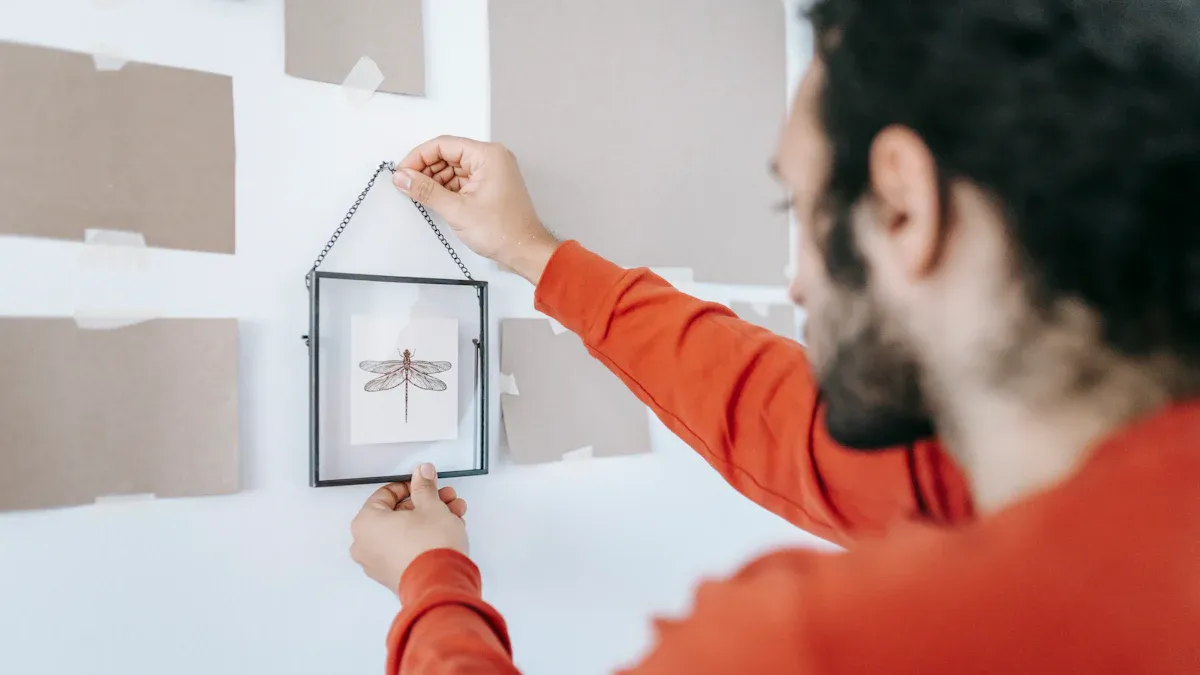
With your materials and tools ready, you can now begin the assembly. This part of the process brings your vision to life. You will prepare the acrylic, drill the necessary holes, and sandwich your artwork to create a beautiful display.
Prepare the Acrylic Sheets
Proper preparation of your acrylic sheets is crucial for a flawless finish. You want the surface to be perfectly clear and free of dust before you frame your art.
First, you should reduce static electricity on the acrylic. Static attracts dust and small particles. You can use an anti-static cleaning product for this. A simple home solution is to lightly wipe the protective film with a dryer sheet. This simple action helps dissipate the static charge.
Next, you will clean the acrylic surfaces that will face your artwork. It is best to leave the outer protective film on for now. Peel back the inner film on both sheets. To avoid fingerprints, wear clean, lint-free gloves.
Cleaning Your Acrylic: A Step-by-Step Guide
- Mix a Solution: Combine one part mild dish soap with ten parts distilled water in a spray bottle.
- Remove Debris: Gently wipe the surface with a dry microfiber cloth to remove any loose dust.
- Apply and Clean: Lightly spray the solution onto the acrylic. Use a clean microfiber cloth to wipe in a gentle, circular motion.
- Rinse: Dampen a second microfiber cloth with only distilled water. Wipe the acrylic to remove any soap residue.
- Dry: Use a final, dry microfiber cloth to dry the surface completely. This prevents water spots and streaks.
After cleaning, you are ready to position your artwork. This method works best for flat art like posters, prints, and photographs. Thicker items, such as a canvas, may require a different type of frame.
Drill the Mounting Holes
Accurate drilling is key to a professional-looking frame. This step requires patience and precision. Keep the protective masking on the outside of the acrylic sheets during this process. The film prevents scratches and helps reduce the chance of cracking.
Let’s use a common artwork size as an example. Imagine you have a 20×30 inch poster print. You will want a border around it. A good size for your acrylic sheets would be 24×34 inches. This gives you a 2-inch clear border on all sides.
- Stack and Secure: Place your two acrylic sheets on a flat, stable work surface. Make sure their edges are perfectly aligned. You can use clamps to hold them together, but place a soft cloth under the clamps to avoid marks.
- Mark Your Holes: You need to decide where to drill. A good rule is to place the hole’s edge at a distance of at least twice the acrylic’s thickness from the sheet’s edge. For a 1/4-inch thick sheet, drill at least 1/2-inch from the edge. For our 24×34 example, measuring 1 inch in from each corner is a safe and visually pleasing spot. Mark these four spots with your pencil.
- Drill Slowly: Set your power drill to a slow speed, around 500-1000 RPM. A fast speed can melt or crack the acrylic. Using a step bit is highly recommended. Begin drilling through your marked spots. Apply steady, light pressure. It is helpful to back the drill bit out a few times to clear away shavings. Drill through both sheets at once to ensure perfect alignment.
Create Your DIY Floating Acrylic Frame
Now you will put everything together to create your diy floating acrylic frame. This is the final and most rewarding step of the assembly.
- Peel and Place: Remove the remaining protective film from the inner side of the bottom acrylic sheet. Place it on your clean work surface.
- Position Your Art: Carefully place your artwork in the center of the acrylic. Use your measuring tape to ensure it is perfectly centered. For our 20×30 poster on a 24×34 sheet, you should have a 2-inch border on every side.
- Secure the Artwork (Optional): The pressure from the standoffs is usually enough to hold a paper print in place. However, if you want to add photos to acrylic with extra security, you can use a small piece of double-sided adhesive. A tiny square of a product like a 3M Adhesive Sheet in each corner of the artwork will hold it firmly without being visible.
- Complete the Sandwich: Peel the inner film from the top piece of acrylic. Carefully lower it onto your artwork, aligning the edges and drilled holes with the bottom sheet.
You have now assembled your diy acrylic floating frames! The next and final stage is mounting your new floating gallery frame on the wall.
Wall Mounting and Final Display
You have assembled your frame, and now it is time for the final step: hanging it on the wall. Proper mounting ensures your artwork looks professional and stays secure. This process transforms your project into a stunning piece of home decor.
Mark the Wall for Hardware
Accurate marking is the foundation of a perfectly level display. You will use the holes you drilled in the acrylic as your guide. For this step, you will need a few tools.
- Measuring Tape
- A Level (a laser level offers extra precision)
- Pencil or Marker
Hold your assembled frame against the wall where you want it to hang. Use your level to make sure the frame is perfectly straight. Once it is aligned, lightly mark the center of each of the four drilled holes onto the wall with your pencil.
Pro Tip: Ensure a Perfect 90-Degree Angle You can check if your marks are perfectly square using the 3-4-5 method. Measure 3 feet horizontally from one mark and 4 feet vertically. The diagonal distance between those two points should be exactly 5 feet. This confirms a true 90-degree corner for flawless alignment.
Install the Standoff Mounts
With your spots marked, you can now install the hardware. The anchors you use will depend on your wall type. For drywall, heavy-duty anchors like Zip Toggles are a great choice. The standoff hardware you purchased should include the correct screws and anchors. Standoffs are surprisingly strong.
| Wall Type | Tested Load (pounds) |
|---|---|
| Drywall | 191 |
| Cement | 190 |
| Brick | 191 |
Follow these steps to install the standoff barrels:
- Drill a pilot hole on each of your four pencil marks.
- Insert a wall anchor into each hole. Tap it gently with a hammer until it is flush with the wall.
- Place a screw through a standoff barrel. Drive the screw into the wall anchor until the barrel is snug against the wall. Repeat for all four mounts.
Secure Your Frame in Place
This is the moment you have been waiting for! You will now hang your diy acrylic floating frames.
Carefully lift your acrylic sandwich and place it over the mounted standoff barrels. The holes in the acrylic should line up perfectly with the barrels. Finally, thread the standoff caps through the front of the acrylic and into the barrels.
To avoid cracking the acrylic, do not overtighten the caps. A good rule is to tighten them by hand until they are snug, then back them off by a quarter turn. This secures the artwork without putting stress on the material. Now, step back and admire your beautiful, modern display!
You now have all the steps to create your own diy acrylic floating frames. You prepared your materials, assembled the frame, and mounted it securely. This diy project creates a beautiful floating gallery frame for your home. To keep your diy floating picture frame looking great, clean it with a soft microfiber cloth and avoid ammonia-based cleaners.
Get started on your project today! You will feel great satisfaction from your custom-made home decor. 🎉
PREGUNTAS FRECUENTES
What thickness of acrylic should I use?
You should choose the thickness based on your frame’s size. A 1/8-inch thickness works well for smaller pieces under 24 inches. For larger or heavier artwork, a 1/4-inch thickness provides better stability and prevents bowing.
Can I hang my frame on any type of wall?
Yes, you can hang your frame on most walls, including drywall, plaster, or brick. You must use the correct wall anchors for your wall type. The hardware kit often includes anchors, but you can buy stronger ones for extra security.
How do I prevent the acrylic from cracking when I drill?
You can avoid cracks with a few simple steps. Keep the protective film on the acrylic sheets. Use a drill bit made for plastic or a step bit. Set your drill to a slow speed and apply light, steady pressure.
Where can I find a good acrylic frame tutorial?
This guide provides a complete acrylic frame tutorial for your project. You can also find helpful videos online. These videos can show you specific techniques, like drilling or installing standoff hardware, for extra visual guidance.
See Also
Clever Home Styling: 10 Uses for Small Acrylic Trays
Acrylic Tray Truths: Simple DIY Projects Debunk Common Misconceptions
Elevate Your Home: Acrylic Trays as Modern Decor in 2025
Transform Your Space: 10 Chic Ideas Using Acrylic Trays
Showcase Your Items: Innovative Uses for Acrylic Tabletop Stands


 Español
  English
  Français
  Русский
  Deutsch
  Português
  日本語
日本語