
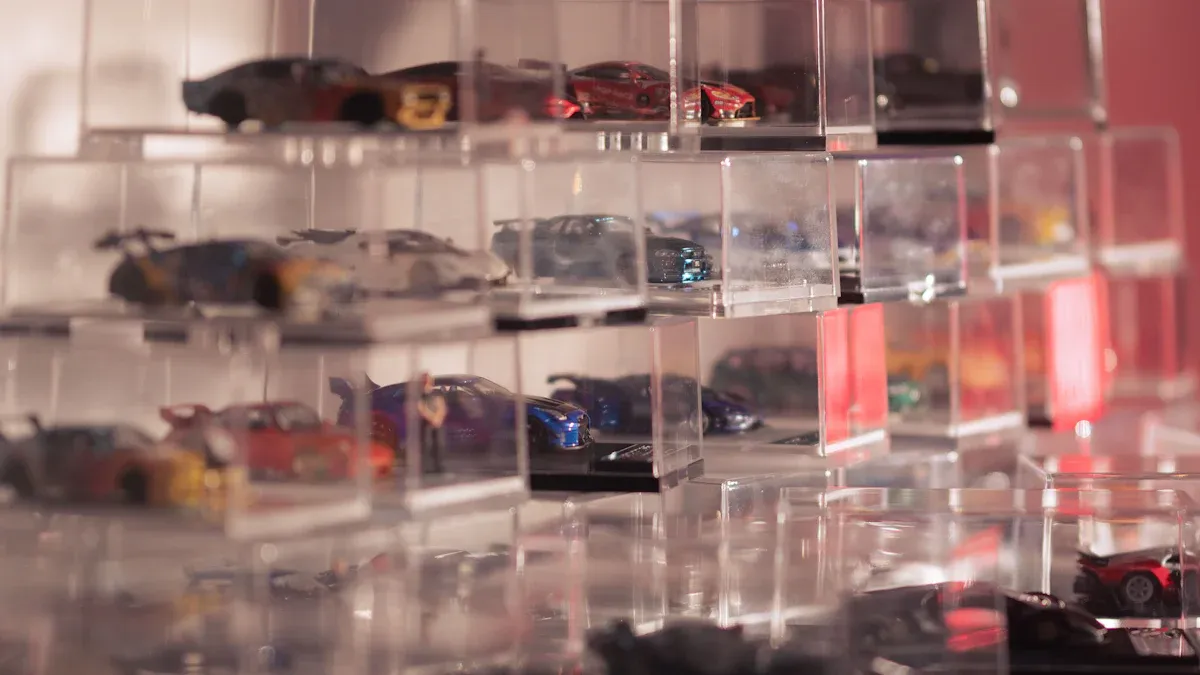
You face a key decision: Acrylic vs glass vs PETG. For most food and bakery chains, PETG delivers the best overall value due to its superior safety and durability. You can choose the right material by balancing key business factors.
Material Snapshot 📝
- Acrílico is your top budget-friendly choice.
- Vidrio is the premium option where scratch resistance is most important.
This guide helps you weigh durability, safety, cost, and appearance to make the most informed investment for your displays.
Acrylic vs Glass vs PETG: A Direct Comparison
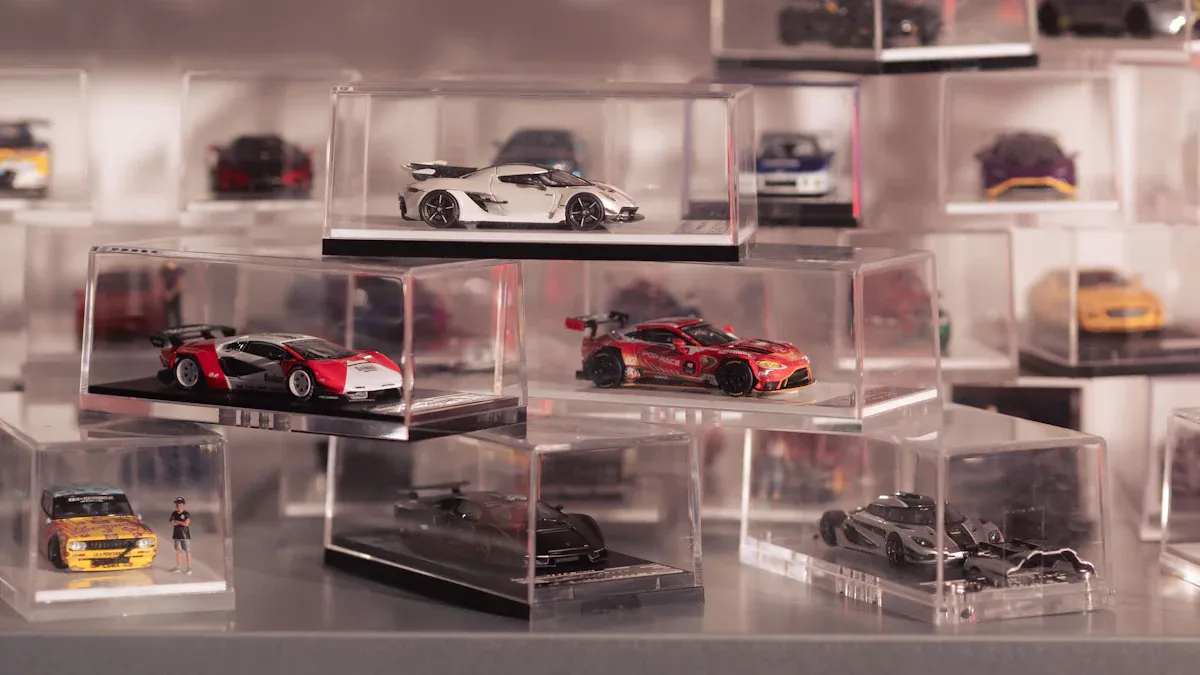
When you choose a material for your food displays, you must look at more than just the price tag. The right choice balances safety, strength, appearance, and long-term value. This direct comparison of Acrylic vs glass vs PETG will help you understand the key differences.
Food Safety & FDA Compliance
You must ensure your displays meet health standards, especially when they directly contact food. Each material handles this differently.
- Vidrio: This material is a natural choice for food safety. Glass is non-porous and inert. It will not leach chemicals into food, making it perfectly safe without needing special grades.
- PETG: You can feel confident using PETG in your bakery or cafe. It is inherently food-safe and easily meets FDA compliance standards for food contact.
- Acrílico: You need to be specific when choosing acrylic. Standard acrylic is not automatically food-safe. You must select a “food-grade” option. The FDA regulates these materials under
21 CFR 177.1010. Manufacturers must have their clear, colorless sheets independently certified to meet these requirements for use with food.
Durability & Impact Resistance
Your displays need to withstand the daily hustle of a busy commercial environment. Impact resistance is crucial for both safety and longevity.
- PETG: This is your most durable option. PETG is virtually unbreakable and will not shatter into dangerous shards upon impact. This makes it the safest and most reliable choice for high-traffic areas where bumps and knocks are common.
- Acrílico: Acrylic offers excellent impact resistance, often 10 to 20 times stronger than glass. It provides a great deal of durability. However, a sharp, direct blow can still cause it to crack.
- Vidrio: Standard glass is brittle. Tempered glass is stronger but can shatter into many small pieces if it breaks. This poses a significant safety risk in busy public spaces, making it the least durable option against impacts.
Visual Clarity & Aesthetics
You want your products to look their best. The clarity of your display case is essential for showcasing your food items attractively.
Light Transmission at a Glance 💡
- Acrílico: 92%
- Vidrio: Up to 92%
- PETG: 86% – 90%
Acrylic often provides the best optical clarity, allowing 92% of light to pass through. This can make it appear even clearer than standard glass. However, its surface is softer and can scratch. Glass also offers high clarity and is extremely scratch-resistant. Thicker sheets of glass can sometimes have a slight green tint. PETG provides very good clarity, though slightly less than acrylic. It is also the softest of the three, making it more prone to scratching than acrylic.
The refractive index also affects how your customers see your products. Acrylic has a refractive index of 1.49, which is slightly different from glass. This can cause minor visual distortion, but it is rarely noticeable in display applications.
For displays exposed to sunlight, UV resistance is key for long-term clarity.
| Material | UV Resistance | Long-Term Effect |
|---|---|---|
| Acrílico | Excellent | Maintains optical clarity over time. |
| PETG (Standard) | Moderate | Can yellow and become hazy with sun exposure. |
| Vidrio | Excellent | Unaffected by UV radiation. |
Cost-Effectiveness
Your budget involves more than just the initial purchase price. You should consider fabrication, installation, and potential replacement costs to understand the true lifetime value. The debate of Acrylic vs glass vs PETG often comes down to this balance.
- Acrílico: This is typically your most budget-friendly option for the material itself. It gives you a high-end look for a lower initial investment.
- PETG: PETG costs more than acrylic but is generally less expensive than glass. Its real value comes from its durability. Because it resists breaking, you will spend less on replacements over time, offering excellent long-term value.
- Vidrio: Glass has the highest initial cost. A 1/4-inch thick sheet of tempered glass can cost you between $12 and $15 per square foot. Custom cuts and edgework will add to this price. Its weight and fragility also make replacement expensive.
Fabrication is another major cost factor. PETG is the easiest to work with. You can cut, drill, and bend it without it cracking, which lowers labor costs and reduces material waste. Acrylic is also easy to machine but can crack during bending if not handled correctly. Glass is the most difficult and expensive to fabricate, requiring specialized tools and expertise.
Weight & Installation
The weight of your display material directly impacts installation complexity and cost. Heavier materials require more labor and more robust support structures.
| Feature | Glass Displays | Acrylic & PETG Displays |
|---|---|---|
| Weight | Very heavy. A 1/4″ sheet weighs over 3 lbs per sq. ft. | Lightweight. A 1/4″ acrylic sheet weighs about 1.5 lbs per sq. ft. |
| Support | Requires reinforced frames and heavy-duty hardware. | Can use lighter, less expensive support structures. |
| Handling | Difficult and requires multiple people for safe installation. | Easy for one person to handle and install. |
Because acrylic and PETG are about half the weight of glass, you save on shipping costs and labor. The easier handling reduces installation time and makes it a much simpler process overall.
Chemical Resistance & Cleaning
Keeping your food displays clean and sanitized is non-negotiable. The material you choose determines which cleaners you can safely use.
- Vidrio: Offers excellent chemical resistance. You can clean it with almost any standard glass cleaner without worrying about damage.
- PETG: Has good chemical resistance, better than acrylic. It can handle a wider variety of cleaners, but you should still use soft cloths to avoid scratching the surface.
- Acrílico: This material requires the most care. You must avoid harsh chemicals. Cleaners containing ammonia (like Windex), alcohol, or acetone will cause crazing—a network of fine cracks that clouds the material and weakens its structure.
Cleaning Tip for Acrylic ✅ Always use a mild soap and water solution or a specialized product like Novus #1 Plastic Clean & Shine. These products clean effectively without causing damage, helping you maintain the clarity and strength of your acrylic displays.
Scenario-Based Recommendations
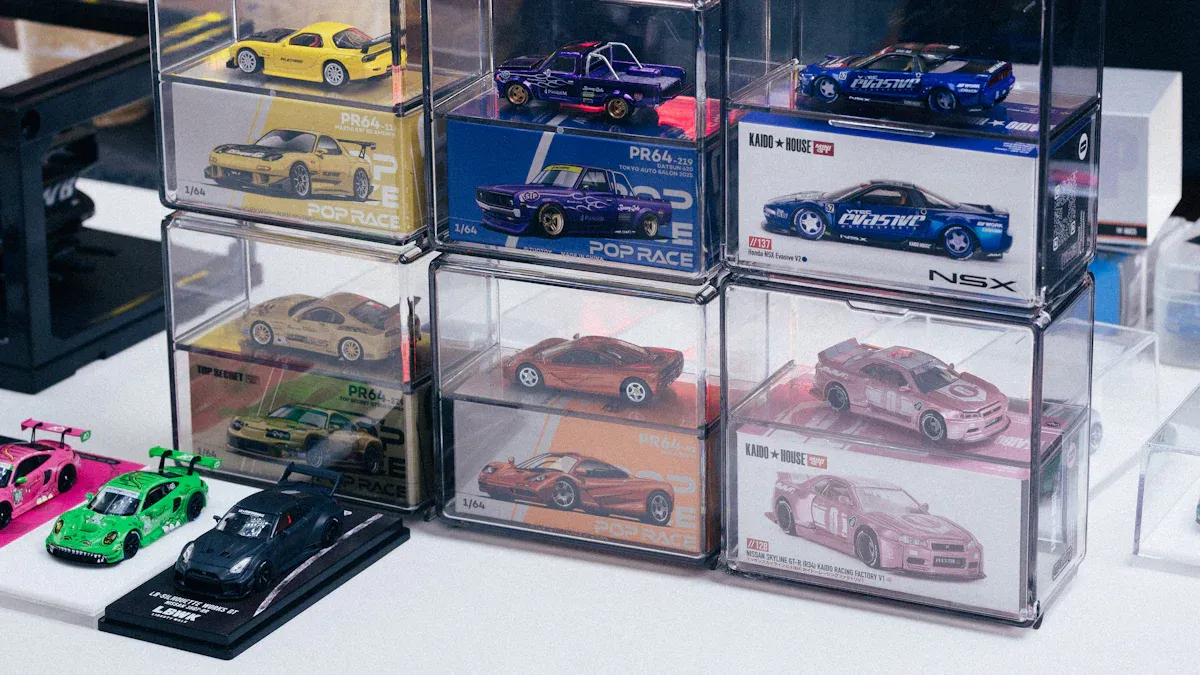
The technical details help you compare materials, but the real decision in the Acrylic vs glass vs PETG debate comes from your specific business needs. You can use these scenario-based recommendations to match the right material to your operational goals.
Choose PETG For…
You should choose PETG when safety and long-term durability are your absolute top priorities. It is the workhorse material for high-traffic food service environments where displays must withstand constant use.
Lo mejor para: Environments where impacts are likely and safety is non-negotiable.
Consider PETG for these applications:
- High-Volume Bakeries and Cafes: Use it for countertop display cases, sneeze guards, and bin lids. Its unbreakable nature protects both your products and your customers from accidents.
- Self-Serve Food Stations: It is the ideal choice for bulk food bins in grocery stores or toppings bars in frozen yogurt shops. It holds up to scoops, tongs, and frequent customer interaction without cracking.
- School and Hospital Cafeterias: In these settings, safety regulations are strict. PETG’s impact resistance and FDA-compliant status make it a reliable and worry-free option.
- Any Display Requiring Frequent Handling: If you or your staff need to move or regularly clean display components, PETG’s strength and superior chemical resistance reduce the risk of damage.
Choose Acrylic For…
You should choose acrylic when you need excellent visual clarity on a tight budget. It is the perfect solution for startups, temporary installations, or any business where initial cost is a primary factor.
Lo mejor para: Cost-conscious businesses needing a lightweight, high-clarity display for low-impact settings.
Acrylic is an excellent fit for these situations:
- Startups and Pop-Up Food Vendors: Acrylic gives you a premium, glass-like look without the high price tag. Its lightweight nature also lowers shipping costs and makes setup easy, which is crucial for temporary businesses. It is a cost-effective material that provides a high return on investment.
- Trade Show Booths and Events: You can build custom acrylic displays for your products and marketing materials. Their light weight makes them easy to transport and set up. Their durability ensures they withstand the rigors of a busy trade show floor while their clarity attracts visitors.
- Portable Exhibit Kiosks: You can use acrylic to create functional workspaces with display elements. These kiosks serve as product demonstration areas or information stations and are easy to move due to the lightweight material.
- Low-Traffic Retail Displays: For items on shelves or behind a counter, acrylic offers a fantastic balance of appearance and cost. Its superior optical clarity makes your products shine.
Choose Glass For…
You should choose glass when your goal is to create a permanent, high-end, and luxurious brand image. It is an investment in aesthetics and scratch resistance for establishments where perception is everything.
Lo mejor para: Luxury brands and permanent installations where premium feel and scratch-proof surfaces justify the high cost.
Glass is the ultimate choice for these environments:
- High-End Patisseries and Dessert Shops: You can create an exquisite visual effect with custom glass displays. For example, a French dessert shop might use a showcase with curved ultra-clear glass and warm LED lights to highlight the craftsmanship of its products and reinforce its premium brand identity.
- Luxury Hotels and Fine Dining Restaurants: You can integrate large, built-in glass showcases to blend with your overall decor. A five-star hotel’s dessert area might feature curved displays made of ultra-clear glass and stainless steel to create a grand and luxurious atmosphere for guests.
- Permanent Jewelry and Boutique Displays: In these settings, a scratch-proof surface is essential. Glass ensures your displays remain pristine for years, reflecting the quality of the high-value items inside.
You must also budget for the high cost of ownership. Annual maintenance can run 5-15% of the initial investment. A single replacement for a commercial glass panel can cost you anywhere from $500 to over $3,000, making it a significant long-term financial commitment.
Quick-Reference Decision Matrix
You have reviewed the detailed comparisons. Now, you need a simple way to see all the facts side-by-side. This quick-reference matrix helps you make a final decision in the Acrylic vs glass vs PETG debate. You can use this chart to quickly weigh the pros and cons of each material against your specific business priorities.
Comparing Materials at a Glance
This table summarizes the most important factors for your display case material.
| Feature | PETG (The All-Rounder) | Acrylic (The Budget Beauty) | Glass (The Premium Classic) |
|---|---|---|---|
| Impact Resistance | ✅ Virtually Unbreakable | Good (10-20x stronger than glass) | ❌ Poor (Brittle) |
| Visual Clarity | Very Good (86-90%) | Excellent (92%) | Excellent (up to 92%) |
| Scratch Resistance | Fair (Softest material) | Good | ✅ Excellent |
| Food Safety | ✅ Inherently Safe (FDA Compliant) | Requires “Food-Grade” | ✅ Inherently Safe (Inert) |
| Initial Cost | $$ (Mid-Range) | $ (Most Affordable) | $$$ (Highest Cost) |
| Weight | Lightweight | ✅ Lightest | ❌ Very Heavy |
| Chemical Resistance | Good | Fair (Needs special cleaners) | ✅ Excellent |
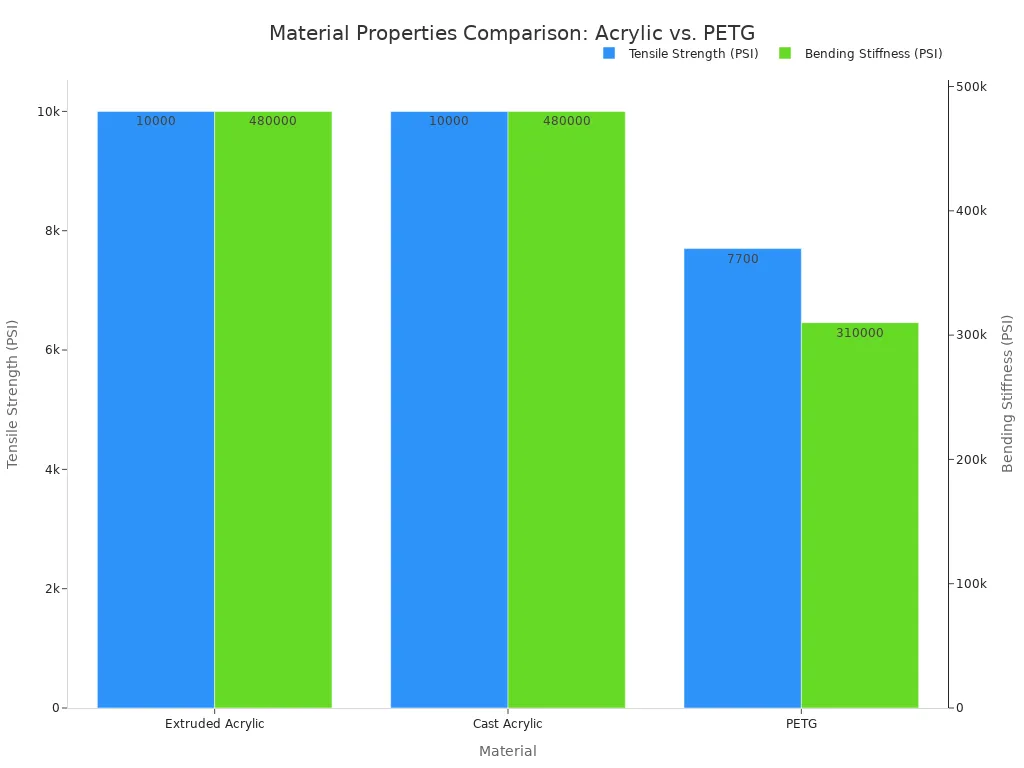
| Tensile Strength | 7,700 PSI | 10,000 PSI | ~7,000 PSI (Annealed) |
| Bending Stiffness | 310,000 PSI | 480,000 PSI | ~10,000,000 PSI |
While acrylic is technically stronger and stiffer than PETG, its brittleness makes it more likely to crack under sharp impact. The chart below shows you the difference in strength between the two plastics.
Your Final Choice 💡 The decision of Acrylic vs glass vs PETG comes down to a simple trade-off. You are often choosing between the superior impact safety of PETG, the pristine clarity and low cost of acrylic, or the unmatched scratch resistance and premium feel of glass.
You now have the facts to choose your display material. For most food service businesses, PETG offers the most versatile and durable solution. You can use this summary to guide your final choice.
Recap for Your Business 📌
- PETG: Choose for all-around performance and safety.
- Acrílico: Select for budget-friendly projects needing high clarity.
- Vidrio: Invest in for a permanent, premium, scratch-proof finish.
Use this guide to confidently assess your specific needs. You can now make the most informed investment for your business.
PREGUNTAS FRECUENTES
Can I use PETG displays outdoors?
You should avoid using standard PETG for outdoor displays. It has moderate UV resistance and can yellow over time with sun exposure. You can choose UV-grade PETG, acrylic, or glass for applications that will be in direct sunlight. These materials maintain their clarity much better outdoors.
Which material is easiest to bend and shape?
PETG is the easiest material for you to bend. You can cold-bend it or heat-form it without it cracking or whitening. This makes it ideal for creating custom curves and unique shapes for your displays, which reduces fabrication costs and material waste.
Which material is the absolute clearest?
Acrylic offers the best optical clarity. It allows 92% of light to pass through, making it even clearer than some types of glass.
Clarity Champion ✅ If your top priority is a crystal-clear, flawless view of your products, you should choose acrylic.
Can I repair scratches on these materials?
You can often polish and buff out light scratches from acrylic and PETG. You will need a special plastic polishing kit. Scratches on glass are permanent and cannot be easily repaired, usually requiring you to replace the entire panel to restore its appearance.

 Español
  English
  Français
  Русский
  Deutsch
  Português
  日本語
日本語