
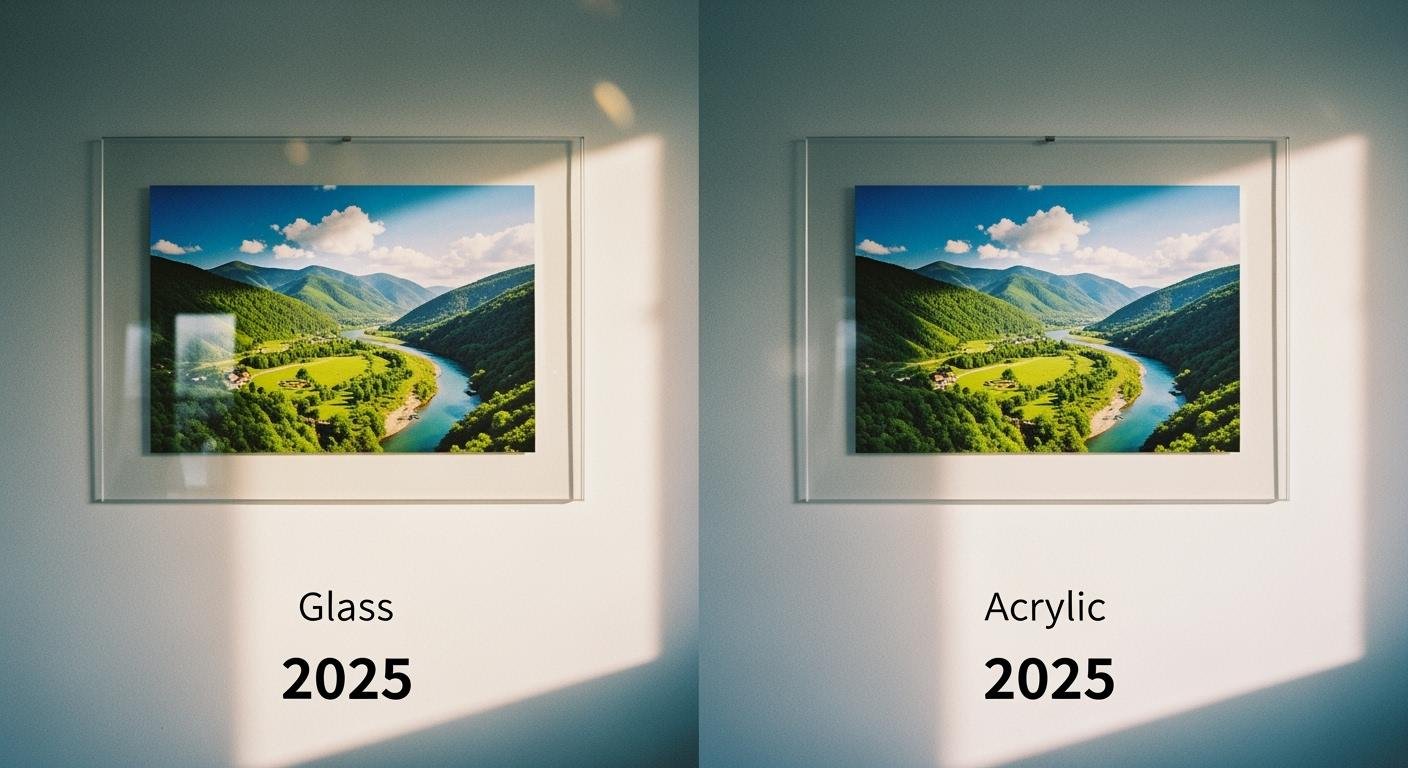
You will find acrylic is the better choice for most situations. Acrylic picture frames are durable, lightweight, and protect your art. This makes acrylic a top contender. However, glass has its own strength. Glass offers excellent scratch resistance.
Note: Choose glass when you need maximum scratch resistance for a stationary picture frame. For nearly everything else, acrylic is the modern solution. This guide helps you pick the right material, either acrylic or glass, for your artwork.
Acrylic vs Glass: A Direct Comparison

When you choose a picture frame, the glazing material is one of the most important decisions. The right choice protects and enhances your artwork. This direct comparison of acrylic vs glass will help you select the perfect option for your needs.
| Feature | Acrylic (Plexiglass) | Standard Glass |
|---|---|---|
| Durabilidad | Highly shatter-resistant, but scratches more easily. | Scratches less easily, but shatters upon impact. |
| Weight | Lightweight (about 50% lighter than glass). | Heavy, making large frames difficult to hang. |
| Clarity | Excellent clarity (up to 92% light transmission). | Good clarity, but can have a green tint. |
| UV Protection | Standard acrylic offers built-in UV filtering (up to 95%). | Offers minimal to no UV protection. |
| Seguridad | Very safe. It does not shatter into sharp pieces. | Can be hazardous when broken. |
| Coste | Higher material cost, but lower shipping cost. | Lower material cost, but higher shipping cost. |
Durability: Shatter vs. Scratch
You must consider both impact and surface durability. Here, acrylic and glass have opposite strengths and weaknesses. Acrylic is a flexible plastic that provides incredible shatter-resistant protection. It has many times the impact resistance of glass, making it a very durable choice if a frame might fall. You can think of acrylic as completely shatterproof.
Glass, on the other hand, offers better surface durability. On the Mohs hardness scale, standard glass has a rating of about 5.5, while acrylic rates much lower at 2-3. This means a glass frame is much harder to scratch. However, glass shatters easily on impact, which can be dangerous. Even tempered glass, which is stronger than standard glass, can break. The choice between durability and scratch-resistance is a key factor.
Peso y manejo
Weight directly impacts how you hang and handle your frame. Acrylic is incredibly lightweight. It weighs about half as much as glass. This makes acrylic picture frames lightweight and easy to hang, especially for oversized pieces. The reduced weight puts less stress on your walls and hanging hardware.
Pro Tip: When handling large acrylic sheets, you should store them upright at a slight 10-degree angle. This prevents the material from bowing over time. If you must stack them, place larger sheets at the bottom to avoid damage.
Glass is significantly heavier. A large glass frame requires more robust wall anchors and can be difficult to lift and position safely. The weight difference becomes very noticeable in frames larger than 16″ x 20″.
Visual Clarity & Color
You want your artwork to look its best. The glazing you choose plays a big role in the final display. High-quality clear acrylic allows up to 92% of light to pass through. This gives you a crystal-clear display with no color distortion. Your art’s colors will appear true and vibrant.
Standard glass has a slightly lower light transmission of around 89%. More importantly, the iron content in standard glass often gives it a subtle greenish tint. You can see this tint when you look at the edge of a piece of glass. This can slightly alter the appearance of your artwork. One of the disadvantages of an acrylic frame is that its surface can build up a static charge, which attracts more dust than glass.
UV Protection for Art
Art preservation is a critical job for any picture frame. Invisible UV radiation is a major threat to your art. It causes photodegradation, a process where high-energy rays break down pigments and paper fibers. This leads to irreversible damage like fading colors and yellowing paper. Watercolors and photographs are especially vulnerable to this damage.
This is one of the biggest benefits of acrylic. Standard framing acrylic comes with built-in UV filtering that blocks up to 95% of harmful rays. This excellent uv protection helps keep your art safe for years. Standard glass, by contrast, offers almost no protection from UV light, leaving your art exposed to potential damage.
Overall Cost: Material & Shipping
Your budget is always a consideration. At first glance, glass appears cheaper. The raw material for a glass pane costs less than an acrylic sheet of the same size. However, the total cost includes more than just the material.
Shipping is where the costs flip. Because glass is heavy and fragile, it is more expensive to ship. There is also a higher risk of it breaking during transit. For this reason, most online framers use acrylic for larger frames to reduce shipping costs and damage claims. The lighter weight and better durability of acrylic make it less expensive to ship safely. The benefits of tempered glass, like increased strength, still don’t overcome its weight and fragility during shipping compared to acrylic.
Key Differences Between Tempered Glass and Plexiglass
You will often see plexiglass and tempered glass as premium options for framing. Understanding the key differences between tempered glass and plexiglass helps you make an informed choice. Both materials offer upgrades over standard glass, but they have unique properties.
What is Plexiglass (Acrylic)?
Plexiglass is a brand name for acrylic. This material is a synthetic resin formed from a chemical called methyl methacrylate. Manufacturers create high-quality acrylic sheets by pouring a liquid monomer into a glass mold. The liquid then hardens into a solid, optically clear sheet. This process makes plexiglass a strong and lightweight alternative to glass. You will find that plexiglass is a very versatile plastic.
What is Tempered Glass?
Tempered glass is a type of safety glass. It undergoes a special manufacturing process involving extreme heat and rapid cooling. This thermal treatment makes the tempered glass about four times stronger than standard glass.
Safety First: When tempered glass breaks, it shatters into small, dull, cube-like pieces. This greatly reduces the risk of injury compared to the large, sharp shards of broken standard glass.
Head-to-Head: Plexiglass vs. Tempered Glass
Choosing between tempered glass and plexiglass depends on your priorities. While tempered glass offers superior scratch resistance, acrylic has its own advantages. One of the disadvantages of plexiglass is its softness, making it easier to scratch. However, acrylic is much lighter and provides better optical clarity. The following table highlights some core differences.
| Feature | Plexiglass (Acrylic) | Tempered Glass |
|---|---|---|
| Clarity | Excellent (up to 92% light transmission). | Very clear, but slightly less than acrylic. |
| Weight | Very lightweight. | Heavy, similar to standard glass. |
| Seguridad | Does not shatter. | Shatters into small, safe cubes. |
| Coste | Higher material cost, lower shipping. | Lower material cost, higher shipping. |
Ultimately, acrylic is often the more practical choice for shipped frames due to its durability and low weight. The strength of tempered glass is impressive, but its weight makes it difficult to handle and ship.
Practical Scenarios: Which to Choose?
Making the right choice comes down to your specific situation. You need to think about where the frame will hang, what it will hold, and who will be around it. This section gives you practical scenarios to help you decide between glass and acrylic with confidence.
Choose Glass If…
You should choose glass only in very specific circumstances. Its main advantage is scratch resistance. If your frame will be in a secure, low-traffic area where it will not be touched or bumped, glass is a good option.
Consider using glass in controlled environments such as:
- Private Offices: Frosted glass can offer privacy while still allowing light to pass through.
- Reception Areas: A glass frame can provide a modern and transparent first impression.
- Conference Rooms: Tinted glass can help create a focused atmosphere for meetings.
For Artists and Photographers: If you are displaying professional artwork, the color accuracy of your piece is everything. You should consider low-iron glass. Standard glass has a green tint, but low-iron glass offers superior clarity. This ensures the colors of your photography and art remain true. While tempered glass is stronger than standard glass, it still carries the risk of shattering. For stationary displays where scratches are the biggest worry, a high-quality glass pane is a valid choice.
Choose Acrylic If…
For most people and most situations, you will find acrylic is the superior choice. The benefits of acrylic make it incredibly versatile. Its durability and light weight are perfect for busy environments. You can use acrylic frames in many public spaces.
- Schools and Libraries: Acrylic is lightweight and shatter-resistant, making it ideal for educational displays, science fair projects, and library notices.
- Hospitals and Clinics: The non-porous surface of acrylic is easy to sanitize. This is crucial for protective barriers and information stands in healthcare settings.
- Galleries and Museums: Galleries use acrylic to protect valuable art from UV rays, dust, and physical damage. Its clarity ensures a perfect view of the artwork.
The many benefits of acrylic make it the modern standard for framing. If you need a frame for a high-traffic area, a child’s room, or any public space, you should choose acrylic.
Best for Large Acrylic Picture Frames
When you frame oversized pieces, acrylic is the only practical option. A glass pane’s weight becomes a major issue for any picture frame larger than 16″ x 20″. The heavy glass puts significant stress on the frame, the hanging hardware, and your wall.
Professional framers strongly recommend acrylic for large artwork, especially if it needs to be shipped.
Pro Tip: Delivery services may not always handle packages with care. Acrylic is much stronger and more resistant to breaking than glass. Its lighter weight also lowers shipping costs and makes the frame much easier to handle and hang safely.
The choice is clear for large formats. The durability and low weight of large acrylic picture frames make them the safer and more logical selection. A heavy tempered sheet of glass is still not recommended for shipping due to its weight and fragility compared to plexiglass.
Picture Frame Safety: Kids & Pets
Your family’s safety is the most important factor. In homes with children, pets, or high activity, a glass picture frame can be a serious hazard. If a glass frame falls and breaks, it shatters into sharp, dangerous shards.
Statistics show that accidents involving broken picture frames are unfortunately common, especially with young children. Incidents include children stepping on broken glass or cutting themselves on frames in trash bags. A 2002 report estimated over 1,300 foot injuries from picture frames in just one year. Choosing acrylic eliminates this risk.
- Acrílico does not shatter. If it breaks under extreme force, it typically cracks into a few large, dull-edged pieces.
- Tempered glass is a safer alternative to standard glass because it crumbles into small, cube-like pieces. However, it can still break.
For ultimate peace of mind in your home, acrylic picture frames are the best choice. The shatter-resistant nature of acrylic provides a safe environment for everyone.
Understanding Glazing Finishes

The finish on your glazing affects how your art looks. You can choose a finish that reduces glare or maximizes color. Understanding your options helps you create the perfect display for your artwork.
Clear Finish: Maximum Vibrancy
You should choose a clear finish for the most vibrant colors. This standard option provides a crystal-clear display with sharp details. It is the most popular choice for most framing projects. Both clear acrylic and glass have a similar level of reflection.
- Clear Acrylic: Reflects about 8% of light.
- Premium Clear Glass: Reflects about 8% of light.
This finish works best in rooms with controlled lighting. It allows your artwork’s true colors to shine through without any distortion.
Non-Glare Finish: For Bright Rooms
You can use a non-glare finish to reduce distracting reflections. This finish has a matte surface that scatters light. It is an excellent choice for a picture frame that will hang in a brightly lit room or opposite a window. The matte surface helps you see fine details in the art without any glare. However, this finish can make colors appear slightly more muted. The image may also look a little less crisp compared to a clear finish.
Anti-Reflective Finish: The Premium Choice
You get the best of both worlds with an anti-reflective finish. This premium option offers amazing clarity while minimizing reflections. It makes the glazing seem almost invisible. This allows you to see your art with incredible detail and true color, even in bright light. High-end galleries often use anti-reflection acrylic to protect and show valuable pieces.
Pro Tip: Choose anti-reflection acrylic for your most important artwork. It provides a museum-quality view that makes your art the center of attention. This is the ultimate choice for a professional display.
You can see the many benefits of acrylic. Its lightweight and shatter-resistance make it the clear winner for most needs. You should still consider glass for professional artwork in a secure display where scratch resistance is key. You now have the knowledge for perfect art preservation. You can confidently choose the right picture frame, knowing acrylic picture frames offer a superior modern display. The choice between acrylic and glass is now simple.
PREGUNTAS FRECUENTES
Is acrylic better than glass for picture frames?
You will find acrylic is the better choice for most needs. It offers superior durability, lighter weight, and built-in UV protection. You should only choose glass when you need maximum scratch resistance for a frame in a very safe, low-traffic location.
How do you clean acrylic and glass frames?
You clean glass with a standard glass cleaner and a paper towel. For acrylic, you must use a soft microfiber cloth and a special acrylic cleaner.
Important: Avoid using paper towels or ammonia-based cleaners like Windex on acrylic. These materials can scratch or damage the surface.
Which material is cheaper, glass or acrylic?
Glass has a lower initial material cost. However, acrylic is often cheaper overall. Its light weight and durability reduce shipping costs and the risk of breakage. For large frames, acrylic is the more budget-friendly option when you include shipping.
Does acrylic protect art from fading?
Yes, acrylic provides excellent protection. Standard framing acrylic blocks up to 95% of harmful UV rays that cause colors to fade. Standard glass offers almost no UV protection, leaving your artwork vulnerable to damage from sunlight.
See Also
Glass Or Acrylic Coffee Tables: A Simple Choice Guide
Your Ultimate Guide To Understanding Acrylic Table Stands
Essential Care And Materials For Your Acrylic Coffee Table
Edge-Lit Acrylic Signs: Definition, Principles, And Practical Applications
Acrylic (PMMA): Defining Its Properties And Diverse Applications


 Español
  English
  Français
  Русский
  Deutsch
  Português
  日本語
日本語