
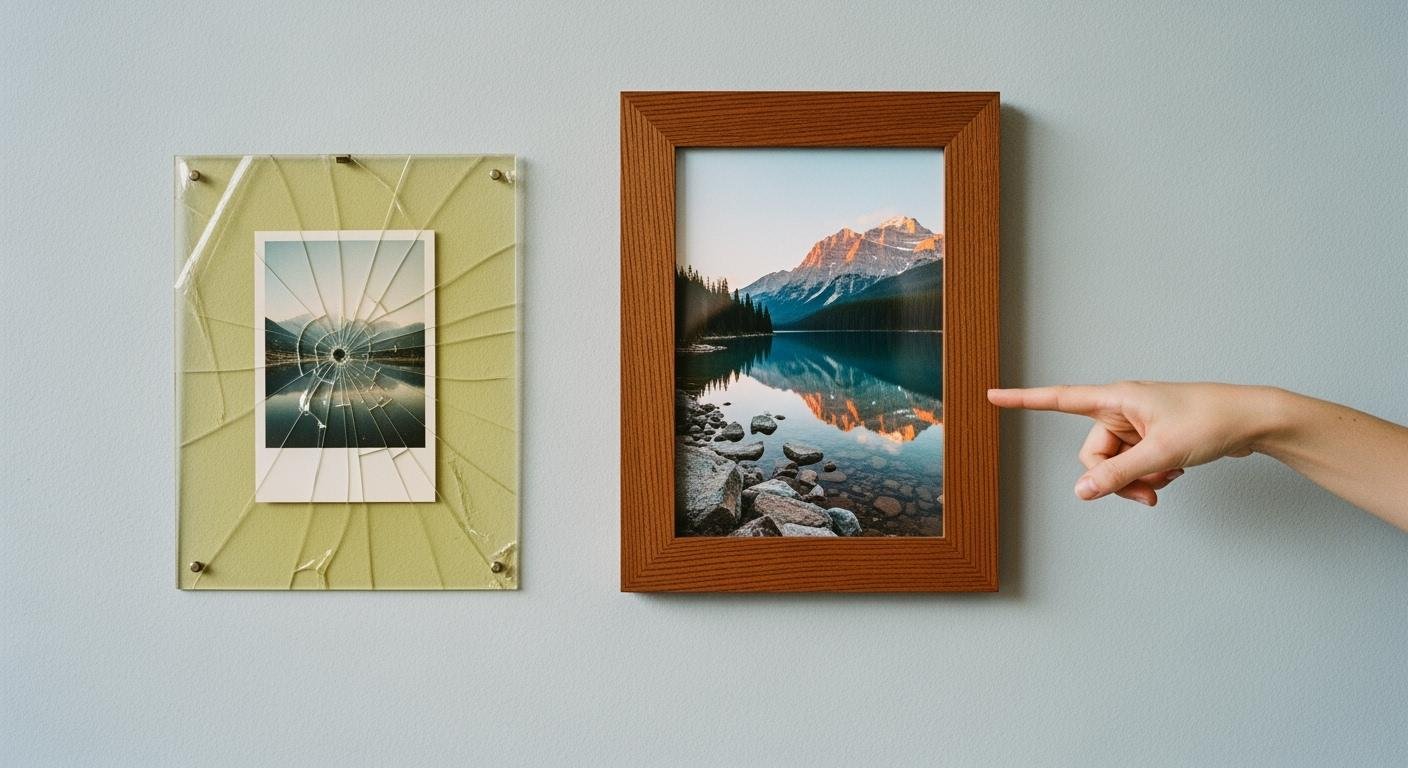
You may know acrylic frames are lightweight and shatter-resistant. These benefits make them a popular choice. But have you considered the hidden problems? Before you frame your cherished art, you should understand the significant disadvantages of acrylic.
Key Drawbacks to Consider:
- It scratches very easily.
- It attracts dust and static.
- It can damage delicate artwork.
- It often costs more than glass.
This guide helps you protect your valued photos and artwork from unintended harm.
Key Disadvantages of Acrylic Frames
While acrylic seems like a modern solution, its practical disadvantages can affect your artwork and your wallet. You need to understand these drawbacks before you commit to this material. The lack of long-term durability is a significant concern for many users.
1. Prone to Scratches and Abrasions
One of the most frustrating issues with acrylic is its poor scratch resistance. Unlike glass, acrylic is a soft material. A simple wipe with the wrong cloth can leave permanent marks that obscure the view of your art.
Everyday items in your home can easily damage an acrylic surface. You should never use them for cleaning:
- Paper towels or tissues
- Ammonia-based cleaners (like Windex)
- Rough or dirty cleaning cloths
Even a high-quality cleaning cloth can cause scratches if it has trapped dust or other fibers. Once an acrylic frame is scratched, the damage is almost always permanent. While some polishing kits exist for minor scuffs, they rarely restore the original clarity. Deep scratches are nearly impossible to fix without professional help, which can be expensive. This low scratch resistance compromises the material’s overall durability and visual appeal.
2. A Magnet for Dust and Static
Many people consider static cling the single biggest problem with acrylic. The material naturally generates a static charge, especially when you wipe it. This electrical charge turns your frame into a dust magnet, attracting particles from the air. As a result, you will find yourself cleaning acrylic frames far more often than glass ones.
Cleaning Tip: How to Safely Clean Acrylic 🧼 To minimize static and avoid scratches, use a soft, non-abrasive microfiber cloth. You can use compressed air to blow off loose dust first. If you need more cleaning power, use a cleaner made specifically for acrylic. Never spray the cleaner directly on the frame; spray it onto the cloth first.
3. Risk of Damage to Delicate Artwork
The static charge from an acrylic sheet is not just an annoyance; it poses a real threat to certain types of art. The static electricity can be strong enough to pull particles directly off the surface of your artwork.
This is especially dangerous for pieces made with loose media, such as:
- Charcoal drawings
- Pastel paintings
- Unfixed pencil sketches
Art conservators have also documented a problem known as “acrylic disease.” This condition causes a fine white powder—actually tiny particles of the acrylic itself—to form on the inside of the glazing and on the artwork. In some cases, this has caused irreversible abrasion and damage to photographs, prints, and even oil paintings. For irreplaceable or delicate pieces, the risk may be too great.
4. Susceptible to Bowing and Warping
Acrylic is not as rigid as glass. Over time, especially in larger sizes, an acrylic sheet can start to bow or warp within its frame. This problem is often caused by changes in the environment.
| Cause | Effect on Acrylic |
|---|---|
| Temperature Changes | Heat and cold cause acrylic to expand and contract, leading to bending. |
| High Humidity | Moisture in the air can create tension on the surface, causing slight warping. |
Thinner sheets of acrylic are much more likely to warp. To prevent this on larger frames, you may need additional support hardware, like backing boards or support wires. These extra measures add to the complexity and cost of the framing job, highlighting another of the material’s hidden disadvantages.
Hidden Costs and Inherent Flaws
Beyond the daily frustrations, acrylic frames come with hidden costs and built-in problems. You should understand these financial and preservation-related disadvantages before making a purchase. These issues can affect both your wallet and the long-term safety of your art.
The Higher Initial Price Tag
You might assume a plastic material would be cheaper than glass, but that is not the case. Acrylic is a petroleum-based product, so its price often reflects oil market changes. It consistently costs more than standard picture-framing glass. While its lighter weight can reduce shipping fees, the upfront material cost is a significant financial drawback. This higher price does not guarantee better quality, especially with standard options.
Inadequate UV Protection in Standard Acrylic
Sunlight contains harmful ultraviolet (UV) rays that cause irreversible damage to artwork. This light damage is cumulative, meaning even small amounts of exposure add up over time. It can cause:
- Faded colors in photos and paintings
- Yellowing or discoloration of paper
- Brittle textures that lead to cracking
Standard, lower-quality acrylic offers very little UV protection. It allows these damaging rays to pass through and harm your art. For any piece you value, this lack of protection is a serious flaw.
Costly Upgrades for Better Performance
To solve these problems, manufacturers offer upgraded acrylic with special coatings. You can find acrylic with UV-blocking, anti-static, and scratch-resistant features. However, these are not standard. Each upgrade adds significantly to the final price.
A Costly “Solution” 💰 Fully-featured acrylic can easily cost as much as, or even more than, museum-grade glass. At that point, you are paying a premium for a material that still has drawbacks, like its susceptibility to scratches.
Poor Barrier Against Water Vapor
Acrylic is not a perfect barrier against moisture. In humid environments, water vapor can slowly pass through the material or seep through the frame’s seals. This creates a risk of mold growth or “foxing”—small, rust-colored spots on paper art. To prevent this, you must ensure the frame is perfectly sealed. Experts also recommend adding bumpers to the frame’s corners. This creates an air gap between the frame and the wall, which helps reduce moisture buildup. This extra step highlights another complication of using lower-quality acrylic.
You should now understand the key disadvantages of acrylic frames.
- They scratch easily and permanently.
- They attract dust with static electricity.
- They can bow or warp over time.
- They have a higher price tag.
While acrylic is lightweight, these practical drawbacks often outweigh its benefits. For preserving your cherished pieces, traditional glass is often a safer and more economical choice. Carefully consider these points before you make your final decision to protect your art effectively.
PREGUNTAS FRECUENTES
Is acrylic ever a good choice?
Yes, you might choose acrylic for very large frames. Its light weight makes hanging easier. It is also a safer option in children’s rooms or busy areas because it resists shattering.
How can I tell if my frame is acrylic or glass?
You can gently tap the surface with your knuckle.
- Vidrio makes a sharp, high-pitched sound.
- Acrílico makes a dull, plastic-like thud.
Acrylic also feels lighter and warmer to the touch than glass.
Can you repair scratches on acrylic frames?
You cannot easily fix deep scratches on acrylic. Polishing kits might help with minor scuffs, but they rarely restore the original look. A deep scratch is almost always permanent, which is a major drawback.
See Also
Elevate Your Living Space: Ten Benefits of Acrylic Coffee Tables
Acrylic Risers Explained: Understanding Their Design, Uses, and Advantages
Exploring Impact-Modified Acrylic: Its Properties, Characteristics, and Practical Uses
Acrylic (PMMA) Unveiled: Essential Properties, Definitions, and Diverse Applications
Discovering Acrylic Blocks: Their Purpose, Key Features, and Versatile Uses


 Español
  English
  Français
  Русский
  Deutsch
  Português
  日本語
日本語