

Proper sizing for a classic floater effect is simple. You measure your art, then add a 2-4 inch clear border to find your final frame dimensions. This creates the signature floater look in your floating picture frames.
Note: The term floater also describes a frame where art sits edge-to-edge.
Your choice of floater picture frame or acrylic floating frames depends on the look you want. These float frames and floating picture frames offer many options for your ideal frame.
Key Styles of Acrylic Floating Frames

You need to choose a frame style before you can measure for it. Each style creates a unique look and works best with certain types of artwork. Understanding these options will help you select the perfect frame for your piece.
Standoff Bolt Frames
Standoff bolt frames offer a sharp, contemporary look. This style uses two panels of acrylic. You sandwich your print or photo between them. Metal bolts in the four corners hold the panels together. These bolts also mount the frame to the wall, creating a space that makes your art appear to float. These acrylic floating frames are perfect for a clean, gallery-style presentation.
Magnetic Block Frames
Magnetic block frames are thick, solid blocks of acrylic that stand on their own. They are ideal for desks, shelves, and mantels. Tiny, powerful neodymium magnets are embedded in the corners of the blocks. These magnets hold the two pieces together securely. They provide a very strong hold, often better than traditional fasteners, for a clean and reliable display. This design gives your photo a beautiful, borderless floater effect from all angles.
Pro Tip: Keeping Your Acrylic Clean 🧼 You should handle your acrylic frame with care to avoid scratches.
- Always use a soft microfiber cloth for wiping. Avoid paper towels.
- Clean with a simple mix of mild soap and water. Never use cleaners with ammonia or alcohol.
- Consider a special product like Brillianize Acrylic Cleaner. It cleans safely and reduces static to keep dust away.
The Classic Floater Picture Frame
The classic floater picture frame is a popular choice, especially for canvases. This style places your artwork inside a frame with a visible gap on all sides. This gap, called the “reveal,” creates the illusion that the canvas is floating. This type of floater frame adds depth and dimension to your art.
While the front may be open or covered with acrylic, the outer frame itself comes in many materials.
- Wood: You can find solid wood like oak or pine for a traditional feel.
- Aluminum: This metal offers a sleek, modern, and durable frame.
- Polystyrene: This lightweight plastic can mimic the look of wood at a lower cost.
This versatility makes the floater picture frame a great option for many decor styles and is one of the most common types of canvas frames.
Frameless Clip Mounts
For a truly minimalist look, you can choose frameless clip mounts. This method does not use a traditional frame at all. Instead, your artwork is placed behind a sheet of glass or acrylic and on top of a sturdy backing board. Clips hold this “sandwich” together at the edges. These float frames are an inexpensive and simple way to hang prints and posters. When choosing clips, you must consider the size of your art to ensure stability. For example, Swiss Clips work well for floating picture frames up to 30″ x 30″, providing a secure hold for larger pieces. This is a great choice when you want the art, not the frame, to be the complete focus. These are also excellent canvas frames for a simple floater look.
Sizing Your Floating Picture Frames
Correct sizing is the most important step to achieve your desired look. You must decide if you want a visible border around your art or a tight, shadow-gap effect for a canvas. This choice directly impacts how you measure for your floating picture frames. This guide makes the sizing process simple.
Standard vs. Custom Sizes
You can find floating picture frames in standard, off-the-shelf sizes or order custom dimensions. Standard sizes are made to fit common photo and art dimensions. Custom sizing gives you complete control, but it often costs more. A table can help you visualize how a border changes the final frame size.
Note: The final dimensions of a standard frame might not create a perfectly even border. For example, an 8″ x 10″ artwork in a standard 11″ x 14″ frame gives you a 1.5-inch border on the sides and a 2-inch border on the top and bottom. This slight variation is common and still looks great.
Here is a quick reference for adding a consistent border to your art.
| Artwork Size (Inches) | Frame Size for 2″ Border | Frame Size for 3″ Border |
|---|---|---|
| 8 x 10 | 12 x 14 | 14 x 16 |
| 11 x 14 | 15 x 18 | 17 x 20 |
| 16 x 20 | 20 x 24 | 22 x 26 |
| 18 x 24 | 22 x 28 | 24 x 30 |
How to Measure for a Bordered Look
A bordered look is perfect for standoff bolt acrylic floating frames or any style where you want a clear space around your print. This space makes your artwork pop. Follow these simple steps for accurate sizing.
- Measure Your Art. Use a tape measure to find the exact height and width of your paper print or photograph.
- Choose Your Border Width. Decide how much clear space you want. A 2-inch border is standard, but you can choose anything from 1 to 4 inches for your desired floater effect.
- Calculate the Final Size. Double your chosen border width. Add that number to both the height and width of your artwork. This gives you the final dimensions for your frame.
Artwork Width + (Border Width x 2) = Frame Width
Artwork Height + (Border Width x 2) = Frame Height
The Reveal: Sizing Float Frames for Canvases
Sizing for canvas frames is different. You do not add a large border. Instead, the magic happens in the small gap between the canvas and the frame. This gap is called the “reveal.”
- Reveal: This is the shadow gap between the edge of your canvas and the inside edge of the floater picture frame. The standard reveal is usually between 1/8 and 1/4 of an inch. This small space creates the classic floater illusion.
- Rabbet Depth: This is the depth of the inner part of the frame where the canvas sits. You must ensure the rabbet depth of your frame is deeper than your canvas. This allows the canvas to be mounted securely from the back.
For most canvas frames, you buy a frame that matches your canvas size. The frame is built with the reveal already included. This means a 16×20 inch canvas fits perfectly into a 16×20 inch floater frame. The listed frame size refers to the artwork it holds, not its outer dimensions. This same-size method works for many popular canvas sizes.
Examples of Same-Size Canvas Framing: You can use this sizing method for many dimensions, including:
- A 20 x 24 inch canvas in a 20 x 24 inch floater frame.
- A 24 x 36 inch canvas in a 24 x 36 inch floater frame.
- A 30 x 40 inch canvas in a 30 x 40 inch floater frame.
This approach makes buying canvas frames straightforward. You just need to match your canvas size to the frame size and check the rabbet depth. The result is a professional floater look every time.
Matching Frame to Artwork
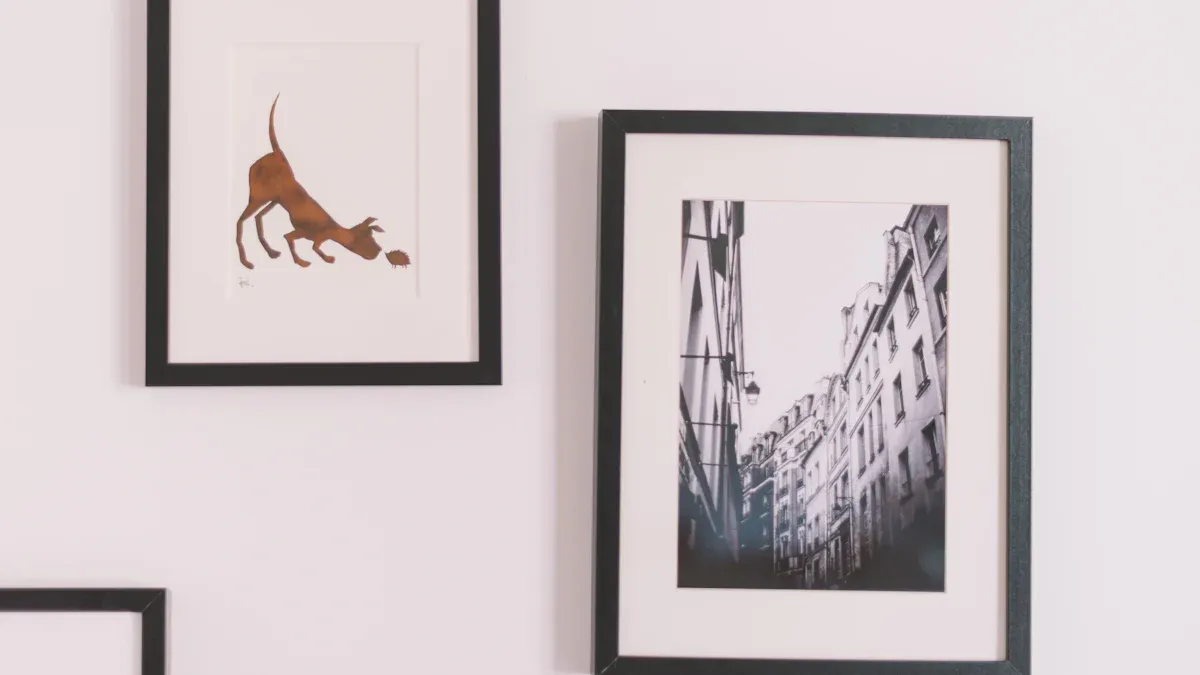
Choosing the right frame involves more than just measurements. You should match the frame’s size, style, and hardware to your specific artwork and room. This ensures your art looks its best.
Sizing for Visual Impact
The size of your frame and its border creates a powerful visual effect. A larger border gives your artwork more space, which can emphasize the piece and draw more attention to it. You can also play with the border proportions for a custom floater look.
- Bottom-Weighting: You can make the bottom border slightly wider. This technique visually grounds the artwork, creating the illusion of a perfectly even frame when viewed.
- Room Scale: Consider your wall space. A small frame can get lost on a large wall. As a general guide, your art and frame should take up about two-thirds of the wall space above furniture.
- Color and Finish: The frame color affects how large the art feels. A light-colored frame can make a piece seem more expansive, while a dark frame adds weight and containment.
Choosing a Style for Your Art
The style of your art helps determine the best type of frame. Different mediums work better with certain floating picture frames. A classic floater is a great choice for many pieces.
Art Style and Frame Pairing Guide 🖼️
- Modern Photos & Abstract Art: Clear acrylic floating frames enhance vibrant, contemporary pieces. The minimalist design of this floater frame keeps the focus on the art.
- Oil or Acrylic Paintings: Classic floater canvas frames are the perfect choice. The gap, or reveal, creates a professional gallery look for your floater.
- Prints and Watercolors: You can use float frames to show off the paper’s deckled edge. A simple frame with a wide mat also creates a timeless museum aesthetic.
Mounting and Hardware Considerations
Heavy floating picture frames require secure mounting. Your hardware choice is critical for a safe and level display. Always check the weight capacity of any hardware you use for your frame.
For the strongest support, you should anchor your frame directly into wall studs. You can use a stud finder to locate them. If studs are not available, use heavy-duty drywall anchors. Toggle bolts are an excellent option for heavy canvas frames. For very large pieces, a French cleat system provides maximum security.
Installation Tip: Avoid Common Mistakes! A common error is making the floater reveal too tight, which can make the art look cramped. Always do a dry test fit before final mounting to ensure your reveal is even.
You can now find the perfect frame. Follow these simple steps for your ideal floater frame.
- Identify your art type, like a print or canvas.
- Choose a frame style, such as a classic floater.
- Decide on the look: a clear border or a shadow-gap floater reveal.
- Measure your art to find your final frame dimensions.
You are ready to select a great frame with confidence.
PREGUNTAS FRECUENTES
What is the best reveal size for a canvas?
You should aim for a reveal of 1/8 to 1/4 of an inch. This small gap creates the classic shadow effect. It makes your canvas appear to float inside the frame. Most pre-made floater frames for canvases already include this spacing, simplifying your choice.
Can I put a paper print in a canvas floater frame?
You can, but you must prepare the print first. You need to mount your paper artwork onto a rigid backing, like a foam board. This gives the print the necessary support to sit correctly inside the frame’s rabbet, just like a canvas would.
How do I clean my acrylic frame without scratching it? 🧼
You should always use a soft microfiber cloth. Clean the acrylic with a simple mixture of mild soap and water. Never use glass cleaners containing ammonia or alcohol, as they can damage the surface. This simple care routine keeps your frame looking new.
Do I need a border for my floating frame?
The need for a border depends on your frame style.
Standoff bolt frames look best with a 2-4 inch clear border around your art. Classic floater frames for canvases do not use a wide border. Instead, they use a small reveal for the floating effect.
See Also
Your Comprehensive Guide to Choosing and Using Acrylic Table Stands
Exploring the Versatile Designs and Practical Applications of Round Acrylic Trays
Understanding Acrylic Risers: Their Definition, Key Features, and Diverse Applications
Discovering Acrylic Watch Displays: Definition, Structural Insights, and Practical Uses
An In-depth Look at Acrylic Aquariums: Definition, Features, and Applications


 Español
  English
  Français
  Русский
  Deutsch
  Português
  日本語
日本語