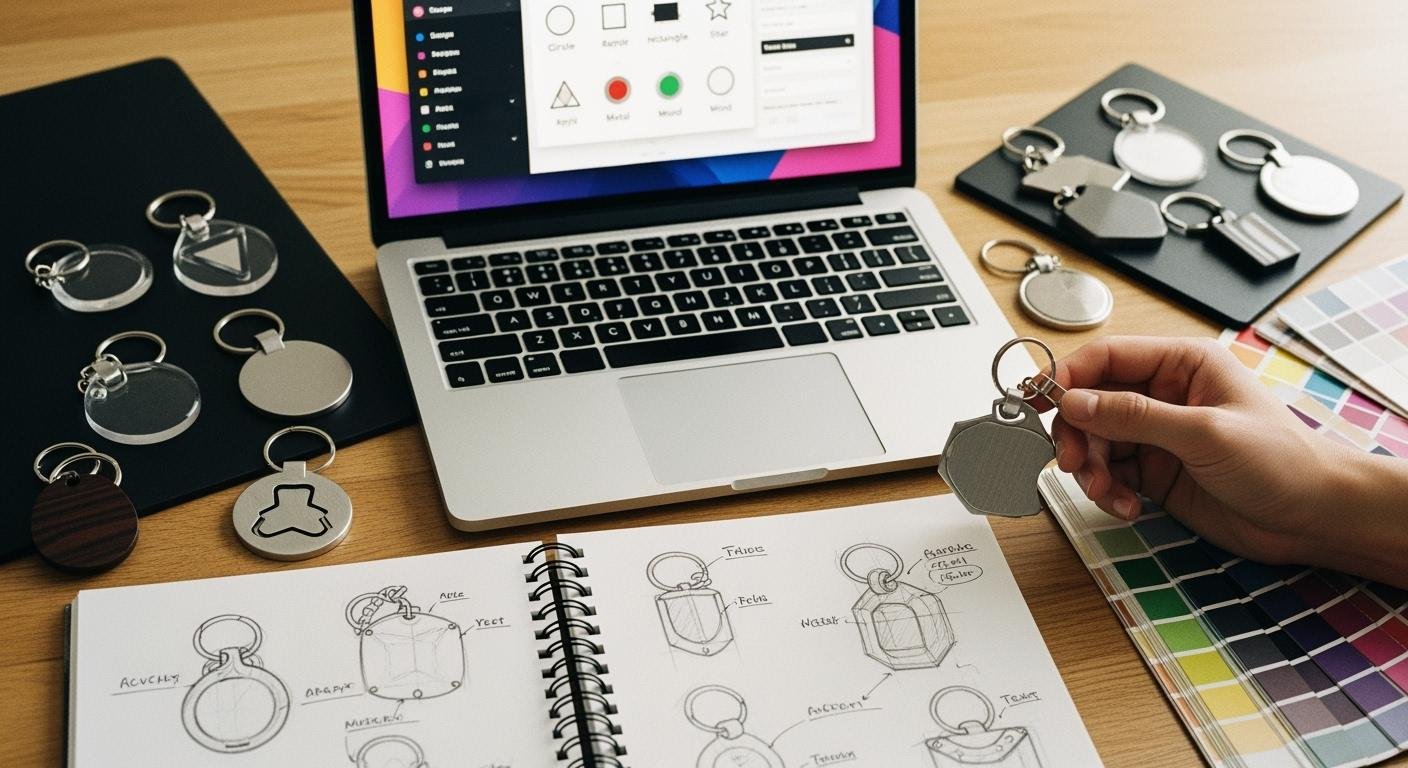
You have amazing art. You want to turn it into a physical keychain. This is a great idea, as the personalized gift market is projected to reach over $28.3 billion by 2033. To get started, you just need to follow a few key steps.
Follow this essential checklist, and you can order custom keychains with confidence.
- Prepare Your Design File
- Choose Your Keychain Specifications
- Find and Vet a Supplier
- Place the Order and Approve Proofs
- Receive and Inspect Your Keychains
Preparing Your Keychain Design
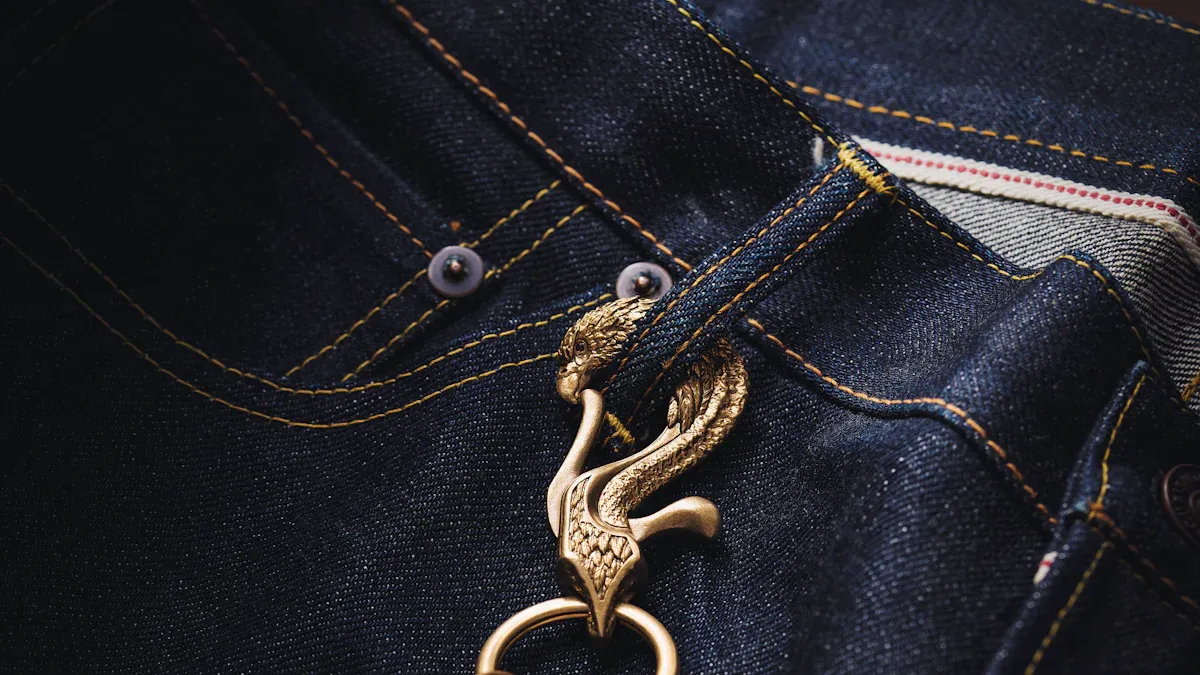
Your artwork is the heart of your keychain. Getting the digital file right is the most important step to ensure your final product looks exactly as you imagined. This involves choosing the right file type, setting the quality, and telling the manufacturer where to cut.
File Format and Quality
You will start with a design file. There are two main types: vector and raster.
- Vector files (like AI, EPS, SVG) use mathematical paths to create images. They can be resized to any dimension without losing quality, which results in very clean lines for the final cut.
- Raster files (like PNG, JPG, PSD) are made of pixels. They are great for photos or artwork with complex shading and gradients.
Pro Tip: For the best results, use a vector file for your design’s outline. If your art is a raster image, make sure it is high-resolution. Manufacturers recommend a resolution of at least 300 DPI (dots per inch) and using the CMYK color mode, which is the standard for printing and helps prevent unexpected color shifts.
Creating a Cutline
A cutline is a path on your design file that tells the manufacturer’s machine the exact shape to cut for your keychain. You must create this line on a separate layer in your design software.
Typically, you will create this by:
- Making a copy of your artwork layer.
- Merging the copied art into a single, solid shape.
- Adding a thin outline (often a 1pt magenta stroke) around this shape.
This outline becomes the cutline. It ensures your keychain has a clean, professional border around your design. If you are new to this, many suppliers offer templates or services to help you create the cutline correctly when you order custom keychains.
Using Transparency and Borders
You can use transparency in your design to create unique effects. For example, you can add a transparent rainbow tint to the background or have a gradient that fades into the clear acrylic. Just make sure these transparent areas are clearly marked in your file. The space between your artwork and the cutline creates a border, which can be clear acrylic or part of your design.
Choosing Your Keychain Specifications
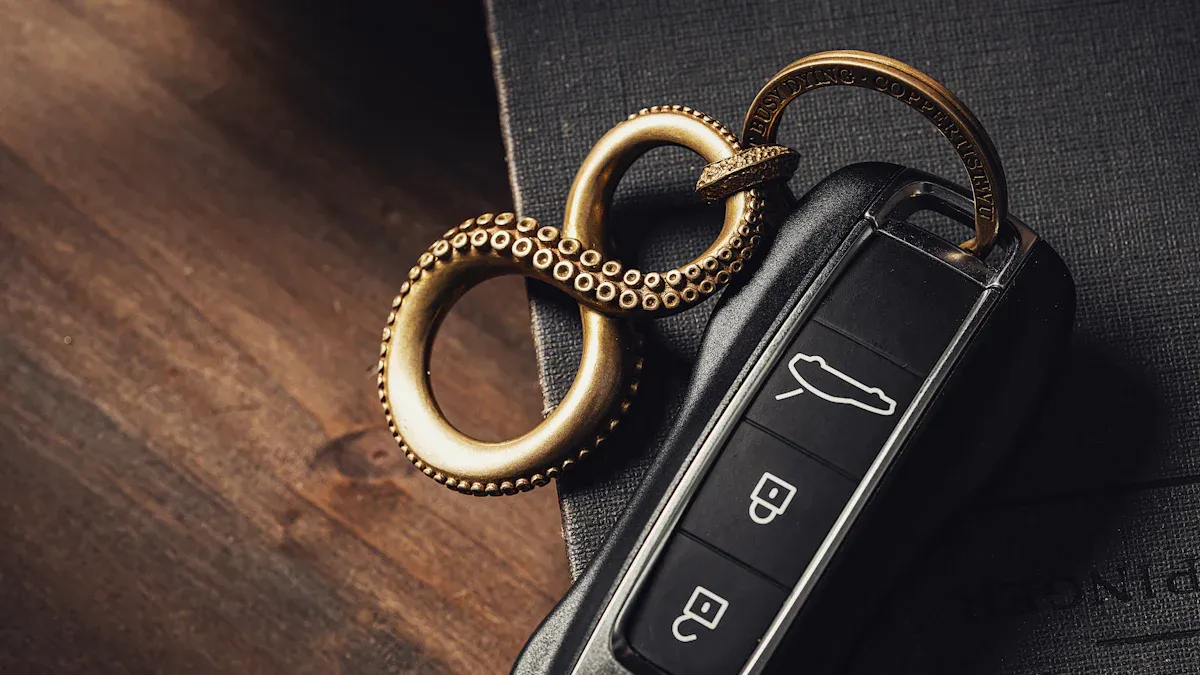
With your design file ready, you now get to decide on the physical details of your keychain. These choices will define its final look, feel, and durability.
Size and Thickness
The size of your keychain affects its visibility and how it feels in a pocket or on a bag. Most artists choose a size that balances detail with portability.
| Size Range (inches) | Popularity/Use Case |
|---|---|
| 1.5″ – 2.5″ | This is the most popular range. It offers a great balance of visibility and convenience. |
| Around 2″ | Many buyers prefer this size. It provides enough space for clear art while fitting comfortably in hand. |
Thickness impacts your keychain’s durability. The standard thickness is about 3mm (or 1/8″). Thicker acrylic contains more material. This makes the keychain stronger and more resistant to breaking, but it also increases the price. While the average lifespan of a daily-use acrylic keychain is 1-2 years, a thicker build can enhance its longevity.
Eco-Friendly Tip: ♻️ Ask your supplier if they offer materials like 100% recycled acrylic. This is a great way to make your product more sustainable.
Print and Finish Options
You can print your design on one or both sides of the keychain. You might think single-sided printing is always cheaper, but this is not always the case. Sometimes, unique shapes or materials for single-sided designs can increase their production cost.
Next, you will choose a finish. This adds personality and protection.
- Epoxy: This gives a smooth, glass-like dome over your art. It is highly scratch-resistant and keeps colors vibrant.
- Glitter or Holographic: These add sparkle and shine. A holographic finish creates a rainbow effect that shifts in the light.
A two-year test showed that an epoxy finish stays smooth and clear, while a glitter finish can become hazy and lose its sparkle over time. For maximum durability when you order custom keychains, look for UV printing combined with an epoxy finish.
Hardware Attachments
The final touch is the hardware that connects your keychain to keys or a bag. You can choose from various styles and colors to match your design’s aesthetic.
Popular hardware types include:
- Lobster Clasps
- Star-Shaped Clasps
- D-Rings
- Standard Keyrings
These often come in several metal colors, such as gold, silver, and rose gold.
Finding and Vetting a Supplier
You have a perfect design file and clear specifications. Now you need a partner to bring your design to life. Finding the right manufacturer is a critical step when you order custom keychains.
Where to Find Manufacturers
You can find many keychain suppliers online. Each serves a slightly different audience. Your choice will depend on your budget and order volume.
- Popular Manufacturers: Companies like
VograceandZap Creativesare very popular with independent artists. They specialize in custom merchandise and often have helpful guides. - Bulk Marketplaces: If you need a large quantity, you can explore marketplaces like
Alibaba. These sites connect you directly with factories for high-volume production.
Key Comparison Factors
You should compare suppliers on a few key points before making a decision. Look beyond the price per keychain to find the best value for your project.
First, check the Minimum Order Quantity (MOQ). This is the smallest number of keychains you can buy. This number varies greatly between companies.
Some suppliers have no minimum order requirement at all. Others, like ViviPrint, offer an MOQ as low as one unit, which is perfect for samples. A more standard MOQ might be around 20 units, like that of MessengerCo.ai. Always confirm the MOQ for the specific product you want.
Next, look at pricing tiers and perks. Most suppliers offer bulk discounts, meaning the price per keychain goes down as your order quantity goes up. Some also provide benefits like free worldwide shipping. You can also find suppliers like Misil Craft that offer free sample packs. This allows you to verify the material and print quality before committing to a large purchase.
Finally, verify the supplier’s quality and reputation. Read customer reviews and look through their online photo galleries. Seeing photos from actual customers gives you the best idea of what your final products will look like. This simple check helps you order custom keychains with confidence.
How to Order Custom Keychains and Approve Proofs
You have your design and specifications ready. Now it is time for the exciting part: placing your order. This process involves uploading your file and carefully checking a digital sample before production begins. Following these steps helps you order custom keychains without any surprises.
The Ordering Process
Most suppliers make the ordering process simple. You will typically follow a few main steps on their website. Many sites even offer a product creator tool to see your design on the keychain before you buy.
The general process looks like this:
- Select Your Product: First, you browse the supplier’s catalog and choose the keychain type you want.
- Add Your Design: Next, you use their online tool to upload your artwork. You can edit its placement and review how it looks on the product.
- Place Your Order: Finally, you add the finished item to your cart. You can select your quantity and benefit from any bulk discounts before you check out.
Reviewing Your Digital Proof
After you place your order, the manufacturer will send you a digital proof. This is a final image showing exactly how your keychain will be produced. You must review this proof very carefully. Your approval tells the factory to start making your keychains.
Important: Check your proof as soon as you get it. Many companies will automatically process an order if they do not hear back within 48 hours. Any delay in your approval can also delay your delivery date.
When you review your proof, check these key details:
- Design: Is your artwork correct? Are there any missing elements?
- Colors: Do the colors match your original file?
- Size: Does the listed size match what you ordered?
- Materials: Does the proof confirm the correct material and finish (e.g., epoxy, holographic)?
- Cutline: Does the cutout shape look exactly as you intended?
If anything is wrong, contact the supplier immediately. Most include one free revision with your order.
Production, Shipping, and Final Checks
You approved your proof. Your keychains are now on their way to becoming real products. This final stage involves production, shipping, and your own quality check.
The Production Timeline
Once you approve the digital proof, the factory begins its work. The average production time for custom acrylic keychains is usually 3 to 4 working days. This clock starts after the company receives your payment and final design approval.
Sometimes, delays can happen. Understanding these issues helps you set realistic expectations. Common causes for delays include:
- Supply Chain Problems: Issues can arise when design, materials, and shipping are handled by different companies.
- Large Order Requirements: Some factories have high minimum orders that can create bottlenecks and slow down production.
- Poor Tracking Systems: A lack of digital tracking can lead to errors and miscommunication.
- Lack of Transparency: You may not learn about a problem until it is too late, causing a major delay.
Receiving Your Order
Your package has arrived! 📦 Before you celebrate, you should perform a final quality check. This step ensures you received exactly what you paid for.
Open your box and inspect your order carefully.
- Count Your Keychains: Make sure the quantity matches your order.
- Check for Protective Film: Most acrylic keychains have a thin plastic film on one or both sides to prevent scratches during shipping.
- Inspect Each Item: Look for any printing errors, scratches, or other damage.
- Verify the Hardware: Confirm that you received the correct clasp type and metal color.
Pro Tip: The protective film can make the keychain look dull or scratched. Peel it off from a corner to reveal the shiny, clear surface underneath.
If you find any issues with your order, take photos and contact your supplier right away. A good manufacturer will work with you to fix any mistakes.
You can turn your art into a profitable product. Keychains often sell for $10-$20 each while costing under $2 to produce. Use this final checklist to order with confidence.
Quick-Reference Checklist
- ✓ Your artwork is a 300 DPI CMYK file.
- ✓ You have chosen your keychain size, finish, and hardware.
- ✓ You confirmed the supplier’s MOQ and pricing.
- ✓ You have approved the final digital proof.
- ✓ You will inspect your order upon arrival.
You have all the information you need. Now you are ready to place your order.
PREGUNTAS FRECUENTES
What if I can’t create a cutline?
You do not need to worry. Many suppliers can create the cutline for you. Some companies offer this service for free. Others may charge a small fee. You just upload your artwork, and they handle the rest.
Can I order just one keychain?
Yes, you can order a single keychain. Look for suppliers with no Minimum Order Quantity (MOQ). This is a great way to get a sample. You can check the quality before placing a larger order.
Why does my keychain look scratched or dull?
Your keychain likely has a thin protective film. This film prevents scratches during shipping.
Remember: You can peel the film off from a corner. The shiny, clear surface will be underneath. ✨
What is the difference between CMYK and RGB?
RGB (Red, Green, Blue) is for digital screens. CMYK (Cyan, Magenta, Yellow, Black) is for printing. You should set your file to CMYK. This ensures your keychain’s printed colors will look correct and match your design.
See Also
Your Comprehensive Guide to Choosing and Using Acrylic Table Stands
Understanding Minimum Order Quantity: A Practical Guide for Businesses
Personalize Your Space: Elegant Touches for Custom Acrylic Trays
Laser Cutting and Engraving: Process and Applications for Acrylic Products
Selecting and Maintaining White Acrylic Trays: A Complete Guide

 Español
  English
  Français
  Русский
  Deutsch
  Português
  日本語
日本語