
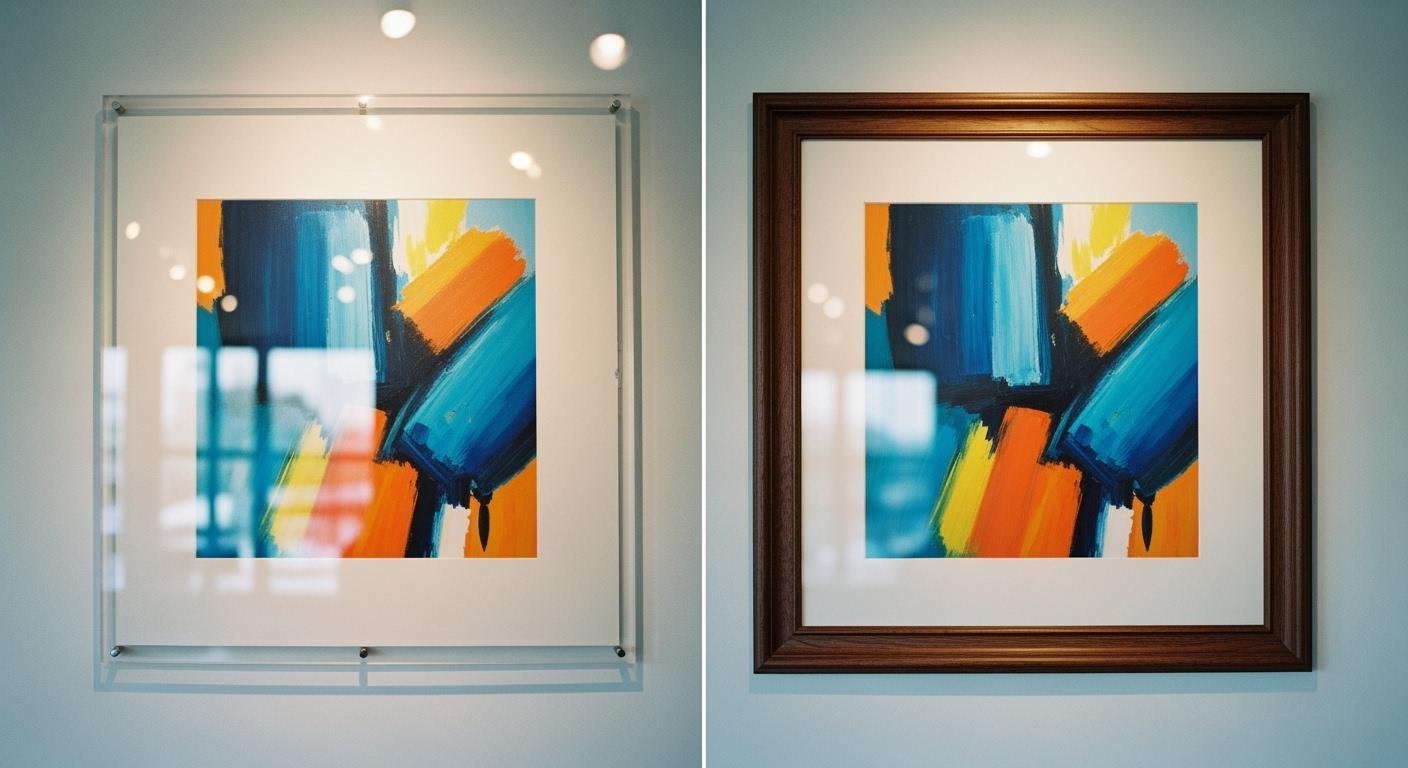
You face the choice in the acrylic frames vs glass frames debate. For most picture frames in a modern home, an acrylic frame is the superior option.
The excellent durability and safety of acrylic make it a clear winner over glass. A traditional glass frame does offer better scratch resistance.
This guide directly compares acrylic versus glass, helping you choose with confidence.
Acrylic Versus Glass: A Feature Comparison
When you compare acrylic frames vs glass frames, you will find several key differences. Understanding these distinctions helps you protect and display your art perfectly. Let’s break down the features of acrylic versus glass.
Durability and Safety
Your frame’s ability to protect your art is crucial. Acrylic offers many times the impact resistance of standard glass. In fact, acrylic has 10 to 20 times greater impact strength than regular plate glass. This makes it a tough, shatter-resistant alternative. While glass can shatter easily into dangerous shards, acrylic will not shatter if it breaks. It typically fractures into larger, duller-edged pieces, making it a much safer choice for homes with children, pets, or in high-traffic areas.
For situations where safety is the top priority, acrylic is the preferred material. It is up to 15 times more impact-resistant than glass, meeting several safety standards like ANSI Z 97.1 for building materials.
The table below shows how a falling ball impacts different materials, highlighting acrylic’s impressive strength.
| Material | Falling ball impact strength (ft-lbs) |
|---|---|
| 0.250″ thick plate glass | 1.0 |
| 0.250″ thick tempered glass | 15.5-29.1 |
| 0.250″ acrylic sheet | 18.1 |
Weight and Shipping Costs
Weight is a practical factor that affects both cost and convenience. An acrylic sheet weighs half as much as a glass sheet of the same size. This has several advantages for you.
- Easier Hanging: Lighter frames are simpler to hang and require less heavy-duty hardware. You can often use simple picture hanging strips for small acrylic frames.
- Lower Shipping Costs: Because it is lighter and less fragile, acrylic is cheaper to ship. This can make a big difference in the total cost, especially for large picture frames.
- Increased Safety: The lighter weight puts less stress on your walls and hanging hardware, reducing the risk of frames falling.
For large pieces of art, the weight of glass becomes a major concern, often needing extra wall support. Acrylic’s light weight removes this worry.
Clarity and Appearance
You want your artwork’s colors to look vibrant and true. Both materials offer excellent clarity, but there is a noticeable difference. Standard glass contains iron, which gives it a slight green tint. This tint can subtly alter the appearance of the colors in your artwork.
Acrylic, on the other hand, is naturally optically pure and does not have this green tint. It allows for 92% light transmission, letting you see the authentic colors of your art without distortion. Some high-end acrylics and special coatings can also reduce glare, making viewing more pleasant.
UV Protection
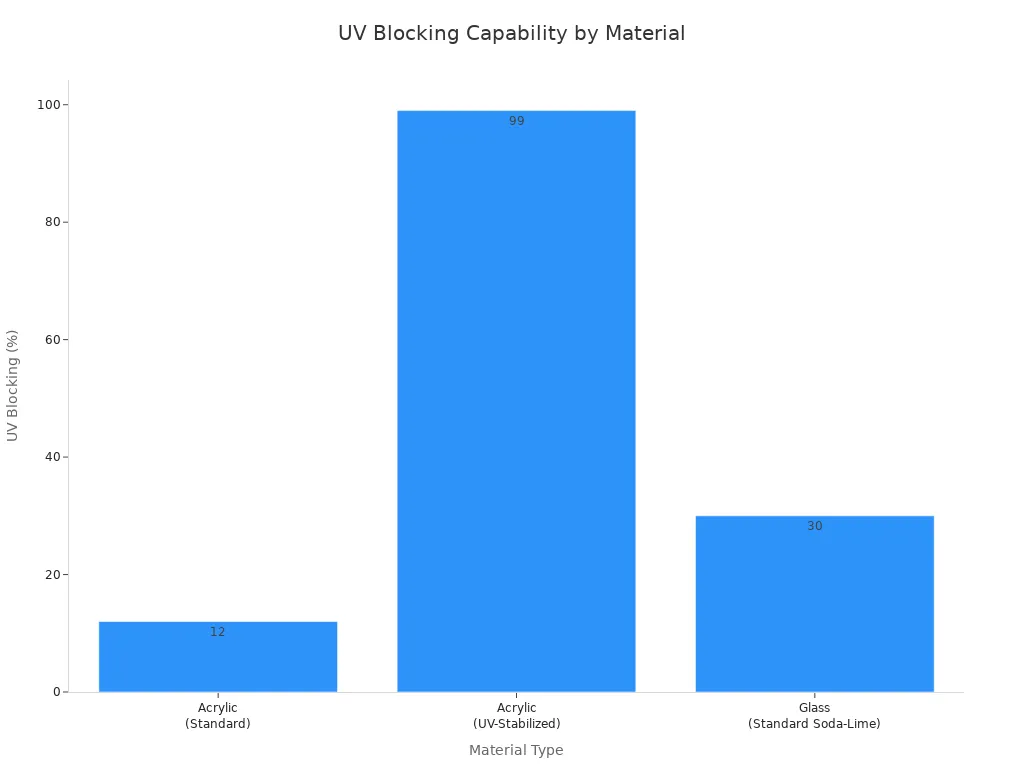
Sunlight contains ultraviolet (UV) rays that can fade your precious photos and artwork over time. Protecting them is essential. Standard acrylic provides excellent uv protection from the start. It naturally blocks over 80% of harmful UV rays. Standard picture frame glass, by contrast, allows most UVA rays to pass through.
For valuable or sentimental pieces, you can choose conservation-grade materials. Both acrylic and glass offer versions that block uv rays by up to 99%. However, modern UV-stabilized acrylic is a fantastic, sustainable option for long-term preservation.
Résistance aux rayures
When considering acrylic frames vs glass frames, scratch resistance is glass’s main advantage. On the Mohs scale of hardness, glass scores around a 6, while acrylic has a hardness of about 3. This means glass is naturally better at resisting minor scratches from everyday cleaning and handling. If maximum scratch resistance is your absolute priority, glass is the stronger contender.
However, you should know two things about acrylic:
- Special Coatings: Modern acrylic is available with abrasion-resistant coatings that significantly improve its durability against scratches.
- Reparability: You can often buff out and repair minor scratches on an acrylic surface with a simple polishing kit, restoring its clarity. You cannot repair a scratch on glass.
Overall Cost
The debate of acrylic versus glass also comes down to price. Initially, glass is often the cheaper material to buy, especially for smaller picture frames. However, the total cost is more complex.
| Material | Coût des matériaux | Shipping Cost |
|---|---|---|
| Verre | Generally less expensive | More expensive |
| Acrylique | Generally more expensive | Less expensive |
While acrylic may have a higher upfront material cost, its lighter weight leads to lower shipping fees. Its superior durability means you are less likely to spend money replacing broken frames. Over time, these factors often make acrylic a more cost-effective and environmentally responsible choice, especially for larger pieces or items that need to be shipped. It is an eco-friendly investment in protecting your art.
Which Frame to Choose: Acrylic or Glass

Deciding between acrylic versus glass depends on your specific needs. Your artwork, display location, and priorities will guide your choice. This section helps you select the perfect material for your picture frames.
When to Choose an Acrylic Frame
You should choose an acrylic frame for safety, versatility, and large displays. The advantages of acrylic make it the ideal choice in many modern situations.
- For Safety-First Environments: Acrylic is perfect for high-traffic areas or homes with children and pets. Its shatter-resistant nature prevents dangerous accidents.
- For Large or Oversized Art: The light weight of acrylic makes it much easier to hang large pieces. You will not need heavy-duty wall anchors, and shipping costs are lower.
- For Different Artwork Types: You can find an acrylic frame for any piece. Single-panel frames work for thin art, while double-panel frames secure thicker items. You can even find acrylic cases for 3D objects.
When to Choose a Glass Frame
You might prefer a glass frame for specific, traditional applications. Glass is a great option when scratch resistance is your main concern and the frame is in a secure location.
Museums and galleries often use glass for permanent exhibits. It is also the best choice for sealing humidity-sensitive art, like chalk pastels, for long-term preservation.
Choosing Between Tempered Glass and Plexiglass
When safety is a concern, the choice often comes down to choosing between tempered glass and plexiglass (acrylic). Both are stronger than standard glass. The main difference in the acrylic frames vs glass frames debate here is how they balance durability and safety. Tempered glass offers excellent scratch resistance. However, tempered glass is much heavier. Acrylic is lighter and more impact-resistant.
This table compares tempered glass and acrylic:
| Fonctionnalité | Tempered Glass | Acrylique (plexiglas) |
|---|---|---|
| Sécurité | Breaks into small, dull cubes | Highly shatter-resistant |
| Poids | Plus lourd | Léger |
| Durabilité | High scratch resistance | Scratches more easily |
| Coût | Generally more expensive | More affordable |
Tempered glass is strong, but it can shatter under enough force. Tempered glass is a good safety option, but its weight makes it difficult to handle. For most home uses, acrylic provides a better combination of safety and practicality than tempered glass.
In the acrylic frames vs glass frames debate, your choice is clear for most modern homes. The safety, light weight, and protective qualities of acrylic make it the superior option. You might still choose glass for small picture frames in secure locations where scratch resistance is the top priority. You can feel confident choosing a modern acrylic frame. It is an excellent way to protect and display your art for years to come.
FAQ
How do you clean acrylic and glass frames?
You should use a soft, microfiber cloth for both materials. For acrylic, use a special plastic cleaner or mild soap and water. You must avoid ammonia-based cleaners, like Windex, on acrylic. These harsh chemicals can damage the surface.
Is acrylic or glass more eco-friendly?
Both materials offer recycling options. The light weight of acrylic reduces fuel use during shipping. This makes it a more environmentally responsible choice for transportation. Your choice contributes to a smaller carbon footprint for larger frames.
Does acrylic turn yellow over time?
No, modern acrylic does not turn yellow. High-quality acrylic contains UV stabilizers that prevent discoloration. Your frame will maintain its crystal-clear appearance for many years, ensuring your art always looks its best.
Which material is better for valuable artwork?
You should choose conservation-grade acrylic for valuable pieces. It offers superior UV protection and is shatter-resistant. This combination provides the best defense against light damage and physical accidents, preserving your art’s condition and value.
See Also
Glass Versus Acrylic Coffee Tables: A Simple Selection Guide
Discovering the Unique Appeal of Acrylic and Glass Coffee Tables
Essential Care and Material Insights for Acrylic Glass Coffee Tables
Acrylic Boxes and Cases: Defining Their Structure and Diverse Uses
Acrylic Aquariums: Understanding Their Features, Definition, and Applications


 Français
  English
  Русский
  Deutsch
  Español
  Português
  日本語
日本語