
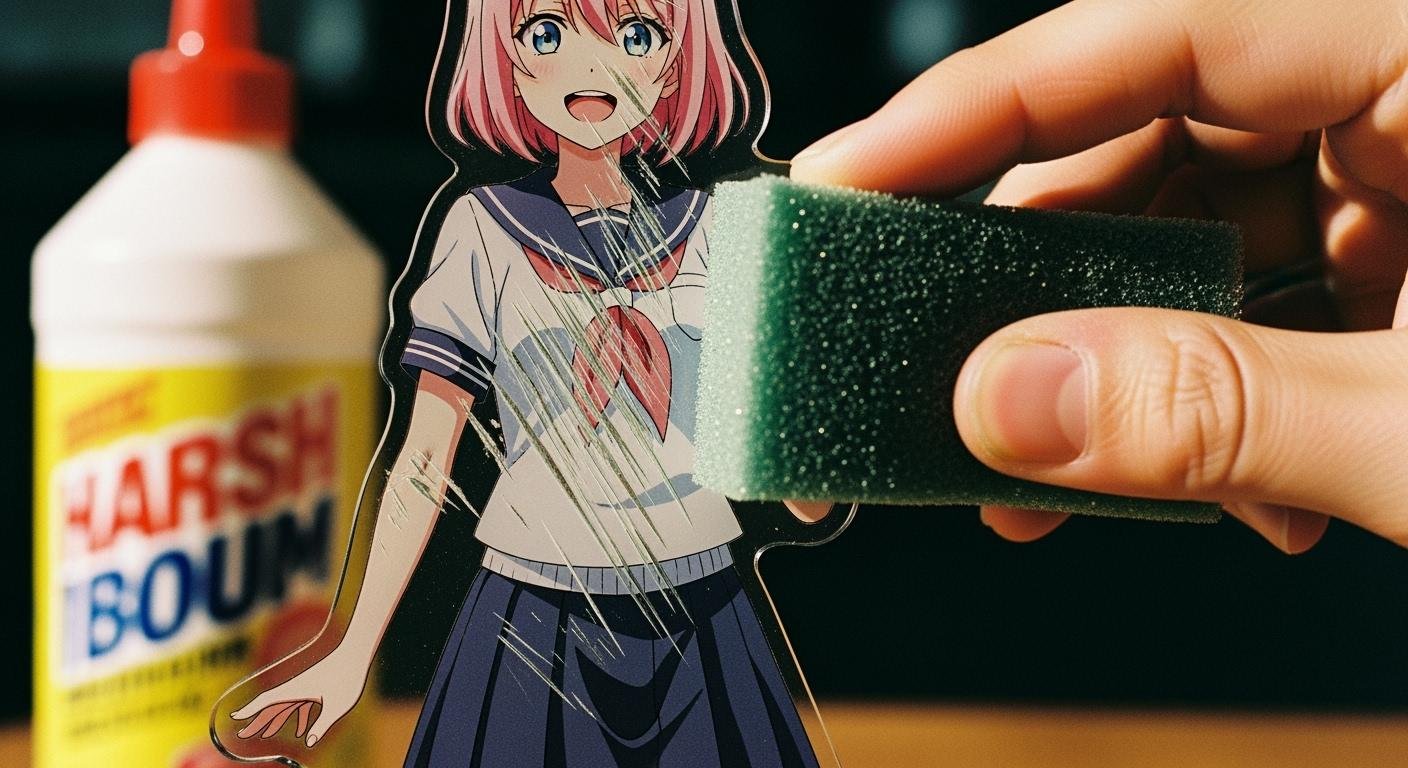
You want your acrylic standee collection to look flawless. Most damage, however, does not come from major accidents. It comes from small, common mistakes you can easily avoid. This guide helps you spot these simple errors. You will learn the correct methods to protect acrylic standees from harm.
Your goal is to prevent scratches, fading, and breakage. Following these tips ensures your collection stays vibrant and new for years.
Mistake #1: Sunlight and Heat Exposure
You might love that sunny spot in your room, but your acrylic standees do not. Placing them in direct sunlight or near a heat source is one of the fastest ways to cause irreversible damage.
The Problem: UV Fading and Warping
Direct sunlight is a major threat to your collection. Its ultraviolet (UV) rays attack the acrylic material on a molecular level. This constant exposure causes several problems:
- Discoloration: UV rays break down the pigments in the artwork. This process makes vibrant colors fade and can cause the clear acrylic itself to turn yellow over time.
- Embrittlement: Sunlight doesn’t just affect color; it weakens the acrylic’s structure. The material can become brittle, making it more likely to crack or chip from a small bump.
- Warping: Heat is another enemy. Acrylic begins to soften at temperatures between 150°F and 180°F (65°C to 82°C). A standee left in a hot, sunny window or near a radiator can easily reach this temperature, causing it to bend and warp out of shape.
The Solution: Strategic Placement and Display
You can easily prevent these issues with smart placement. The best defense is keeping your standees out of harm’s way.
Pro Tip: Your goal is a cool, stable environment. For ideal preservation, you should aim for a room with around 55% humidity and no direct sun exposure.
Consider these simple rules for displaying your collection safely.
| Do ✅ | Don’t ❌ |
|---|---|
| Display on shelves away from windows. | Place standees on a windowsill. |
| Use curtains or blinds to block direct sunlight. | Display them near heaters, radiators, or hot electronics. |
| Choose a cool room with a stable temperature. | Leave them in a car on a hot day. |
| Invest in a UV-protective display case for valuable items. | Assume a standard glass or acrylic case blocks harmful UV rays. |
For the best protection, look for display cases that are specifically designed to safeguard collectibles. You should choose cases that have built-in UV-blocking properties to prevent fading and are sealed to keep out dust. This investment provides peace of mind and keeps your standees looking brand new.
Mistake #2: Improper Cleaning Methods
You might reach for a common household cleaner to wipe away dust from your standee. This is a frequent and damaging mistake. Using the wrong chemicals or tools can cause permanent harm to the acrylic, ruining its clear and glossy finish.
The Problem: Chemical Damage and Crazing
Many cleaning products are too harsh for acrylic. Ammonia-based glass cleaners, alcohol, and other solvents can cause serious issues.
- Chemical Reactions: Ammonia-based products, like traditional Windex, trigger a chemical reaction with the acrylic. This reaction leads to permanent clouding and can weaken the plastic over time.
- Crazing: Harsh chemicals can also cause crazing. Crazing is a web of tiny cracks that forms just below the surface. It does not break the standee, but it creates a hazy, “stress-whitened” appearance that scatters light and makes the artwork look dull and foggy. This damage is irreversible.
The Solution: Safe Cleaning Agents and Tools
Protecting your standees during cleaning is easy when you use the right materials. Your most important cleaning tools are simple: a soft microfiber cloth and water. Never use paper towels or abrasive sponges, as they will leave tiny scratches.
For a clear guide, follow this list of safe and unsafe cleaning agents.
| Safe ✅ | Unsafe ❌ |
|---|---|
| Lukewarm water | Ammonia-based cleaners (e.g., Windex) |
| Mild dish soap (a few drops in water) | Alcohol or acetone |
| Specialized acrylic cleaners (e.g., Novus, Brillianize) | Abrasive powders or scouring pads |
| A clean, soft microfiber cloth | Paper towels or rough cloths |
Pro Tip 🧼: To clean your standee, first blow off any loose dust. Lightly spray a microfiber cloth with a solution of water and a drop of mild soap. Gently wipe the standee in a circular motion. Use a second, dry microfiber cloth to buff the surface until it is clear and dry.
For the best results, you can use a product made just for acrylic. Cleaners like Novus Plastic Polish are designed to clean, shine, and protect the surface without causing harm.
Mistake #3: Using Abrasive Materials
You might think a quick wipe with a paper towel is harmless. However, using the wrong material is just as damaging as using the wrong chemical. Abrasive materials create permanent damage that ruins the glossy finish of your acrylic standees.
The Problem: Micro-Scratches and Dullness
Many common cleaning items act like fine sandpaper on acrylic. You should never use items like paper towels, rough sponges, steel wool, or powdered cleansers. These materials create thousands of tiny scratches on the surface.
These micro-scratches might be small, but they have a big impact.
- Light Scattering: A smooth acrylic surface reflects light evenly, giving it a clear, glossy look. Scratches disrupt this surface. They scatter light in all directions, which creates a hazy or foggy appearance.
- Visible Haze: Even a tiny amount of scratching creates a haze that is visible to your naked eye. Rough scratches can even appear as white marks that are impossible to hide.
- Dull Finish: Over time, the buildup of these scratches makes the artwork look dull and lifeless. The once-vibrant colors will appear muted behind a damaged surface.
Abrasive cleaners and tools create grooves where dirt can get trapped. This makes your standee harder to clean in the future and dulls its shine permanently.
The Solution: Sticking to Soft Microfiber
You can easily avoid scratches by using the right tool. The only cloth you should use on your acrylic standees is a soft, clean microfiber cloth.
Microfiber is not just a soft fabric. Its design makes it perfect for delicate surfaces.
- Microscopic Fibers: Microfiber cloths have tiny, split fibers. These fibers create a huge surface area that can grab and hold onto microscopic dust and dirt particles.
- Electrostatic Properties: The fibers also have an electrostatic charge. This charge acts like a magnet, attracting and trapping dust instead of just pushing it around.
- Lint-Free Cleaning: Unlike paper towels, which leave behind fibers and can be abrasive, a quality microfiber cloth leaves nothing behind.
For best results, look for a cloth with a silky texture and a tight weave. Brands like MR.SIGA make multi-purpose microfiber cloths that are gentle enough for acrylic and will not leave lint or scratches. Always dedicate a few cloths just for your collection to avoid transferring dirt from other household chores.
Mistake #4: Careless Storage and Handling
You might have the perfect display spot, but damage often happens when standees are not on display. Careless handling and improper storage can quickly lead to permanent harm.
The Problem: Scratches, Chips, and Breakage
Most physical damage comes from how you move and store your collection. Accidental knocks in high-traffic areas can easily cause chips or cracks. Stacking standees on top of each other is another major mistake. The friction creates micro-scratches, and uneven pressure can cause the acrylic to bend. Once acrylic warps, it does not return to its original shape.
“Acrylic doesn’t ‘bend back.’ Once deformed beyond its elastic limit—even by 0.3 millimeters—the molecular chains reorient permanently. That’s why prevention, not correction, is non-negotiable.” — Dr. Lena Park, Materials Scientist
Common causes of damage include:
- Improper Handling: Picking up standees by their thin edges or printed surfaces.
- Stacking: Placing standees directly on top of one another without a protective barrier.
- Accidental Impacts: Bumping or dropping standees, especially those placed near busy walkways.
The Solution: Secure Display and Individual Storage
You can easily protect acrylic standees with mindful handling and smart storage. For items on display, consider using a secure case. Locking acrylic cases with hinged or sliding doors are excellent for safeguarding valuable items from dust and accidental bumps. These cases create a stable environment that prevents falls and unwanted handling.
When you need to store your standees, always store them individually.
- Wrap each standee in a soft microfiber cloth or an acid-free bag.
- Avoid direct contact with bubble wrap, as its chemicals can cause a hazy film on the acrylic over time.
- Store them upright in a sturdy box with dividers, or lay them flat with a soft cloth between each one.
- Keep the storage box in a cool, dry place away from extreme temperature changes to prevent warping.
By separating each piece, you prevent them from rubbing against each other and creating scratches. This simple habit keeps your collection safe when it is not on display.
Advanced Ways to Protect Acrylic Standees
You can take extra steps beyond basic care to safeguard your collection. These advanced methods offer a higher level of defense against damage and help you maintain that brand-new look. Taking these proactive measures will help you protect acrylic standees for the long term.
Applying Protective Films and Coatings
You can add a physical barrier to your standees for an extra layer of security. These coatings shield the surface from everyday hazards.
- Protective Films: Many new standees arrive with a thin PVC or plastic film. You can purchase similar films to apply yourself. This layer takes the brunt of any scratches and can be replaced if it gets damaged.
- Scratch-Resistant Coatings: For a more permanent solution, you can apply a liquid scratch-resistant coating. These products create a hard, clear layer that helps prevent minor abrasions.
- Clear Varnish: Some collectors use clear varnish on the back of non-rare standees. It is a cheap way to protect the printed side from scuffs. However, you should avoid this for valuable items, as it is a permanent alteration that can lower a collectible’s value.
Note 🛡️: Always test any coating on a small, hidden area first. This ensures it does not react poorly with the acrylic or the printed artwork.
Using Polish for Maintenance
Even with great care, fine scratches can appear over time. You can use specialized polishes to fix this minor damage and restore the original shine. These products are essential tools if you want to protect acrylic standees from looking worn.
Acrylic polishes work by gently buffing away a microscopic layer of the surface, which smooths out fine scratches and removes haziness. For minor scuffs, a quality polish can make your standee look flawless again.
| Recommended Polish Systems | Meilleur pour |
|---|---|
| NOVUS Polishing System | A multi-step kit for light to deep scratches. |
| Meguiar’s PlastX | A single-step polish for fine scratches and haze. |
| Quixx Scratch Remover | Effective at removing fine scratches and restoring gloss. |
Always follow the product’s instructions carefully. Use a clean microfiber cloth and apply gentle pressure. Regular polishing not only removes damage but also helps maintain the acrylic’s clarity and vibrant look.
You now know the biggest threats to your collection. You can easily protect acrylic standees by avoiding direct sunlight, harsh chemicals, and rough cloths. Always remember to handle your standees by their base and store them separately to prevent scratches and chips.
Following these simple rules is the key to preservation. Your effort ensures your collection stays vibrant and flawless for years to come, looking just as good as the day you got it. ✨
FAQ
Can I fix deep scratches on my standee?
You can use acrylic polish to remove very fine scratches and haze. However, deep scratches that you can feel with your fingernail are usually permanent. Prevention is the best way to keep your standees looking flawless.
Why is bubble wrap bad for storing standees?
Some bubble wrap contains chemicals that can leave a hazy film on acrylic over time. You should wrap your standees in a soft microfiber cloth or an acid-free bag first before using bubble wrap for cushioning.
How often should I clean my acrylic standees?
You should only clean your standees when they are visibly dusty or dirty. Frequent cleaning can cause wear. For regular upkeep, just use a can of compressed air to blow away dust every few weeks.
Remember 💡: Less is more. Avoid unnecessary wiping to protect the surface from micro-scratches.
Should I keep the original protective film on my standee?
The film protects the standee during shipping. You should remove it for the clearest display. If you are very worried about scratches, you can leave it on, but it will make the artwork look slightly dull.
See Also
Your Complete Guide to Acrylic Table Stands: Selection and Usage
Innovative Display Ideas: Utilizing Acrylic Table Top Stands for Showcases
Exploring Premium Acrylic Stand Tables: Design, Materials, and Craftsmanship
Debunking Acrylic Tray Myths: Simple DIY Projects for Creative Uses
Choosing and Maintaining White Acrylic Trays: A Comprehensive Cleaning Guide

 Français
  English
  Русский
  Deutsch
  Español
  Português
  日本語
日本語