
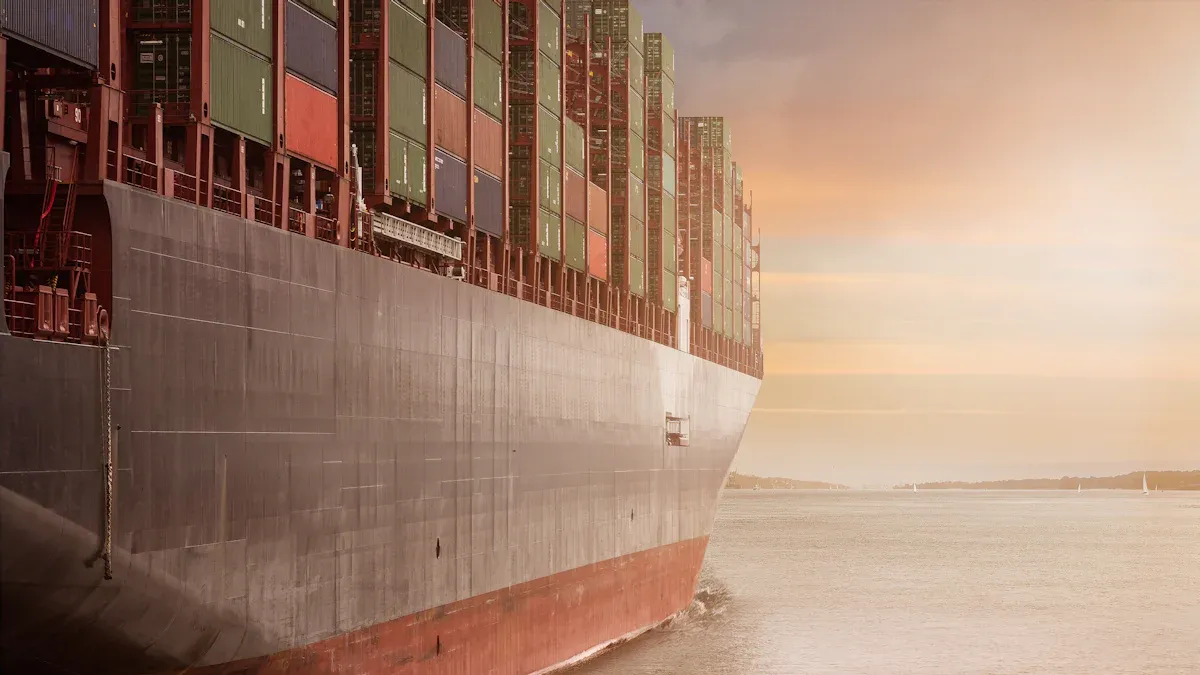
You need to ship acrylic displays. Sea freight often provides the lowest price for large orders. Air freight, however, can be the smarter choice for small or urgent shipments. The global acrylic display market is projected to grow at a compound annual growth rate (CAGR) of XX%, making accurate cost planning essential for your business.
Note: Your final decision depends on your shipment’s unique volume, weight, and urgency. This guide provides the tools to calculate the exact total landed cost, removing any guesswork from your planning.
UNDERSTANDING TOTAL LANDED COST
The price you pay your supplier is only the beginning of the story. Your true investment is the total landed cost. This figure represents the complete price of getting your acrylic displays from the factory floor in another country to your warehouse door. Understanding this number is critical for accurate budgeting and protecting your profit margins. It prevents surprise fees that can turn a profitable order into a financial loss.
THE CORE COST FORMULA
You can calculate your landed cost with a straightforward formula. This equation helps you see all expenses in one place. It moves you beyond the simple product price and gives you a complete financial picture.
Landed Cost = Product Price + Freight Cost + Customs & Taxes + Insurance + Other Fees
Each element in this formula contains multiple smaller costs. Your final calculation must account for all of them to be accurate.
BREAKING DOWN EACH COMPONENT
Let’s look at the specific expenses that make up each part of the formula. A complete cost analysis includes much more than just the product and shipping. You must account for every fee from the factory to your final destination.
Your comprehensive cost checklist should include:
- Product Cost: The price you pay the supplier for the acrylic displays.
- Freight Charges: The cost to transport your goods via air or sea.
- Customs, Duties, and Taxes: Fees your country’s government charges to import the goods. This also includes fees for the customs broker who handles the clearance paperwork.
- Insurance: The premium you pay to protect your shipment against damage or loss during transit.
- Other Fees: This category includes many smaller, often overlooked charges. You may face handling fees, documentation costs, and drayage fees (the cost of trucking from the port to your warehouse). You also face destination charges not included in your initial freight quote, such as terminal handling and cargo release fees.
SHIPPING COST: AIR VS. SEA FREIGHT
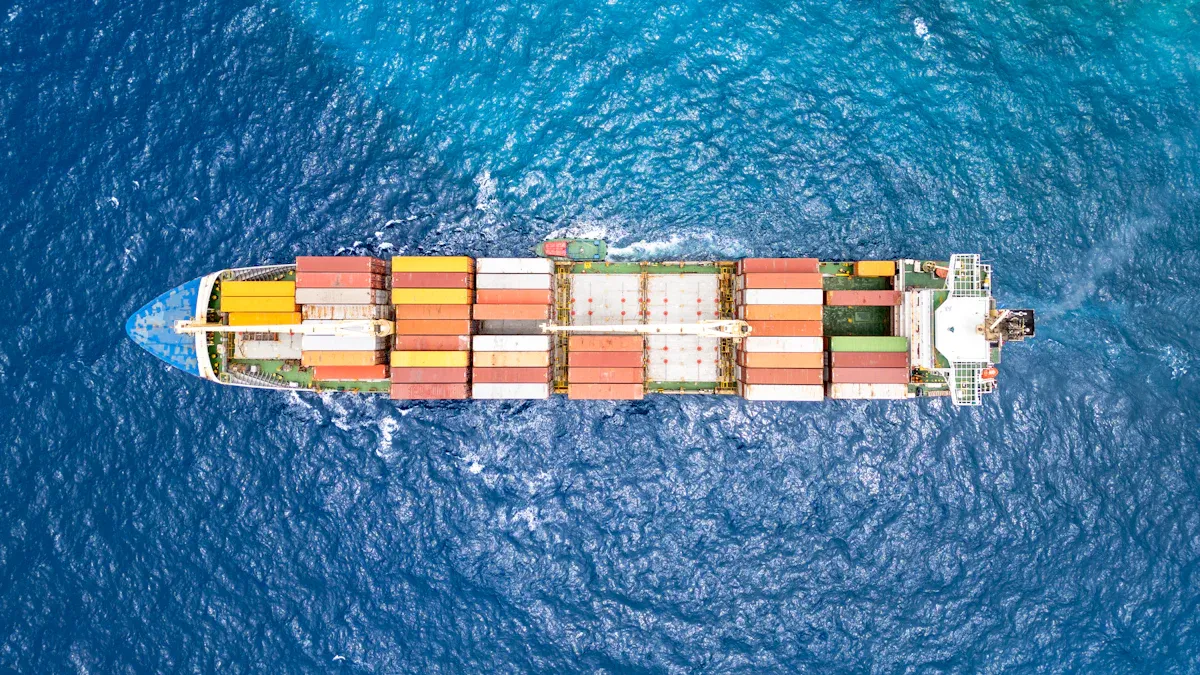
Your freight cost is the largest variable in your total landed cost equation. The choice between air and sea transport will dramatically affect your final budget. Air freight offers speed, while sea freight provides significant cost savings. You should know that air freight is considerably more expensive, generally costing about 12 to 16 times more than sea freight. This price gap exists because aircraft have much less cargo space than ships.
For a shipment from China to the USA, you can expect air freight charges to fall between $3.10 and $4.70 per kilogram. This rate changes based on the airline, route, and time of year. Understanding how each mode calculates its cost is essential for making a profitable decision.
SEA FREIGHT: LCL VS. FCL COSTS
Sea freight gives you two primary options for shipping your acrylic displays: Less than Container Load (LCL) and Full Container Load (FCL). Your choice depends entirely on your shipment’s volume.
-
Full Container Load (FCL): You rent an entire 20-foot or 40-foot container for your exclusive use. You pay a flat rate for the container, regardless of how full it is. FCL is the most cost-effective option for large orders that can fill or nearly fill a container. While market rates fluctuate daily, securing an FCL container from a major port like Shanghai provides cost certainty for high-volume shipments.
-
Less than Container Load (LCL): Your goods share container space with shipments from other companies. You only pay for the volume your cargo occupies, which is measured in Cubic Meters (CBM). For example, LCL rates on major trade lanes like Asia to Europe often range from $80 to $120 per CBM.
Pro Tip: Understanding Sea Freight’s “Weight or Measurement” For LCL, carriers charge based on what is greater: the actual weight in tons or the volume in CBM. This is called “Weight or Measurement” (W/M). Since acrylic displays are light, your cost will almost always be based on volume (CBM). The standard industry ratio is 1 CBM = 1,000 kg. If your shipment’s volume is greater than its weight based on this ratio, you pay for the space.
AIR FREIGHT: CHARGEABLE WEIGHT
Air freight pricing does not use a simple cost-per-kilogram model. Instead, carriers use a metric called chargeable weight. This is the higher value between your shipment’s actual weight and its volumetric weight.
To understand this, look at a common household item:
| Produit | Actual Weight | Volumetric Weight | Chargeable Weight |
|---|---|---|---|
| Microwave | 8 kg | 40.83 kg | 40.83 kg |
In this case, the airline charges for 40.83 kg because the item’s size is the more significant factor. Your acrylic displays will face the same calculation.
VOLUMETRIC WEIGHT EXPLAINED
Volumetric weight (or dimensional weight) is a pricing technique that uses an estimated weight based on a package’s length, width, and height. It exists because the space your cargo occupies on an aircraft is just as valuable as its physical weight. Since acrylic displays are often large but light, volumetric weight is the single most important factor driving up your air freight costs.
You can calculate the volumetric weight for your international air shipment with a standard formula. This calculation uses a 1:6 density ratio.
The Air Freight Volumetric Weight Formula
(Length x Width x Height, in cm) / 6000 = Volumetric Weight in kg
You perform this calculation for one carton and then multiply the result by the total number of cartons in your shipment.
Here are the standard industry divisors:
- 6000 cubic centimeters per kilogram
- 366 cubic inches per kilogram
- 166 cubic inches per pound
Because acrylic displays are mostly empty space packaged in large boxes, their volumetric weight will almost certainly be much higher than their actual weight. This is why a small, seemingly light order can become surprisingly expensive to ship by air. You must calculate this figure accurately to avoid unexpected charges that can erase your profit margin.
CALCULATING CUSTOMS, DUTIES & TAXES

After freight, your next significant expense is customs. Every country charges fees to import goods. These duties and taxes are non-negotiable and are a critical part of your total landed cost. You must calculate them correctly to create an accurate budget and avoid legal penalties. The process involves finding a specific product code and applying the correct tax rate.
FINDING YOUR HS CODE
Every product in the world has a Harmonized System (HS) code. This universal code tells customs officials exactly what you are importing. The HS code for your acrylic displays determines the duty rate you will pay. Misclassifying your products can lead to fines and shipment delays.
For acrylic displays, the correct HS code falls under Chapter 39, which covers plastics and articles thereof. Your specific code will likely be a variation of:
HS Code:
3926.90– Other articles of plastics
You will use this code to find the exact duty percentage for your shipment.
APPLYING DUTY & TAX RATES
Once you have the HS code, you can determine the duty and tax rates. This step can be complex, which is why most businesses hire a customs broker. A customs broker is a licensed professional who manages the entire customs clearance process for you. Their job is to ensure your shipment complies with all regulations.
A broker handles several critical tasks:
- Tariff Classification: They use the HS code to find the correct duties and taxes.
- Documentation and Compliance: They prepare and submit all required paperwork, such as the commercial invoice, bill of lading, and packing list.
- Payment of Duties: They calculate and pay all government fees on your behalf to prevent delays.
- Customs Clearance: They communicate with customs officials and coordinate any necessary inspections.
For acrylic products entering the U.S., you must also provide a TSCA Certification. This document certifies that the chemical substances in your products comply with the Toxic Substances Control Act. Your broker will manage this filing for you, ensuring a smooth and compliant import process.
ACCOUNTING FOR RISK & OVERHEAD
Your landed cost calculation is not complete without accounting for risk and overhead. These final expenses cover everything from potential damages to the cost of time itself. Factoring them in gives you a true financial picture and protects your business from unexpected budget shortfalls.
CARGO INSURANCE COSTS
Acrylic displays are fragile. You must purchase cargo insurance to protect your investment from damage or loss during transit. While sea freight is often cheaper, it can expose your goods to more handling and harsher conditions. Air freight offers a more secure environment but at a premium price.
Pro Tip: For fragile goods, all-risk cargo insurance is a wise investment. You can expect to pay between 0.5% and 2% of your shipment’s commercial value for this comprehensive coverage. This small cost protects you from a total loss.
LAST-MILE DELIVERY FEES
Your freight quote often ends at the destination port or airport. You still need to pay for the final leg of the journey to your warehouse. This is known as last-mile delivery or drayage. These fees can vary significantly based on several factors:
- Distance and Location: The mileage from the port to your warehouse is the primary cost driver. Deliveries in congested urban areas like Los Angeles or New York City will cost more.
- Container Size: A standard 20-foot container is cheaper to move than a larger 40-foot container.
- Fuel Surcharges: Trucking companies add fuel surcharges that fluctuate with market prices.
- Port Congestion: High traffic at the port leads to longer wait times and higher drayage fees.
THE COST OF TIME: LEAD TIME IMPACT
Time is a hidden cost in logistics. The longer your products are in transit, the longer your capital is tied up in inventory you cannot sell. This directly impacts your cash flow and profitability.
You must compare the transit times for each shipping method.
- ✈️ Air Freight: 3 to 7 days
- 🚢 Sea Freight: 20 to 40 days
Choosing sea freight saves money on shipping, but it increases your inventory holding costs. You have to pay for storage and labor for a longer period while waiting for the goods to arrive. You must balance the freight savings from sea shipping against the cost of this extended lead time.
THE LANDED COST CALCULATOR
Theory and formulas provide a foundation. A practical calculator, however, turns those concepts into a powerful decision-making tool. This section gives you a worksheet to organize your expenses and a real-world example. You can see exactly how air and sea freight costs stack up for a typical acrylic display shipment. This process removes all guesswork from your budget.
A PRACTICAL WORKSHEET TEMPLATE
You need a clear way to track every expense. A simple worksheet is the best tool for this job. It organizes your costs into logical categories, ensuring you do not miss any hidden fees. You can build your own in a spreadsheet or use a pre-made template.
For example, you can find a free Landed Cost Calculation Template in Excel format from sources like Eloquens. These tools are designed to help you accurately compute international trade costs.
Below is a basic template you can copy and use for your own calculations. It covers all the essential components of your total landed cost.
| Cost Component | Details / Notes | Cost (USD) |
|---|---|---|
| 1. Product Cost | Price per unit x Number of units | $ |
| 2. Freight Cost | Air or Sea freight quote | $ |
| 3. Customs & Taxes | (Product Cost + Freight + Insurance) x Duty Rate | $ |
| • Customs Broker Fee | Flat fee for clearance services | $ |
| 4. Insurance | Commercial Value x Insurance Rate (e.g., 0.6%) | $ |
| 5. Other Fees | ||
| • Last-Mile Delivery | Trucking from port/airport to warehouse | $ |
| • Destination Charges | Terminal handling, documentation fees | $ |
| TOTAL LANDED COST | Sum of all costs above | $ |
A SIDE-BY-SIDE COST COMPARISON
Now, let’s use the worksheet to compare a real-world scenario. This example will show you the dramatic cost difference between shipping methods.
📦 Shipment Scenario:
- Product: 500 acrylic lipstick displays
- Product Cost: $10 per unit ($5,000 total)
- Packaging: 50 cartons (10 units per carton)
- Carton Dimensions: 50cm x 40cm x 30cm
- Actual Weight: 5 kg per carton (250 kg total)
First, we must calculate the chargeable weight for air and the volume for sea.
-
✈️ Air Freight Calculation:
- Volumetric Weight per Carton:
(50 x 40 x 30) / 6000 = 10 kg - Total Chargeable Weight:
10 kg x 50 cartons = **500 kg**(This is higher than the 250 kg actual weight)
- Volumetric Weight per Carton:
-
🚢 Sea Freight Calculation:
- Volume per Carton:
0.5m x 0.4m x 0.3m = 0.06 CBM - Total Volume:
0.06 CBM x 50 cartons = **3 CBM**
- Volume per Carton:
Now we can fill in the worksheet with estimated costs for both methods.
| Cost Component | Air Freight Cost ✈️ | Sea Freight Cost 🚢 |
|---|---|---|
| 1. Product Cost | $5,000.00 | $5,000.00 |
| 2. Freight Cost | $2,250.00 (500 kg @ $4.50/kg) | $360.00 (3 CBM @ $120/CBM) |
| 3. Customs & Taxes | $448.50 (6% of CIF Value) | $333.78 (6% of CIF Value) |
| • Customs Broker Fee | $175.00 | $175.00 |
| 4. Insurance | $43.50 (0.6% of CIF Value) | $33.38 (0.6% of CIF Value) |
| 5. Other Fees | ||
| • Last-Mile Delivery | $250.00 | $450.00 |
| • Destination Charges | $100.00 | $250.00 |
| TOTAL LANDED COST | $8,267.00 | $6,602.16 |
The final numbers reveal a clear winner on price. The total landed cost for sea freight is $1,664.84 cheaper than air freight for this shipment. The primary driver of this difference is the freight cost itself, where the bulky nature of the displays heavily penalizes the air shipment via volumetric weight. This side-by-side comparison gives you the hard data needed to make a confident, profitable decision.
Your shipping decision framework is now straightforward. You can choose the best method for your specific needs.
- 🚢 Sea Freight: Use this for planned, large-volume orders to maximize your savings.
- ✈️ Air Freight: Opt for this when speed is the priority for urgent or small-batch shipments.
The calculated total landed cost is the ultimate data point for making a confident and profitable choice. Use the provided worksheet for your next acrylic display shipment. This simple action will help you avoid budget overruns and secure your profit margin.
FAQ
Why do I need a customs broker?
You hire a customs broker to navigate complex import laws. They ensure your acrylic displays have the correct HS code and that you pay the right duties. This service prevents costly delays, fines, and compliance issues at the border.
Is “free shipping” from my supplier truly free?
“Free shipping” is rarely free. Suppliers often add the freight cost to your product’s unit price. You lose control over the shipping process and may pay more. Calculating your own landed cost gives you true price transparency.
When does air freight become the better choice?
✈️ You should choose air freight for urgent deadlines or high-value product launches. It is also ideal for small, lightweight sample orders. The speed of air transport can justify the higher cost when time is your most critical factor.


 Français
  English
  Русский
  Deutsch
  Español
  Português
  日本語
日本語