
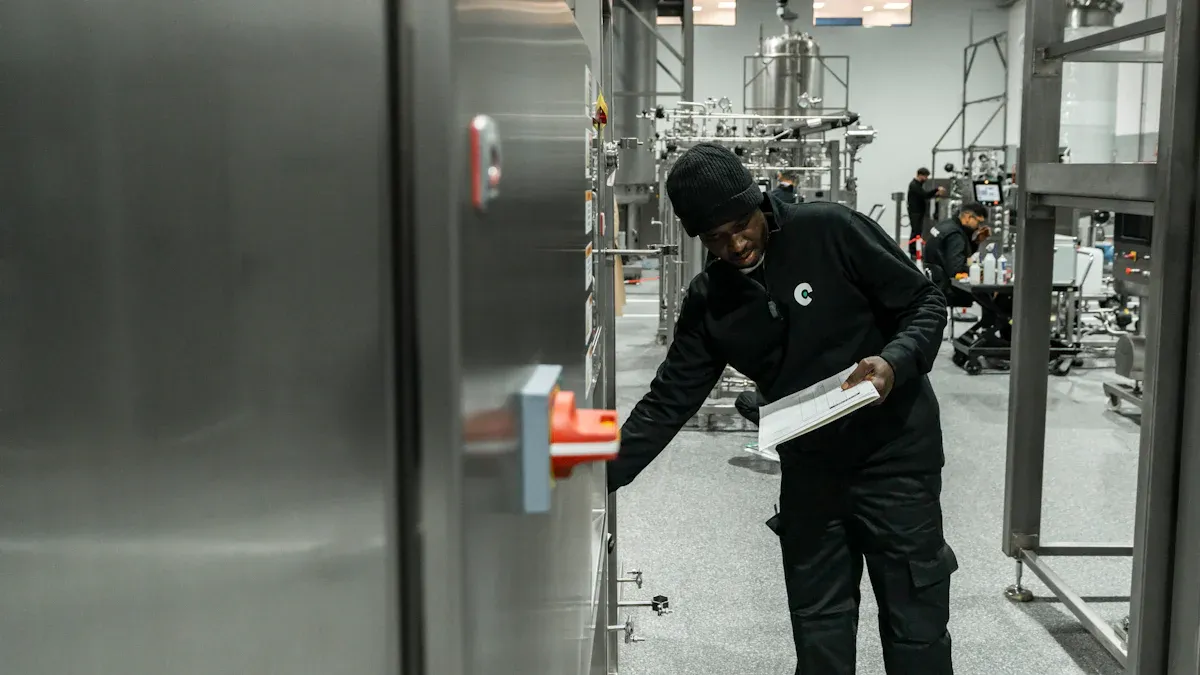
You selected an ISO9001/WCA certified acrylic OEM. This positive sign can speed up approvals. A certificate, however, does not replace a targeted audit for specialized food and bakery fixtures. Your audit confirms a factory’s real-world ability to complete orders to your stringent requirements.
This process verifies that a supplier’s quality and safety practices move beyond the certificate on the wall, ensuring they can meet your specific production needs. ✅
Auditing Your ISO9001/WCA Certified Acrylic OEM
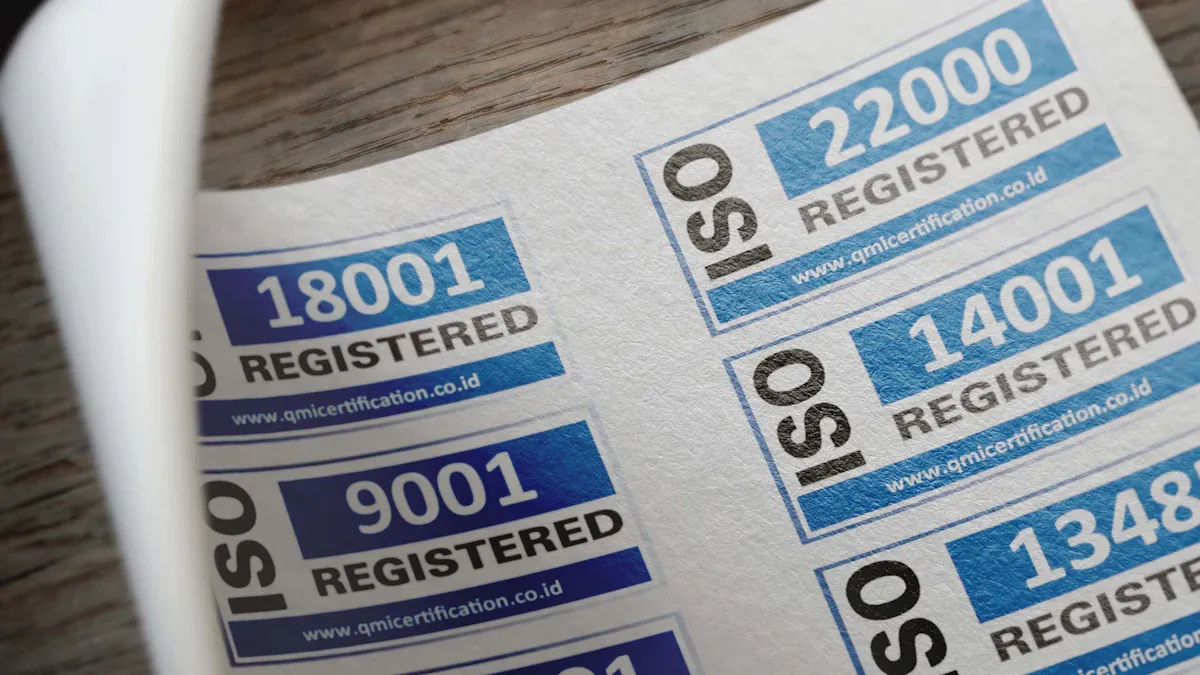
A certificate signals a commitment to quality, but your audit verifies it. This initial phase focuses on document verification. You confirm the paperwork is authentic and aligns with your specific needs before you even step foot in the factory. This homework ensures your on-site assessment of the ISO9001/WCA certified acrylic OEM is efficient and targeted.
Confirm Certificate Validity
First, you must confirm the certificates are real. A genuine ISO 9001 certificate comes from a body accredited by an official organization like ANAB (US) or UKAS (UK).
To verify an ISO 9001 certificate:
- Find the accreditation body’s logo on the certificate.
- Visit that body’s website (e.g., ANAB or UKAS).
- Use their online database to search for the factory by name or certificate number.
- Confirm the certificate status is “valid.”
For WCA reports, you can verify them through Intertek’s Global Supply Chain Compliance (GSCC) platform. This system tracks audit activities and supplier performance.
Review Quality and Safety Documentation
Next, you review the factory’s full Quality Manual. Pay close attention to their documented processes. Look for ISO 9001:2015 Clause 8.5.2 (Identification and Traceability). This clause is critical. It shows how the factory tracks raw materials from receiving through production to final delivery, which is essential for food-contact items.
You should also review the full WCA audit report. Focus on these key areas:
- Health & Safety: Assesses workplace safety protocols.
- Corrective Action Planning: Details how the factory addresses and fixes past issues.
This review tells you how the factory handles non-conforming products and improves its systems.
Define Your Audit Criteria
Finally, you define your specific standards. General certifications do not cover the unique demands of food and bakery fixtures. Create a checklist for your ISO9001/WCA certified acrylic OEM that includes your non-negotiable requirements.
Your criteria should include:
- Acrylic Grade: You must verify the use of cell-cast acrylic for its superior durability and clarity.
- Seam & Joint Strength: Joints should feel solid with no give. A quality capillary cement bond is invisible and strong.
- Chemical Resistance: Test a sample with isopropyl alcohol. Look for tiny cracks (crazing) or cloudiness, which indicate poor quality.
On-Site Factory Assessment

Your document review is complete. Now you move from paper to practice. The on-site assessment is where you verify that the factory’s documented procedures translate into real-world quality. You will walk the factory floor to evaluate their Quality Management System (QMS) in action, from raw material handling to final packaging. This physical inspection confirms the ISO9001/WCA certified acrylic OEM can produce fixtures that meet your stringent food-safety and durability standards.
Material Receiving and Storage
Your assessment begins where the materials arrive. The quality of the final product depends entirely on the quality of the raw acrylic. You must confirm the factory handles and stores these materials correctly to prevent degradation.
First, check the physical storage environment. Proper conditions are non-negotiable.
- Temperature Control: The storage area should be a climate-controlled room. Look for temperatures between 60-80°F (16-27°C). This prevents warping from thermal stress.
- Humidity Levels: Ask about humidity control. Relative humidity should stay between 45-55% to protect the acrylic’s surface quality.
- Light Exposure: Verify that sheets are stored away from direct sunlight. UV radiation can cause yellowing and make the material brittle over time.
- Cleanliness: The area must be clean and free from dust or chemical vapors that could react with the acrylic.
Next, you need to verify their traceability system. For food-contact items, knowing the material’s origin is critical.
Traceability Checklist ✅
Ask to see their inventory system. It must track each batch of food-grade acrylic from receiving to production. Look for:
- Unique Batch Numbers: Each shipment of acrylic sheets must have a unique batch number assigned upon arrival.
- Detailed Records: The system should link this batch number to the supplier, delivery date, and material specifications.
- Batch Production Record (BPR): When a sheet enters production, its batch number must be recorded in the BPR for that specific job. This creates an unbroken chain of custody.
This process ensures that only approved, food-grade materials are used for your fixtures.
Production Line and Processes
Now you will walk the production line. Observe each step to identify potential risks to quality and safety. Pay close attention to details specific to food and bakery fixtures.
Your inspection should focus on these key areas:
- Cutting and Machining: Look at the equipment. Are the cutting tools sharp? High-quality, diamond-tipped blades produce smooth, clean edges. Check the laser cutting area. You must see a dedicated fume extraction system in place. This is essential to remove fumes at the source and prevent toxic residue from contaminating the workspace or the acrylic itself.
- Bonding and Adhesives: Ask what type of adhesive they use. For food displays, they must use a food-safe adhesive. Verify this by checking the product’s technical data sheet. The joints themselves should be tested for strength. While you may not conduct a formal test, ask how they validate bond integrity.
- Polishing and Finishing: Inspect finished or in-process parts. The surfaces must be perfectly smooth and easy to clean. This is a critical sanitary design feature. Most importantly, confirm their process for removing all polishing compound residue from food-contact surfaces. Any leftover compound is a contaminant.
- Worker Safety and Competency: Observe the operators. Are they using appropriate Personal Protective Equipment (PPE), such as safety glasses and gloves? Competent, well-trained employees are a core part of any effective QMS.
Quality Control and Inspection
A strong factory does not wait until the end to check for problems. Quality control (QC) should be integrated throughout the entire manufacturing process. Ask to see their QC records and observe inspectors at their stations.
A robust QC process for an ISO9001/WCA certified acrylic OEM includes multiple checkpoints:
| Inspection Stage | What to Look For |
|---|---|
| 1. Raw Material Inspection | Verify they inspect incoming acrylic sheets for defects like scratches or bubbles before they enter production. |
| 2. First-Piece Inspection | Before starting a mass run, they must inspect the very first unit against the design specifications. This catches setup errors early. |
| 3. In-Process Inspection | Operators and QC staff should check dimensions, edge quality, and joint integrity at various steps along the production line. |
| 4. Final Product Inspection | Before packaging, every single fixture should be inspected for appearance, dimensions, and cleanliness. |
When a defect is found, the factory’s response reveals the true strength of its QMS. According to ISO 9001 standards, they must have a clear procedure for handling non-conforming products. You should see them:
- Segregate the defect: The faulty part is immediately removed from the production line and tagged to prevent accidental use.
- Perform Root Cause Analysis (RCA): They investigate why the error happened.
- Implement Corrective Action (CAPA): They fix the root cause to prevent it from happening again.
Ask to see their Non-Conformance Reports (NCRs) to confirm this process is documented and followed. For measuring dimensions, look for the use of precise digital tools like ultrasonic thickness gauges, not just manual tape measures.
Packaging and Shipping
The final step of your on-site assessment is evaluating how they protect the finished product. Excellent fixtures can be ruined by poor packaging. This is especially true for acrylic, which can scratch or break easily.
Inspect their packaging station and review their standard procedures. A reliable process includes several layers of protection:
- Surface Protection: Each fixture should be covered in a protective film or foam sheet to prevent scratches.
- Cushioning: The item is then wrapped in bubble wrap or fitted with custom foam inserts to absorb shocks during transit.
- Secure Placement: The product must fit snugly inside a sturdy, double-walled cardboard box. Any empty space should be filled to prevent movement.
- Clear Labeling: The final package must be securely sealed and clearly labeled with handling instructions like “Fragile” or “Handle with Care.”
This diligent approach to packaging ensures your fixtures arrive at their destination in perfect condition, ready for use.
Post-Audit Review and Action Plan
Your on-site assessment is complete. Now you must translate your findings into a structured plan. This post-audit phase ensures that all identified issues are formally documented, addressed, and resolved. It transforms your audit from a simple inspection into a powerful tool for continuous improvement.
Compile the Audit Report
First, you compile all your notes into a formal audit report. This document serves as the official record of your findings and provides a clear basis for discussion with the factory. A professional report gives your feedback credibility and structure.
Your report should include these key sections:
- Title Page: Clearly state the report title, the factory’s name, and the audit date.
- Audit Scope and Objective: Define exactly what you assessed (e.g., “Production of food-grade acrylic fixtures”) and your goal.
- Management Summary: Provide a high-level overview of the most critical findings for executives.
- Detailed Findings: Document each observation, linking it to specific evidence like photos or records.
Develop a Corrective Action Plan
Next, you work with the factory to create a Corrective Action Plan (CAP). This plan details how they will fix any non-conformances. You should document each issue using a clear “should be/as found” format. For example, “The procedure should be to use food-safe adhesive; as found, a non-specified adhesive was used on the line.”
You must classify each finding by its risk level to prioritize actions.
| Criteria | Minor Non-Conformance | Major Non-Conformance |
|---|---|---|
| Impact | Low risk to product quality | High risk to product safety or function |
| Action Required | Can be corrected quickly | Needs formal investigation and CAPA |
An effective CAP requires collaboration. It must define clear ownership for each task, set realistic timelines, and use Key Performance Indicators (KPIs) to measure success.
Schedule Follow-Up Verification
Finally, you schedule a follow-up to verify the changes. A plan is useless without confirmation that it worked. The timeline depends on the severity of the findings.
- Major Issues: You should expect the factory to submit a CAP within 30 days.
- Minor Issues: You can typically allow up to 90 days for the factory to implement and confirm the fix.
This final step closes the loop, ensuring the ISO9001/WCA certified acrylic OEM has truly integrated your standards into their processes.
A thorough audit transforms a general certification into a confirmed capability. You move beyond the certificate on the wall to verify real-world quality. By executing the pre-audit, on-site assessment, and post-audit follow-up, you create a clear, documented standard for your fixtures. This diligence delivers a significant return, with detailed supplier audits showing an ROI of over 300%. Ultimately, this process protects your brand and builds a reliable supply chain with your ISO9001/WCA certified acrylic OEM.
FAQ
What if a factory’s certificate is not valid?
You should stop the audit process immediately. An invalid certificate is a major red flag 🚩. It signals a serious lapse in their quality system or a misrepresentation of their credentials. You should not proceed with this supplier until they provide valid documentation.
Can I skip the on-site audit if the documents look good?
You should not skip the on-site audit. Documents show intent, but the physical assessment verifies practice. You must confirm their processes match their paperwork. This ensures they can meet your specific quality and safety standards for food-contact items.
What is the most critical item to check for food fixtures?
You must verify the use of food-safe materials. This includes both the acrylic grade and the adhesives used for bonding. Ask for technical data sheets to confirm compliance. Material safety is the most critical factor for fixtures that contact food.
How often should I re-audit my supplier?
You should re-audit your supplier annually. Regular audits ensure they maintain your standards over time. This practice also helps you identify any process changes that could impact product quality or safety. It keeps your partnership strong and reliable.

 English
  Français
  Русский
  Deutsch
  Español
  Português
  日本語
日本語