一文の定義
Solvent cementing is a process that joins thermoplastic materials—such as acrylic—by softening their surfaces with a solvent, allowing them to fuse at the molecular level and form a seamless, high-strength bond.
詳細説明
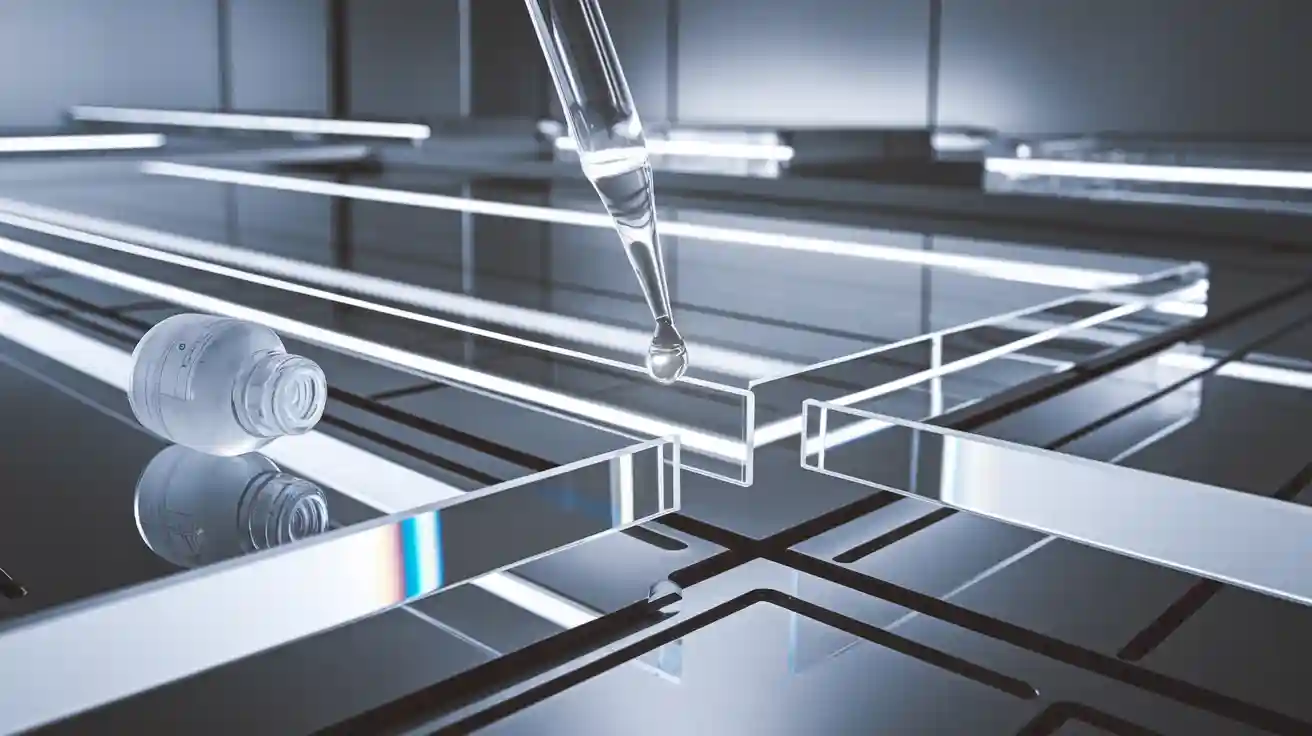
Unlike traditional gluing, solvent cementing does not simply stick two surfaces together. Instead, a suitable solvent (commonly methylene chloride-based for acrylic) is applied to the edges of the parts. This solvent temporarily softens and partially dissolves the acrylic surfaces. When the pieces are pressed together, their polymer chains interdiffuse. As the solvent evaporates, the joint solidifies into a single, continuous piece of acrylic, resulting in a bond that is as strong and clear as the original material (ScienceDirect).
Key Components of Solvent Cementing
- Solvent Selection: For acrylic, methylene chloride-based cements (like Weld-On #3 or #16) are industry standards (Delvie’s Plastics).
- Edge Preparation: Clean, smooth, and stress-free edges are essential for a strong, bubble-free joint.
- Application Method: Solvent is typically applied using a needle applicator, relying on capillary action to draw the liquid into the joint.
- Curing: Initial handling strength is achieved in 30 minutes to 3 hours; full strength develops in 24–48 hours.
- Safety: Always work in a well-ventilated area, avoid skin contact, and keep away from open flames, as solvents are volatile and flammable.
実世界での応用
Solvent cementing is the preferred method for assembling acrylic display stands, storage boxes, protective covers, trays, and custom furniture. For example, at Toyin Acrylic Products Co., Ltd. (TOYIN), this technique enables the creation of high-precision, seamless joints in custom acrylic products. The result is a visually flawless, durable connection—ideal for retail, office, and home applications where clarity and strength are paramount.
Process Overview (Visual Aid Suggestion):
- Prepare and clean the acrylic edges.
- Align the parts and secure them in place.
- Apply solvent cement along the joint using a fine applicator.
- Hold the assembly steady for initial set.
- Allow to cure fully for 24–48 hours for maximum strength and clarity.
関連概念
- Adhesive Bonding: Uses a separate glue layer, not molecular fusion.
- Thermal Bonding: Joins plastics using heat rather than solvents.
- アクリル加工: Encompasses all processes for shaping and assembling acrylic, including solvent cementing.
- Cyanoacrylate Bonding: Sometimes used for quick fixes, but lacks the clarity and strength of solvent cementing.
Common Issues and Safety Tips
- Bubbles or White Marks: Usually caused by trapped air or excess moisture—ensure edges are dry and solvent is applied evenly.
- Crazing (Microcracks): Can result from excessive stress or using the wrong solvent; always use recommended products and techniques.
- Ventilation: Essential to avoid inhaling fumes; use protective gloves and eyewear.
For custom, high-precision acrylic products manufactured with expert solvent cementing, explore TOYIN’s solutions or contact us for a quote today!

 日本語
日本語  English
  Français
  Русский
  Deutsch
  Español
  Português