Acrylic vs. Polystyrene: Which Material Should You Choose for Custom Displays and Organizers?
ローランス、フィオナ
目次
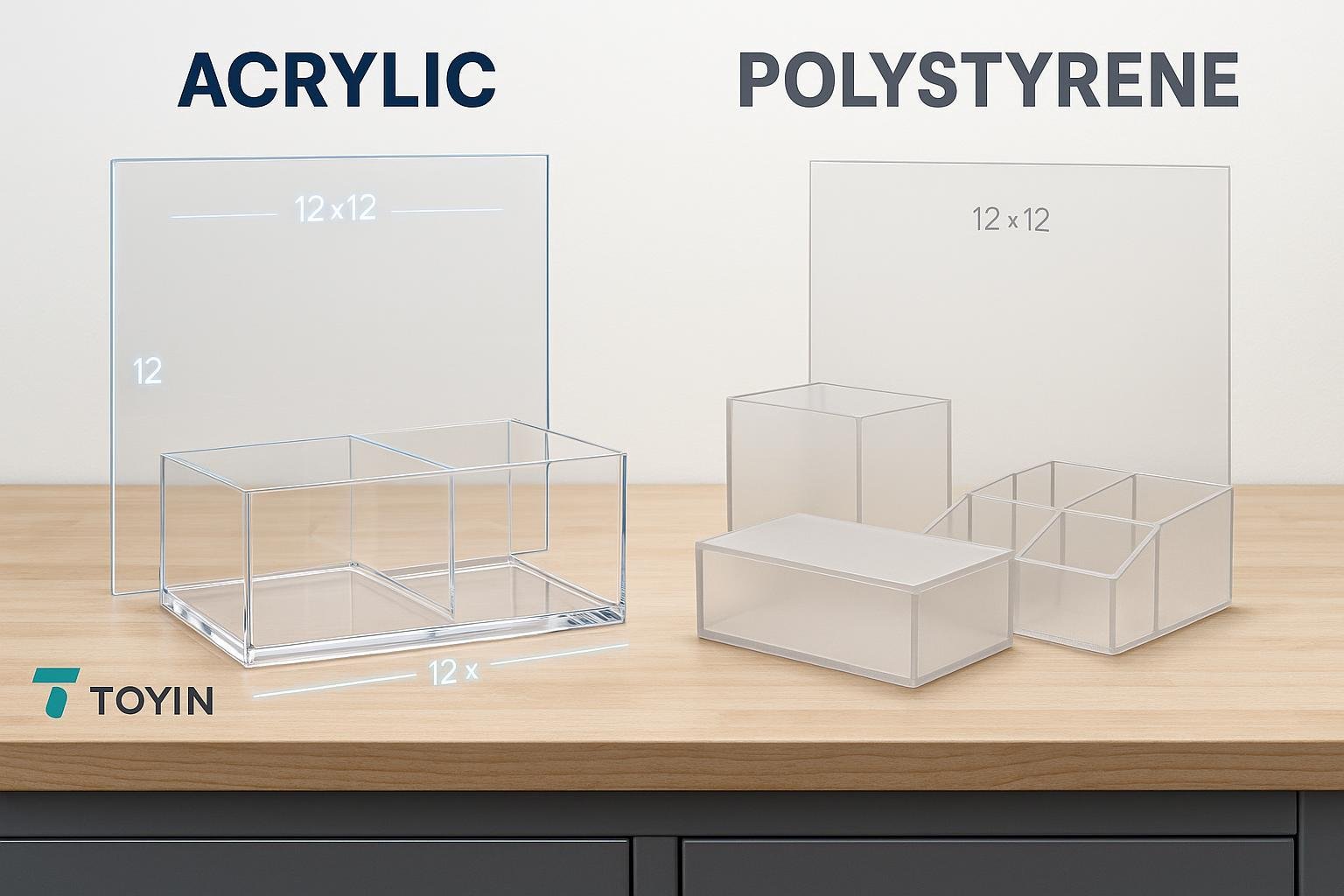
When selecting materials for custom display cases, high-visibility organizers, or branded furniture, the choice between acrylic (PMMA) and polystyrene can significantly impact aesthetics, durability, cost, and sustainability. Whether you are a retail brand, designer, OEM, or individual seeking flawless presentation and lasting quality, understanding the differences empowers you to make the right decision for your project goals.
Material Overview: Acrylic and Polystyrene in Context
Acrylic (PMMA) is renowned for its crystal-clear appearance, robust mechanical properties, and versatility in fabrication. Leading manufacturers specialize in custom acrylic solutions, delivering high transparency, precision, and eco-friendly manufacturing for premium applications.
Polystyrene offers an economical, lighter alternative commonly used in mass-market, temporary, or budget-focused displays. Though easier to source and process in bulk, polystyrene’s mechanical limits and reduced clarity make it less suited for demanding custom projects.
Acrylic vs. Polystyrene: Symmetrical Comparison Across Key Dimensions
1. Transparency and Clarity
プロパティ
Acrylic (PMMA)
Polystyrene
光伝送
92%
88–90%
Gloss Finish
High
Moderate
Clarity Over Time
Retains clarity
Prone to yellowing
User Feedback
“Crystal clear”
“Noticeably foggy”
アクリル delivers industry-leading clarity ideal for luxury or branded displays (Source).
Polystyrene is adequate for basic visibility but often dulls or yellows over time, especially under UV exposure.
2. Strength and Durability
プロパティ
アクリル
Polystyrene
Tensile Strength
~65 MPa (9400 psi)
32–40 MPa
Impact Strength
16 kJ/m² (Charpy)
3–6 kJ/m² (Charpy)
Aging/Yellowing
Minimal
Significant
耐スクラッチ性
Good
Poor
アクリル withstands moderate impact and resists scratching better than polystyrene—displays typically last 5–10+ years (Source).
Polystyrene breaks more easily and ages faster; best for short-term uses.
3. Ease of Fabrication
Metric
アクリル
Polystyrene
Machining
Laser, CNC, polish
Simple cut, score
Forming
Thermoform, glue
Thermoform, glue
Customization
High (complex shapes, edge finish)
Basic shapes
Finish Quality
Premium
Utility-oriented
アクリル excels in custom machining: flawless edges, complex designs, and high-quality surface finishing are achievable.
Polystyrene is easier for basic cut-and-stick assembly, but struggles with intricate forms or premium finishes.
4. Chemical Resistance and Cleaning
特徴
アクリル
Polystyrene
Resistance to Cleaners
Mild/alcohol OK
Many solvents attack
Food Contact Suitability
FDA approved (PMMA)
Limited
耐紫外線性
素晴らしい
Poor
アクリル tolerates mild cleaners and alcohol, and is approved for food contact (ISO/REACH compliance).
Polystyrene cannot endure many common cleaners (solvents, strong alcohol), limiting its safe cleaning options and suitability for displays requiring frequent sanitation.
5. Cost Comparison
Cost Factor
アクリル
Polystyrene
Typical Sheet Price (US, 24×24”)
$10–25+
$3–8
Value-for-Money
Premium, long-lasting
Economy, short-term
Bulk Purchase/Custom
Competitive via quote
Standard
Polystyrene is significantly cheaper upfront, often chosen for disposable or budget-constrained projects.
Acrylic’s price is higher per sheet/sq ft but returns greater value in high-profile or extended-use settings.
6. Environmental Impact
Impact Metric
Acrylic (PMMA)
Polystyrene
Recyclability
Fully recyclable (some limitations)
Recyclable, lower rates
Eco-friendly Options
Available
Limited
Lifecycle Duration
Long (5–10+ years)
Short (1–2 years)
Toxicity
Low (no BPA, safe for displays)
Moderate (can leach styrene)
アクリル offers recyclable options, longer lifecycle, and often eco-friendly manufacturing. Pyrolysis/depolymerization advances are increasing circularity.
Polystyrene struggles with lower recycling rates and environmental concerns around its post-consumer waste. It yellowing and frequent replacement also contribute to higher lifecycle footprint.
7. Typical Applications: Which Material Fits Your Project?
Application Type
アクリル
Polystyrene
Luxury/Brand Displays
Preferred
Not recommended
Retail Organizers
High-end, long-term
Short-term, basic
Furniture
Clear, durable options
Rare, often fails
Event Booths
Premium look, reuseable
Cheap, disposable
Food Contact/Gifts
Suitable (FDA)
Not ideal
Outdoor Signage
UV/weather resistant
Yellows, cracks
Scenario-Based Decision Guide
When Should You Choose Acrylic?
You require lasting clarity, premium brand feel, and reliable durability for high-profile retail displays or office installations.
Your project demands complex shapes, precision finishing, or custom sizes (specialized manufacturers can provide these capabilities).
Sustainability and lifecycle impact are important considerations.
When to Opt for Polystyrene?
Budget and short-term utility are your primary concern (pop-up events, temporary organizers, lightweight craft projects).
Visibility and finish are less critical, and replacement is expected within 1–2 years.
Lowest material cost trumps durability or aesthetics.
Real-World Application Scenarios
Branded Store Display: Acrylic recommended for high-impact, scratch-resistant showcase; maintains gloss and clarity for multiple seasons, supporting upscale branding.
Expo Organizer for Crafts: Polystyrene may suffice for temporary, low-value displays where rapid assembly and minimal cost matter most.
Luxury Furniture: Custom acrylic offers superior strength, finish, and design flexibility—ideal for modern retail and public venues.
The Manufacturing Advantage for Custom Acrylic Projects
Leading custom acrylic manufacturers provide:
Precision Fabrication: Achieve tight tolerances, flawless edges, and intricate designs for luxury displays.
Consistent Quality: Products undergo strict QC for long-term clarity and strength.
Eco-Conscious Manufacturing: Commitment to reducing waste and supporting sustainable practices.
Custom Solutions: Whether for retail, organizers, furniture, or event branding, specialized manufacturers deliver tailor-made acrylic solutions for demanding specifications.
Summary Table: Acrylic vs. Polystyrene at a Glance
Dimension
Acrylic (PMMA)
Polystyrene
Transparency
92% (crystal clear)
88–90% (basic clear)
Tensile Strength
~65 MPa
32–40 MPa
Impact Strength
High
Low/Brittle
Finish Quality
Premium
Utility
UI Resistance
素晴らしい
Poor
Typical Applications
Luxury/retail/organizer
Temporary display
Price (24×24” sheet)
$10–25+
$3–8
Lifecycle
5–10+ years
1–2 years
Recyclability
High (with caveats)
Limited
Conclusion: Making a Decision
For projects where visual excellence, durability, and brand impact matter, acrylic—especially via specialized providers—is the superior choice. Polystyrene remains a viable option for low-cost, disposable, or short-term displays where upfront expense is the only priority.
Ready to Upgrade Your Project?
Explore custom acrylic solutions for displays, organizers, furniture, and more.


 日本語
日本語  English
  Français
  Русский
  Deutsch
  Español
  Português