
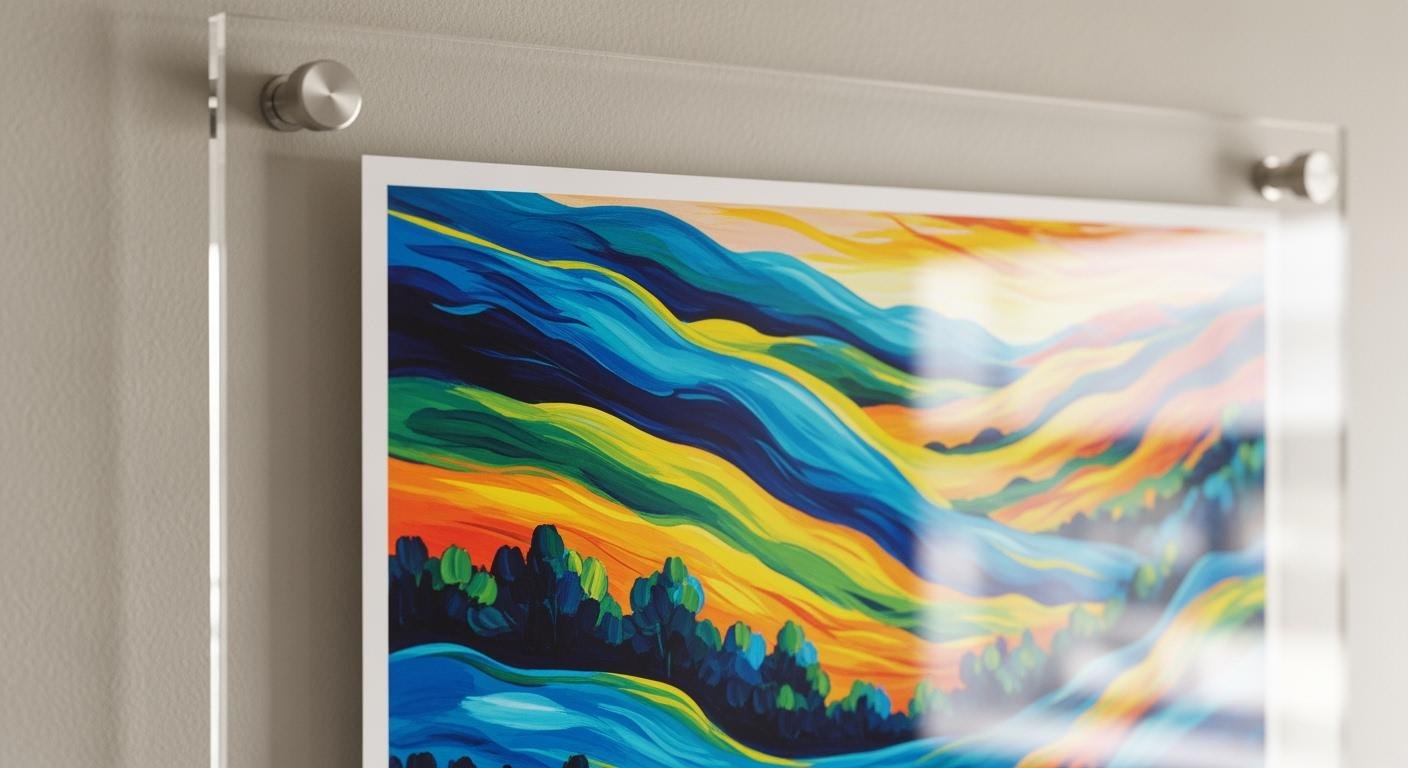
An acrylic floating frame is a borderless display that sandwiches artwork between two clear acrylic panels. This design creates a stunning floating illusion, making the art appear suspended in air against the wall. This modern style puts 100% of the focus on the artwork. The popularity of acrylic floating frames is rising quickly, with searches increasing by 22% in a recent three-month period. The market for these modern acrylic floating frames continues to expand, making this acrylic floating frame a top choice for many.
What Are Acrylic Floating Frames?

Understanding acrylic floating frames begins with their simple yet brilliant design. These modern displays achieve their signature look through a few key parts and a straightforward assembly method. The result is a clean presentation that makes artwork the star of the show. Many people choose these floating frames for their minimalist appeal.
The Core Components
An acrylic floating frame consists of two primary components. The first is a pair of high-quality acrylic sheets. The artwork rests between these two panels. The second component is the standoff mounting hardware. These small metal posts are crucial for both assembly and display. Standoffs for floating frames come in several materials, each with unique properties.
| 素材 | Corrosion Resistance | Magnetic |
|---|---|---|
| Stainless Steel | High | Slightly |
| Aluminum | Average | No |
| Brass | High | No |
| Steel | Low | Strongly |
These hardware pieces hold the acrylic floating frames together and mount them to the wall. The choice of metal often depends on the desired finish and the environment where the floating frame will hang.
The Sandwich and Mount Method
Assembling these floating frames is a simple process. First, a user places their photo or art print between the two acrylic panels. This creates the “sandwich” that protects and displays the piece. The panels have pre-drilled holes in each corner. The standoff hardware goes through these holes. This method secures the artwork firmly in place.
ヒント Learning how to hang a floating frame is easy. You only need a few basic tools for a successful installation.
The final step is mounting the floating frame to the wall. This task requires a few common household tools:
- A drill
- A screwdriver
- Painter’s tape (for marking)
Each standoff barrel is screwed into the wall. Then, the acrylic sandwich is attached to the barrels using the standoff caps. This completes the installation of the floating frames.
How the Float Effect Is Achieved
The “floating” illusion is the main attraction of acrylic floating frames. This effect comes from the standoff hardware. Each standoff consists of two parts: a barrel and a cap. The barrel is a hollow cylinder. It screws directly into the wall. The barrel holds the entire floating frame away from the wall’s surface.
The cap is a threaded screw. It passes through the acrylic panels and fastens into the barrel. This design secures the panels while maintaining a gap between the frame and the wall. This space creates a subtle shadow. The shadow makes the floating frame appear to hover in mid-air. Standoffs typically create a gap ranging from 5/8 inch to 3 inches, adding visual depth to the display. This clever engineering is what makes these floating frames so visually striking. The design of these floating frames ensures the focus remains entirely on the art.
Key Benefits of Acrylic Frames

Acrylic floating frames offer more than just a way to hang art. They provide a unique combination of style, strength, and flexibility. These displays enhance artwork while protecting it. Understanding the benefits of floater frames helps people make an informed choice for their decor.
Modern, Unobstructed Aesthetic
The primary appeal of these floating frames is their clean, modern look. This style follows the “less is more” principle of minimalist design. The borderless presentation creates a sleek and sophisticated appearance. It puts the focus entirely on the artwork itself.
This unobstructed view is perfect for contemporary spaces.
- Attention centers purely on the image without a distracting border.
- The design suggests openness and innovation.
- It works especially well for bold photography and abstract art.
A frameless floating frame helps create bright, open interiors. The clean lines and simple form elevate the look of any room. This approach makes the art a true centerpiece, giving it a powerful visual impact. The floating frames contribute to an uncluttered environment, promoting a sense of order and clarity.
Superior Durability and Protection
Acrylic provides significant advantages over traditional glass. One major benefit is its weight. An acrylic sheet weighs about 50% less than a glass panel of the same size. This difference makes large floating frames much easier to transport and install.
Durability is another key feature. Acrylic is far more shatter-resistant than glass. In fact, it has roughly 17 times more impact resistance. If an acrylic floating frame does break, it typically cracks into large pieces with dull edges. This makes it a safer option for homes with children or pets and for high-traffic areas.
Did You Know? High-quality acrylic also protects art from damage over time. Museum-quality options can block up to 99% of harmful UV rays. This powerful filtering prevents photos and prints from fading, preserving their color and vibrancy for years.
Versatile for Multiple Art Sizes
Floating frames are incredibly versatile. They are not limited to standard photo dimensions. People can find a floating frame for almost any piece of art. Sizes range from small 8″ x 10″ displays to massive 48″ x 72″ installations. This flexibility allows for a cohesive look across different art sizes in a single space.
Many suppliers also offer custom sizing. This is ideal for artwork with unusual or non-standard dimensions.
You can order a floating frame customized to your specifications, often down to a fraction of an inch. This ensures a perfect fit for your unique piece, whether it’s a panoramic photo, a signed print, or a historical document.
These floating frames can hold various types of art, including:
- Digital photographs and art prints
- Posters and original paintings
- Heirlooms and important documents
The design of these floating frames gives each piece a distinct three-dimensional presence on the wall.
Acrylic vs. Traditional Floating Frames
Choosing the right display involves understanding the differences between modern acrylic floating frames and their classic counterparts. While both create a floating effect, their design, materials, and ideal uses vary significantly. The debate of floating frames vs traditional frames often comes down to personal style and the artwork itself.
The Classic Floating Frame Explained
A traditional floating frame is typically made of wood or metal. It creates a gap between the artwork and the frame’s inner edge. This design makes the canvas appear to float within its border. The frame itself has an L-shaped profile that supports the canvas from behind.
Unlike acrylic versions, artwork is loaded into this type of floating frame from the front. It is then secured from the back. Installers use offset clips, also known as Z-brackets, to attach the canvas firmly to the frame.
This method provides strong support, especially for heavy canvases. These classic floating frames offer a more structured look compared to the borderless acrylic style.
Key Differences in Design and Use
The primary difference between the two floating frames lies in their construction and visual impact. Acrylic floating frames are frameless, sandwiching art between two clear panels. Traditional floating frames create a visible border around the art.
| 特徴 | Acrylic Floating Frames | Traditional Floating Frames |
|---|---|---|
| 素材 | Clear Acrylic, Metal Standoffs | Wood or Metal |
| Appearance | Borderless, Minimalist | Visible Border, Structured |
| Protection | Covers Entire Art Surface | Protects Edges, Art is Exposed |
| Best For | Modern Photos, Digital Prints | Stretched Canvases, Paintings |
Acrylic floating frames offer a sleek, contemporary feel. Traditional floating frames provide a classic, gallery-style presentation. The choice between these floating frames impacts the overall aesthetic.
Which Frame Is Right for Your Art?
Your decision depends on your decor and the art you wish to display.
- For Modern Spaces: Acrylic floating frames are an excellent choice. Their clean lines and minimalist design complement contemporary, industrial, and minimalist interiors. They make a room feel more open and are perfect for vibrant photography and abstract art.
- For Classic Spaces: A traditional floating frame often suits classic or vintage decor. Wood finishes like walnut or mahogany add warmth and elegance. These floating frames work beautifully with traditional paintings on canvas.
Ultimately, consider your environment. An acrylic floating frame offers 優れた耐久性 and a modern edge. A traditional floating frame delivers timeless appeal and a defined presence.
An acrylic floating frame secures art between two clear panels using standoff hardware. These floating frames provide a clean, modern look and superior durability. Many floating frames also offer UV protection, preserving valuable prints from fading. The design of these floating frames makes the art the true centerpiece.
For a minimalist, art-centric style, this floating frame is a perfect choice. These floating frames enhance any space with their sleek, hovering effect, making this floating frame a top option for contemporary decor.
よくあるご質問
How do people clean an acrylic frame?
A person cleans acrylic with a soft microfiber cloth. For smudges, they can use a special acrylic cleaner or mild soap and water. People should avoid harsh chemicals like ammonia or alcohol. These substances can damage the acrylic surface and cause cloudiness.
What kind of art works best in these frames?
These frames are ideal for flat items. They perfectly display photographs, art prints, posters, and important documents. Artwork with significant texture or thickness, like a heavy oil painting on canvas, is not suitable for this sandwich-style frame design.
Is hanging an acrylic frame difficult?
Hanging an acrylic frame is a straightforward task. Most installations require only a few common tools and careful measurement.
Tools Needed: A drill, a screwdriver, and painter’s tape for marking hole locations will ensure a successful and level installation.
Do acrylic frames turn yellow over time?
High-quality acrylic does not turn yellow. Reputable manufacturers use acrylic with built-in UV resistance. This feature protects the material from yellowing and also helps shield the artwork from fading, ensuring a clear view and long-lasting preservation for years to come.
See Also
Exploring Acrylic Aquariums: Understanding Their Features and Practical Uses
Top 10 Benefits of Acrylic Coffee Tables for Your Home
Discovering Acrylic Risers: Key Features and Versatile Display Applications
Understanding Frosted Acrylic: Its Unique Qualities and Diverse Uses
Acrylic Blocks Explained: Essential Features and Creative Application Ideas


 日本語
日本語  English
  Français
  Русский
  Deutsch
  Español
  Português