
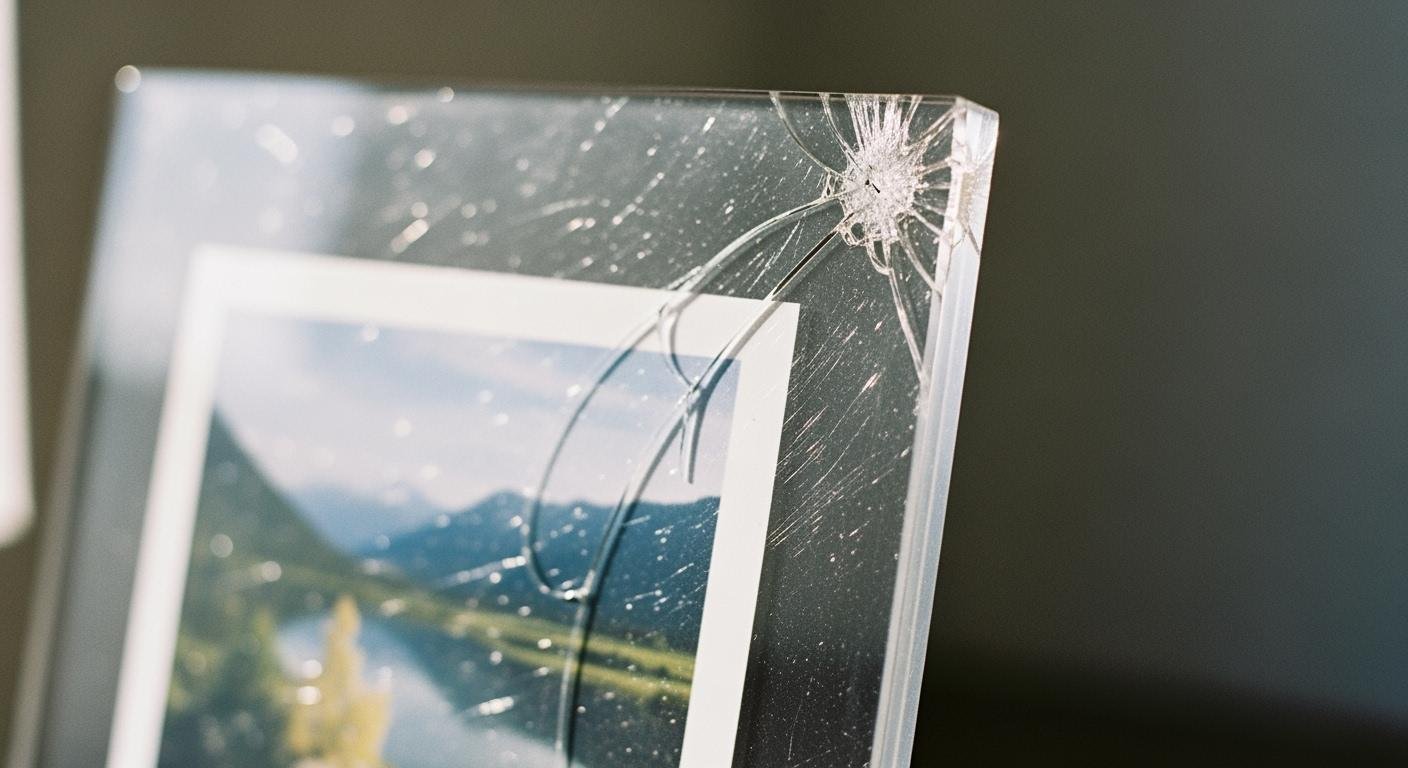
You may love the modern look of an acrylic frame. You should know the key disadvantages of acrylic before you buy. An acrylic surface has some notable drawbacks.
An acrylic frame is not always the best choice for your art.
The primary problems with an acrylic product include:
- It scratches very easily.
- It builds up static and attracts dust.
- It can damage certain types of artwork.
Knowing these issues helps you make a confident framing decision.
Key Material Disadvantages
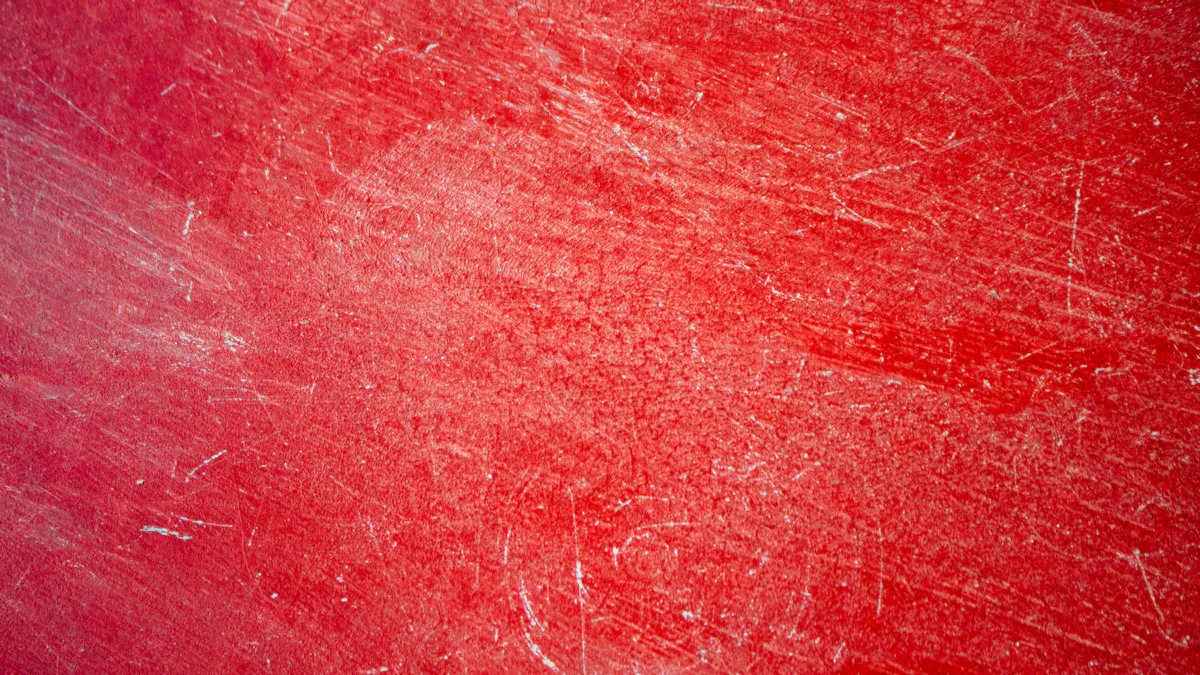
The sleek look of acrylic hides some significant material weaknesses. You need to understand these disadvantages before you commit to using it for your artwork. The problems relate to its softness, its electrical properties, and its sensitivity to cleaners.
Easily Scratched and Damaged
The number one issue with acrylic is its softness. Compared to glass, an acrylic surface is extremely easy to scratch. This difference is clear when you look at their material hardness.
| Material | Mohs Scale Hardness |
|---|---|
| PMMA (Acrylic) | 2-3 |
| Glass | 5.5-7 |
This low hardness score means that everyday handling can cause damage. While you might buff out a minor surface scuff, a deep scratch is another story. Once a deep gouge occurs, it is nearly impossible for you to repair at home, leaving a permanent mark that obstructs the view of your art. Professional repair involves a complex process of filling, sanding, and polishing that is often not practical for a picture frame.
You might be surprised by what can scratch acrylic. Common household items are often the culprits.
- Paper towels: The wood fibers in paper towels act like fine sandpaper.
- Rough cloths: Terry cloth towels or dirty rags can create fine swirl marks.
- Dust and debris: Wiping a dusty surface grinds the particles into the acrylic, causing micro-scratches.
To avoid this, you would need to purchase special scratch-resistant acrylic. However, this premium feature can increase the cost of the material by 10% to 30%.
Prone to Static Buildup
Have you ever noticed how acrylic frame covers seem to be magnets for dust? This happens because acrylic generates a static charge very easily, especially in dry environments. Wiping the surface creates friction, which builds up an electrical charge that attracts airborne dust, lint, and pet hair. This means you will be dusting your frames far more often than you would with glass.
The static charge from acrylic is not just a cleaning nuisance; it can actively harm your art.
This is one of the most critical disadvantages of using acrylic. If you are framing delicate, loose media, the static can be destructive. The electrical charge can pull particles directly off the paper. This can cause visible damage to:
- Charcoal drawings
- Pastel artwork
- Graphite sketches
For these types of art, the risk is significant. The static can lift the medium, causing fading or smudging over time. While special anti-static acrylic exists, it is a premium product. These advanced options use permanent, bonded coatings that dissipate static instantly, but they come at a much higher price point.
Requires Special Cleaning
You cannot clean an acrylic frame with your standard glass cleaner and a paper towel. Using the wrong products or materials will cause irreversible damage. You must use special techniques to maintain the clarity of the acrylic.
First, you need to know what to avoid. Many common cleaners will cause the acrylic to look cloudy or develop tiny cracks, a process known as “crazing.”
- Ammonia-based cleaners (like Windex)
- Cleaners containing alcohol or other solvents
- Abrasive powders or scrubs
- Aerosol sprays with harsh chemicals
Instead, you should use a cleaner made specifically for acrylic. You can often find these in commercial cleaning kits that include a bottle of anti-static cleaner and a special non-abrasive cloth. Even a soft microfiber cloth can leave tiny swirls, so using the right tools is essential.
💡 Pro Tip: When you clean your acrylic frame, always spray the cleaner onto the cloth, not directly onto the acrylic surface. This prevents the liquid from seeping into the edges of the frame and ensures an even application.
Broader Environmental and Cost Factors
Beyond the material itself, you should consider the long-term effects and costs of choosing acrylic. These factors include its reaction to sunlight, its environmental footprint, and the true price of a quality product.
Potential for UV Damage and Yellowing
Standard acrylic does not protect your art from the sun’s harmful ultraviolet (UV) rays. In fact, the acrylic itself can be damaged. Over time, UV exposure causes the material to degrade, leading to a noticeable yellowing or hazy appearance.
- Standard acrylic can show yellowing within 5–7 years of UV exposure.
- This happens because UV rays break down the polymer chains in the acrylic, which then react with oxygen and change color.
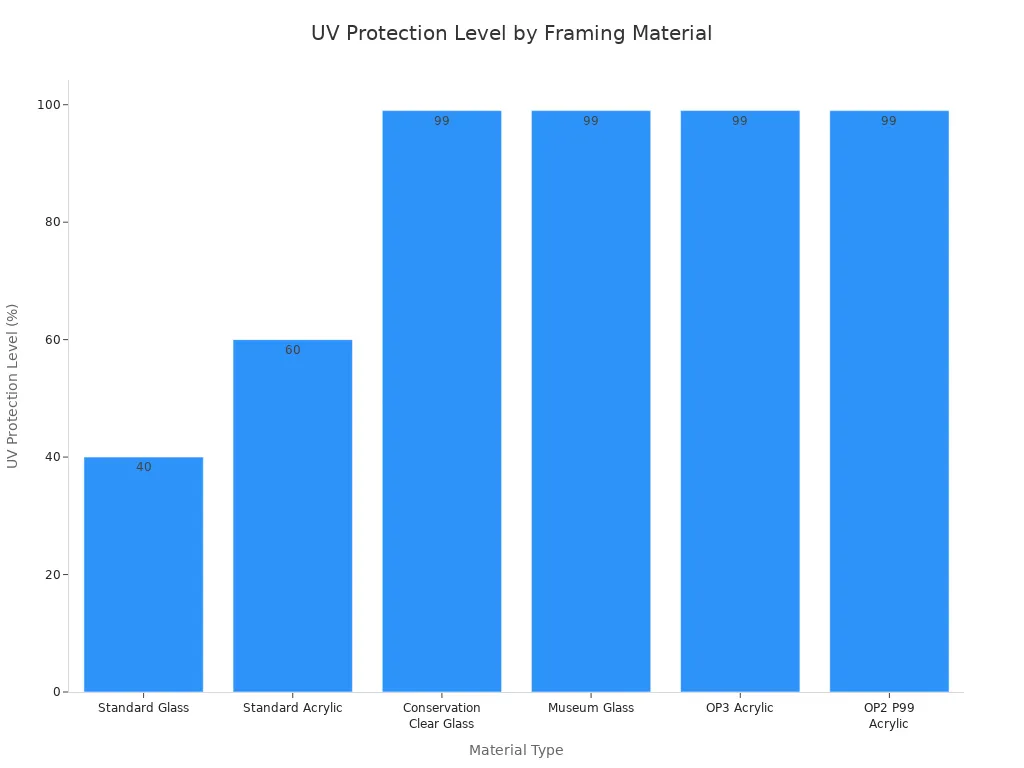
While basic acrylic blocks more UV light than standard glass, it is not enough to preserve your art. You need special UV-filtering acrylic for that, which offers much better protection.
| Material Type | UV Protection Level |
|---|---|
| Standard Glass | Blocks approximately 40% of UV light |
| Standard Acrylic | Blocks approximately 60% of UV light |
| Conservation Clear Glass | Blocks 99% of UV light |
| OP3 Acrylic | Blocks 99% of UV light |
Poor Environmental Profile
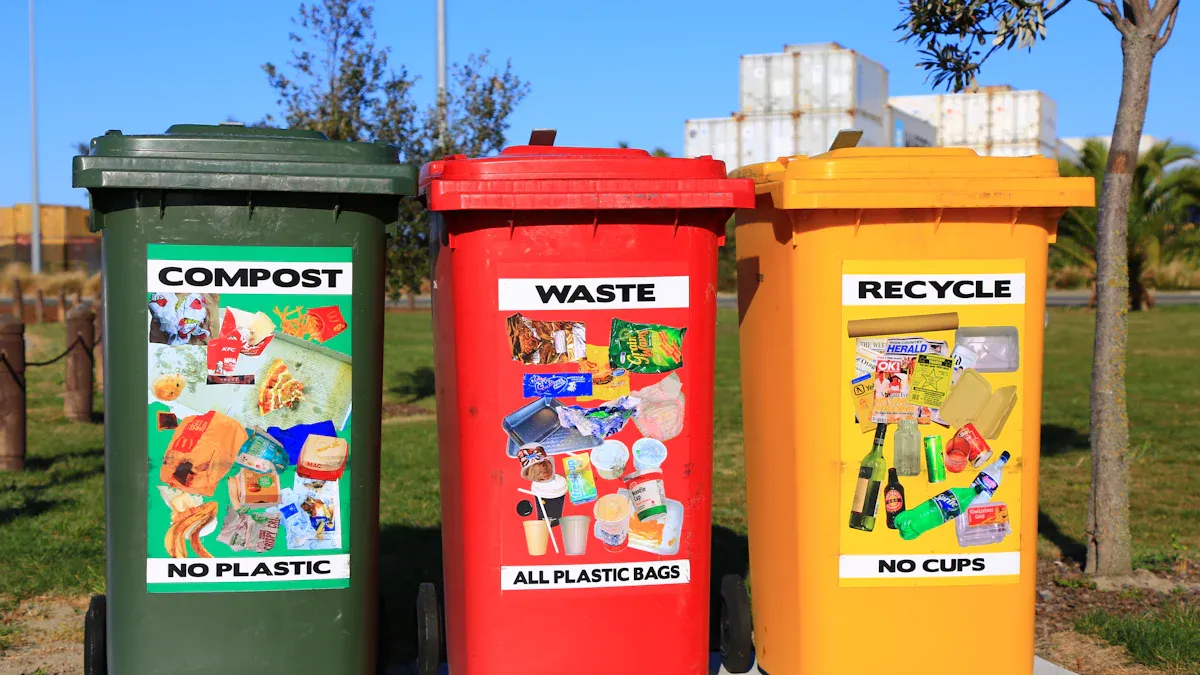
Your choice of framing material also has an environmental impact. Acrylic is a man-made plastic that is not biodegradable. If an acrylic frame ends up in a landfill, it will take approximately 200 years to decompose.
Recycling is another challenge. While glass packaging has a high recycling rate in regions like the EU (around 80%), the rate for plastics is much lower, at about 40%. This makes glass a more sustainable choice from a recycling perspective.
Higher Cost for Premium Features
You might see basic acrylic advertised at a low price. However, this entry-level product comes with all the disadvantages discussed, like scratching and static. To solve these problems, you must upgrade to premium acrylic with special coatings. An acrylic sheet that is scratch-resistant, anti-static, and UV-protective is not cheap.
Often, the cost for this high-performance acrylic is greater than the cost of standard framing glass. You end up paying a premium to fix the inherent weaknesses of the basic acrylic material.
You should now understand the key disadvantages of acrylic. An acrylic surface scratches easily, and its static charge creates a constant maintenance headache. This static can even damage delicate art through a process sometimes called “acrylic disease,” where particles impact the artwork’s surface.
While the shatter resistance of acrylic is a major benefit, the trade-offs are significant. You need premium acrylic to solve its issues, often at a higher cost than conservation glass options.
Before you choose an acrylic frame, carefully weigh these factors against your specific needs and the value of your artwork.
FAQ
Is acrylic ever better than glass?
Yes, acrylic has one major advantage. It is much more shatter-resistant than glass. This makes it a safer choice for high-traffic areas, public spaces, or children’s rooms where breakage is a concern. You trade durability for safety.
Can I fix a scratch on my acrylic frame?
You cannot easily fix a deep scratch. A deep gouge will permanently mark the surface. You might be able to buff out very light surface scuffs with a special polishing compound, but the results are not guaranteed.
Why does my acrylic frame attract so much dust?
Acrylic builds up a static electrical charge, especially when you wipe it. This static acts like a magnet. It pulls dust, lint, and pet hair from the air directly onto the frame’s surface, making it look dirty quickly.
💡 Is all acrylic bad for valuable art?
Standard acrylic is a poor choice for valuable art. It lacks UV protection and can damage loose media like charcoal. However, you can buy premium archival acrylic. This special type offers 99% UV protection and has anti-static properties.
See Also
Exploring Acrylic Aquariums: Understanding Their Design, Uses, and Benefits
Impact-Modified Acrylic: Unveiling Its Properties, Characteristics, and Uses
Acrylic Blocks: A Look at Their Nature, Attributes, and Diverse Applications
Understanding Acrylic Risers: Their Purpose, Design Elements, and Versatility
Frosted Acrylic Explained: Discovering Its Qualities, Appearance, and Utility


 Português
  English
  Français
  Русский
  Deutsch
  Español
  日本語
日本語