
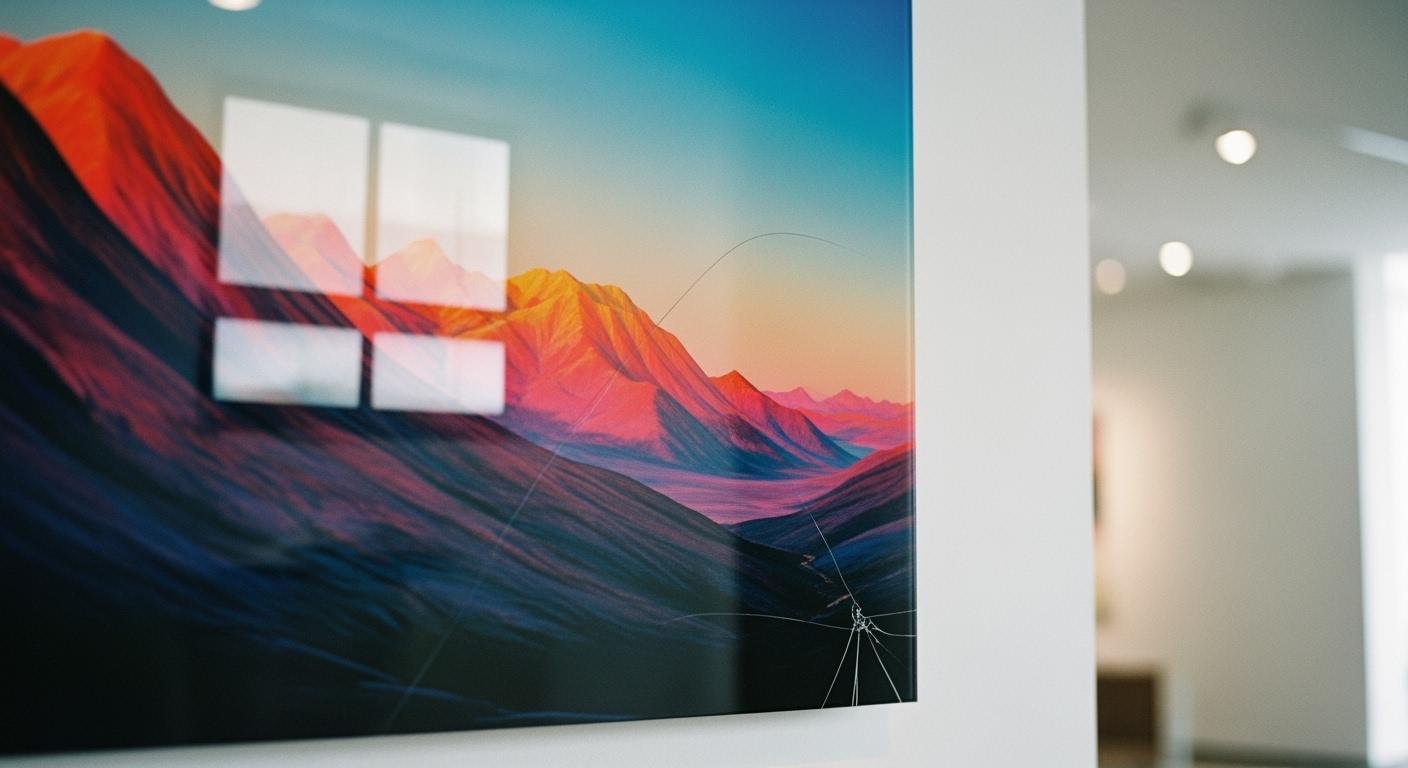
Acrylic prints have several major drawbacks. You should know about their high cost and fragile surfaces. They also create significant glare, are very heavy, and raise environmental concerns. This 2025 guide explores the disadvantages of acrylic prints.
Note: Understanding these potential downsides is key. It helps you decide if this print style truly fits your space and budget. Our goal is to give you a clear, objective breakdown for an informed purchase.
Key Disadvantages of Acrylic Prints: Cost
The high price is one of the biggest disadvantages of acrylic prints. You pay for a premium look, but that look comes with a significant cost. Understanding the reasons behind the price helps you make a better decision.
The Premium Materials and Process
Acrylic prints cost more because of the complex production process. First, your image is printed on high-quality photo paper. This print is then mounted between a sheet of acrylic glass and a rigid backing. This multi-step method requires specialized equipment and skilled labor. The materials themselves, like the thick acrylic and UV-stable inks, are also expensive. You are paying for a product that is built with precision and designed for longevity.
Cost vs. Canvas, Metal, and Paper
You will notice a clear price difference when you compare acrylics to other options. Canvas and metal prints are often less expensive. Paper prints are the most affordable choice initially. However, you must consider the total cost.
Note: Paper prints need a frame and glass for protection and display. These additions increase the final price. Acrylic prints arrive ready to hang, so there are no extra framing costs.
This table shows a simple cost comparison:
| Print Medium | Cost |
|---|---|
| Paper | Very affordable but requires framing at additional cost |
| Acrílico | High |
Ultimately, you must decide if the vibrant, modern appearance of acrylic is worth the higher investment for your specific needs and budget.
Surface Durability and Damage Risks

While acrylic prints look stunning, their surfaces are surprisingly delicate. This fragility is one of the key disadvantages of acrylic prints. You must handle them with care to avoid permanent damage from scratches, dust, and improper cleaning.
Scratch and Dust Vulnerability
The glossy face of an acrylic print is very soft. On the Mohs scale of hardness, standard acrylic rates only a 2-3. This means everyday objects, abrasive cleaning cloths, or even a fingernail can leave a permanent scratch. You need to be extremely careful when handling and displaying your art.
The surface also carries a natural static charge. This charge acts like a magnet for dust and lint, so you will need to clean your print frequently. This static pull is also a major risk if you are face-mounting original loose-media artwork. The acrylic can pull particles directly off charcoal or pastel drawings, damaging the original piece.
Cleaning and Repair Challenges
Cleaning your acrylic prints requires specific products and techniques. Using the wrong cleaner can ruin the surface.
Warning: Avoid Common Cleaners Never use cleaners that contain ammonia, alcohol, or other harsh solvents. Standard glass cleaners, paper towels, and abrasive sponges will cause “crazing”—a network of tiny cracks—and create a foggy, hazy appearance on the acrylic.
To clean your print safely, follow these steps:
- Use a cleaner made specifically for acrylic.
- Spray the cleaner onto a soft, microfiber cloth, not directly on the print.
- Gently wipe the surface and buff dry with a clean part of the cloth.
Unfortunately, if you get a deep scratch, repairs are very difficult. While special polishing kits exist, they require a lot of effort and may not completely remove the damage. For most scratches or cracks, the damage is permanent.
Glare, Reflections, and Fading
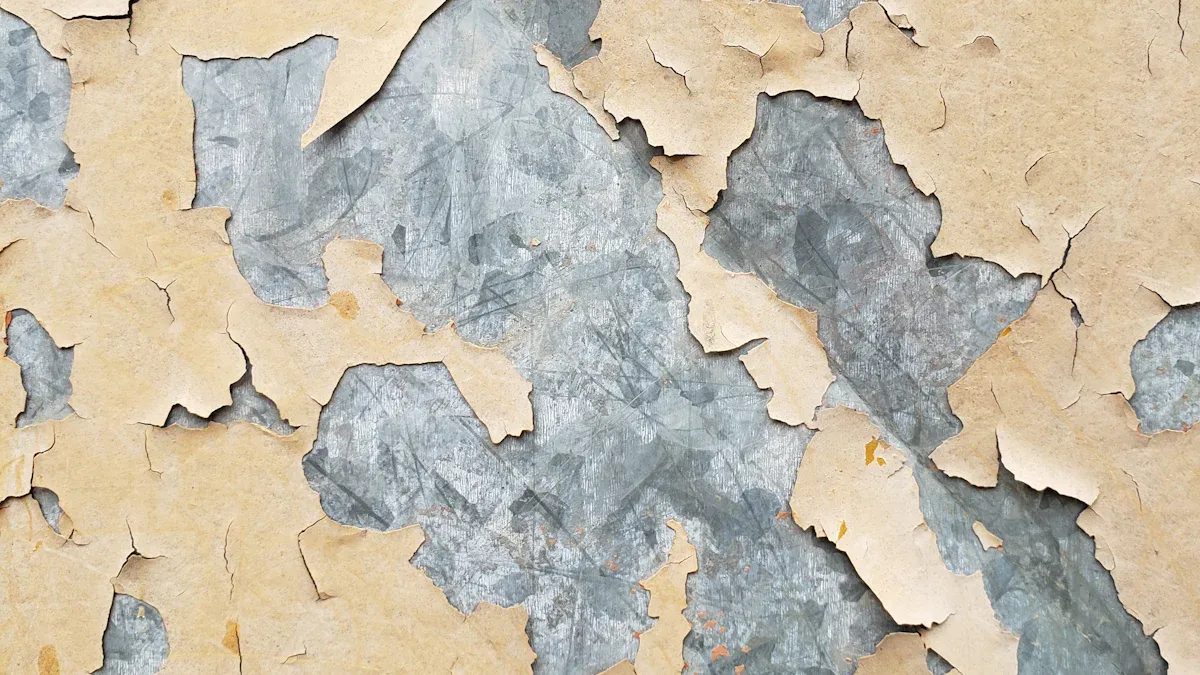
The beautiful, glossy finish of an acrylic print is also the source of one of its most significant issues: reflections. The viewing experience can be easily compromised by glare, and the solutions come with their own set of trade-offs.
The Constant Problem of Glare
You will quickly notice how an acrylic print’s surface acts like a mirror. If you hang your print in a brightly lit room or opposite a window, you will see distracting reflections of lights, furniture, and even yourself. This high-gloss surface reflects approximately 8% of the light that hits it, creating a sharp, specular reflection that can obscure the details of your image. This forces you to be very strategic about where you place the artwork to minimize this effect.
The Non-Glare and UV Fading Trade-Off
To combat reflections, you can choose a non-glare acrylic finish. This surface scatters the reflected light instead of mirroring it back at you. However, this solution presents a major compromise. The scattering process that reduces glare also softens the image, leading to a noticeable loss of vibrancy and sharpness. Your once-crisp photo may appear slightly fuzzy or muted with a non-glare acrylic.
This upgrade also impacts your budget.
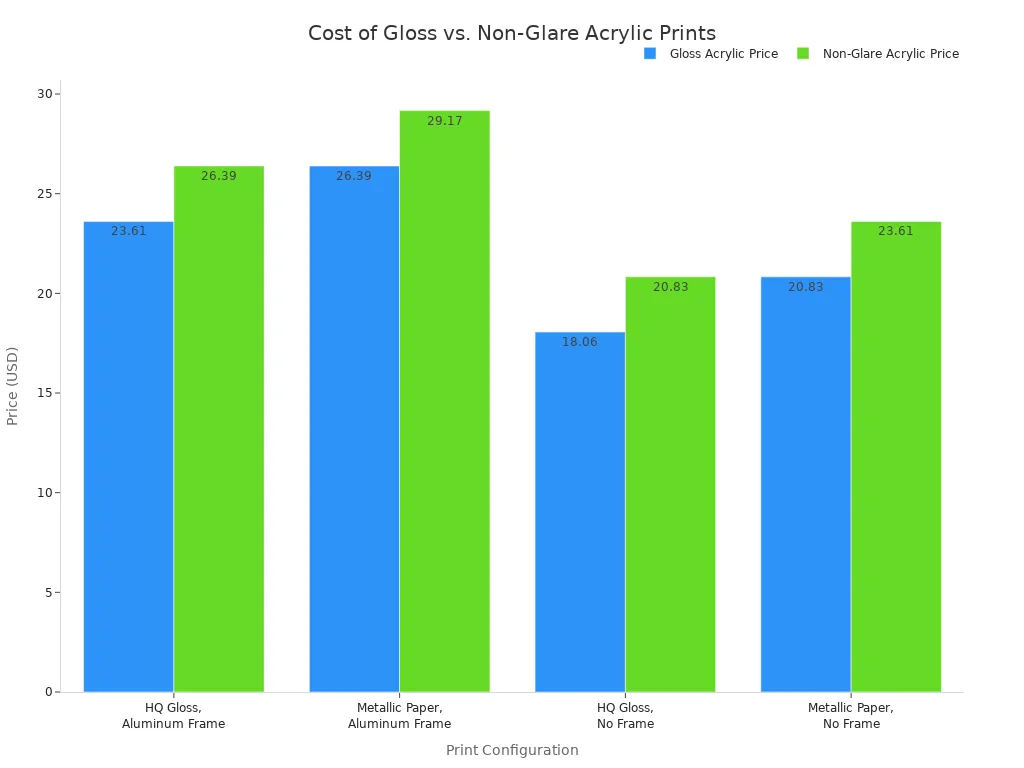
Note: Choosing an anti-glare acrylic finish typically increases the price of your print by 15-20% compared to the standard glossy option. You pay more for a less reflective surface that also diminishes image quality.
Finally, while acrylic prints offer excellent UV protection, they are not invincible. Prolonged exposure to direct sunlight will eventually cause the inks to fade. This is one of the key disadvantages of acrylic prints for placement in very sunny locations. Even with a premium non-glare acrylic, you must still protect your investment from constant, direct sun.
Environmental and Physical Risks
Beyond the visual aspects, you must consider the physical and environmental challenges of acrylic prints. Their weight, fragility during shipping, and reaction to temperature create risks you should not overlook.
The Weight of Acrylic Prints
Acrylic is significantly heavier than other print materials. For example, a 24×36 inch acrylic print with a 1/4 inch thickness weighs around 9 pounds. This is much heavier than a canvas print of the same size. You can see how the weight compares to different canvas options below.
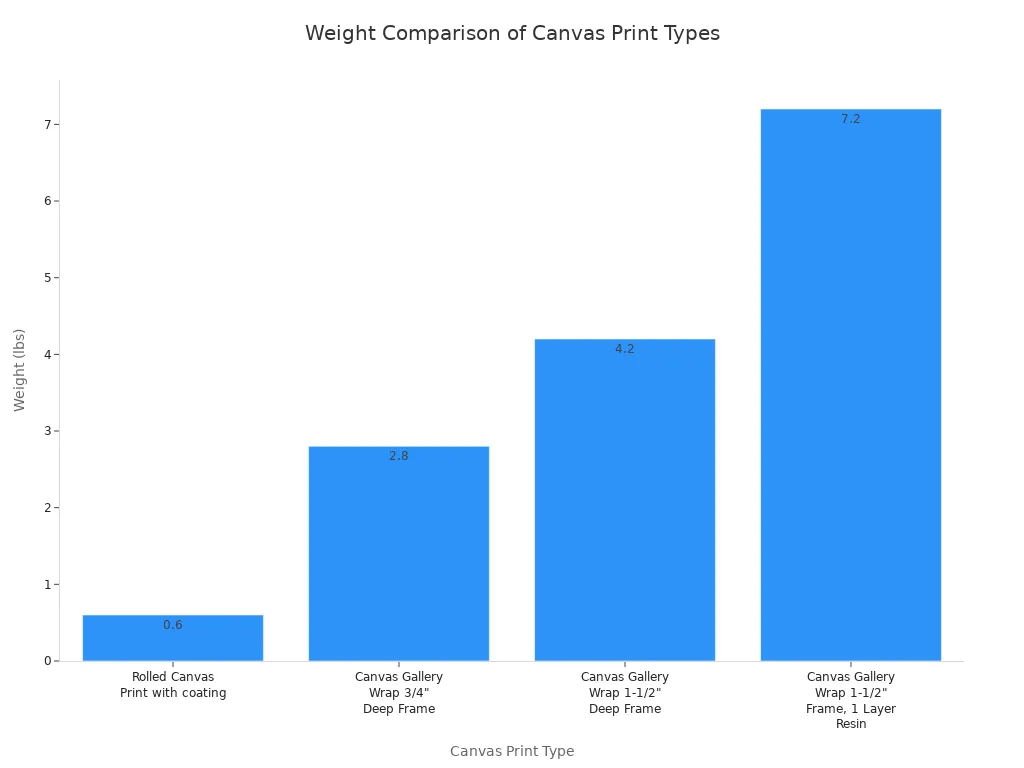
This extra weight means you need to plan your installation carefully to ensure the art is secure on your wall.
Installation and Shipping Logistics
The heavy nature of acrylic requires robust mounting hardware. You cannot use a simple nail. For prints over 20 pounds, you will need metal wall anchors or to drill directly into wall studs.
| Anchor Type | Weight Capacity |
|---|---|
| Plastic Wall Anchors | 20 pounds or less |
| Metal Wall Anchors | 30 pounds or more |
The weight and fragility also increase shipping costs dramatically. Shipping a large 40×60 inch acrylic print can cost over $300, while a canvas print of the same size might cost around $100 to ship. This adds a significant hidden expense to your purchase.
Breakage, Cracking, and Heat Resistance
While acrylic is much stronger than glass—withstanding over 18 times the impact—it is not unbreakable. It can crack from:
- Sharp impacts, especially in cold weather.
- Vibrations during shipping.
- Being dropped or mishandled during installation.
Warning: Keep Away From Heat Acrylic begins to soften at temperatures as low as 160°F (71°C). You should never hang your print above a radiator, fireplace, or in direct, intense sunlight that can heat the surface. The material can deform and lose its shape permanently.
You now understand the main drawbacks of this print style. Before you decide, consider these key points:
- The high price point
- A delicate surface that scratches easily
- Heavy weight that complicates installation
- Significant glare in brightly lit rooms
🤔 Ask yourself: Is your display area high-traffic? Is easy installation a priority?
If budget, durability, or viewing conditions are major concerns, you may find metal or archival paper prints to be a wiser investment. Weighing these disadvantages of acrylic prints helps you make the best choice for your art.
FAQ
What is the main disadvantage of acrylic prints?
Acrylic prints have several key drawbacks. You should consider these four main issues before buying:
- High cost compared to other media
- Surfaces that scratch and attract dust easily
- Significant glare and reflections in bright rooms
- Heavy weight that requires strong wall support
How do I safely clean an acrylic print?
You must use specific products for cleaning. Gently wipe the surface with a microfiber cloth and a cleaner made for acrylic.
Warning ⚠️ Never use glass cleaners or paper towels. These products will cause permanent cloudiness and fine scratches on the surface.
Can I get an acrylic print that doesn’t have glare?
Yes, you can choose a non-glare or anti-glare finish. This option reduces reflections but also makes the image appear less sharp and vibrant. It also costs more than the standard glossy finish, creating a trade-off between clarity and reflections.
Are acrylic prints better than metal prints?
One is not always better than the other. Metal prints are more durable and scratch-resistant. Acrylic prints offer greater depth and vibrancy. Your choice depends on your budget, the display location, and whether you prioritize durability or visual pop.
See Also
Understanding Edge-Lit Acrylic Signs: Principles, Uses, and Benefits Explained
Your Comprehensive Guide to Acrylic Table Stands: Selection and Usage
Acrylic Sign Holders: Defining Their Features, Functions, and Practical Uses
Acrylic Aquariums: Exploring Their Definition, Unique Features, and Uses
Fluorescent-Edge Acrylic: Unveiling Its Definition, Principles, and Diverse Applications

 Português
  English
  Français
  Русский
  Deutsch
  Español
  日本語
日本語