
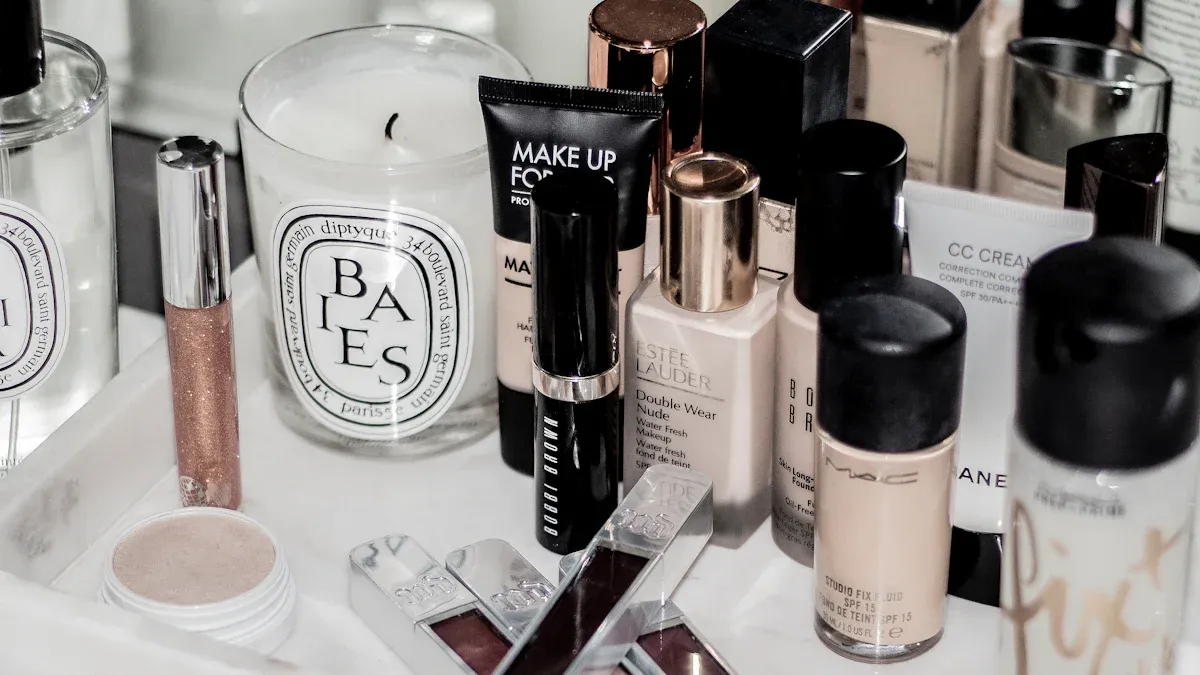
A serum’s price can be $15 or $150. This price difference makes consumers question a product’s true value. The global beauty market, estimated at USD 557.24 billion, uses complex pricing.
This guide on cost drivers explained what determines a product’s final price. The total cost includes many factors.
The price gap is clear across different products. For example, foundation pricing shows a wide range.
| Category | Average Price Range (CAD) |
|---|---|
| High-End Foundation | $40–$75 |
| Drugstore Foundation | $10–$22 |
A luxury brand often has a higher price. The brand pricing reflects its status. A different brand has a lower price. This brand pricing strategy sets the market price. The brand’s final price depends on ingredients and its pricing model. This pricing determines the retail price.
Core Product Pricing Factors
The price of makeup and skincare products depends heavily on what is inside the bottle and how it is presented. Core product factors like the formula, packaging, and research are major cost drivers explained here. These elements directly influence the final price a consumer pays.
Formulation and Ingredient Pricing
The formula is the heart of any cosmetic product. The quality, rarity, and concentration of ingredients create significant price differences. A higher price often reflects a more complex or potent formulation.
Ingredient concentration directly impacts the product’s price. A serum with a higher percentage of an active ingredient generally has a higher price. For example, Vitamin C serums show this pricing trend.
“The quality and concentration of vitamin C used in the formulation can significantly impact the price,” said Hsu, an Illinois-based dermatologist.
As the concentration of vitamin C in a serum increases, so does its price. Consumers should look for an effective amount, typically between 10-20%. A concentration above 20% may not offer more benefits and can increase the price without improving product quality. This pricing strategy helps define the product’s position in the market.
The rarity of an ingredient also drives up the price. Some of the most expensive cosmetic products use ingredients that are difficult to source.
- Agarwood (Oud): This resinous wood forms in specific trees after a fungal infection. Its unique aroma is highly valued in luxury perfumes, and its rarity makes its price very high.
- Saffron: This is one of the world’s most expensive spices. Its use in cosmetic products adds a high cost due to its labor-intensive harvesting and low yield.
The process of cultivating and processing rare ingredients like saffron is demanding. This difficult process adds to the final price.
- Harvesting the flowers requires careful work to avoid damaging the fragile stigmas.
- The drying process needs precise control to prevent mold.
- Processors hand-sort the stigmas to ensure high quality.
- The final product requires airtight packaging to preserve its quality.
The source of an ingredient—natural versus synthetic—also affects pricing. Synthetic fragrances are made in labs. They can copy rare natural scents at a lower price. This makes them a cost-effective choice for many cosmetic products. In contrast, natural ingredients have a higher price. The high price of natural ingredients comes from many factors. About 95% of perfume makers blend synthetic ingredients with essential oils to lower the overall price. The higher pricing for natural ingredients is due to:
- Labor Costs: Harvesting delicate plants is labor-intensive.
- Specialized Storage: Natural ingredients need special storage to maintain their quality.
- Complex Logistics: Sourcing ingredients globally involves high logistical costs.
- Regulations: Natural fragrances must follow strict industry rules, which adds to the price.
Packaging and Presentation
Packaging does more than hold the product. It protects the formula, improves user experience, and communicates brand value. The material, design, and functionality of packaging are key pricing factors for makeup and skincare products. A luxury product often uses premium packaging, which increases its price.
Sustainable materials like post-consumer recycled (PCR) plastic are becoming popular. However, this choice increases the packaging price. Using PCR plastic can raise the material price by 5-10%. A package made of 100% PCR content can have a 15% price premium over virgin plastic. This higher price is passed on to the consumer, but it appeals to the eco-conscious market.
| Материал | Cost Impact |
|---|---|
| PCR Plastic | ↑ 5–10% |
Decoration and design complexity also add to the price. Multi-layer screen printing creates a professional look for cosmetic products. Each color requires a custom screen, which raises the price, especially for smaller orders. Simple adhesive labels are cheaper but can look less professional. They may also crease or tear, affecting the product quality perception. The choice of decoration is a differentiation strategy that affects pricing.
Secondary packaging, like the outer box, adds another layer of cost. Rigid boxes and custom inserts create a premium feel for luxury cosmetics. This enhances the unboxing experience and justifies a higher price. These elements are a marketing tool, but they directly increase the final price. The costs for luxury packaging can add up quickly.
- Rigid boxes can add $3 to $10 per unit to the price.
- Finishing touches like metallic foiling can add $0.30 to $1 per unit.
- Embossing or debossing can add $0.20 to $0.80 per unit.
This detailed packaging contributes to the overall product quality and justifies a higher market price. The pricing reflects both the protective function and the luxury appeal.
R&D for Makeup and Skincare Products
Research and Development (R&D) is the engine of innovation in the beauty industry. Creating new formulas, discovering patented molecules, and ensuring product safety require significant investment. This spending is a major factor in the pricing of makeup and skincare products. The price of innovative cosmetic products reflects these upfront costs.
Major brands invest a substantial portion of their revenue into R&D. This investment funds the science behind new makeup and skincare products. The percentage of revenue dedicated to R&D varies by company, but it always influences product pricing. This spending ensures continuous improvement and high product quality.
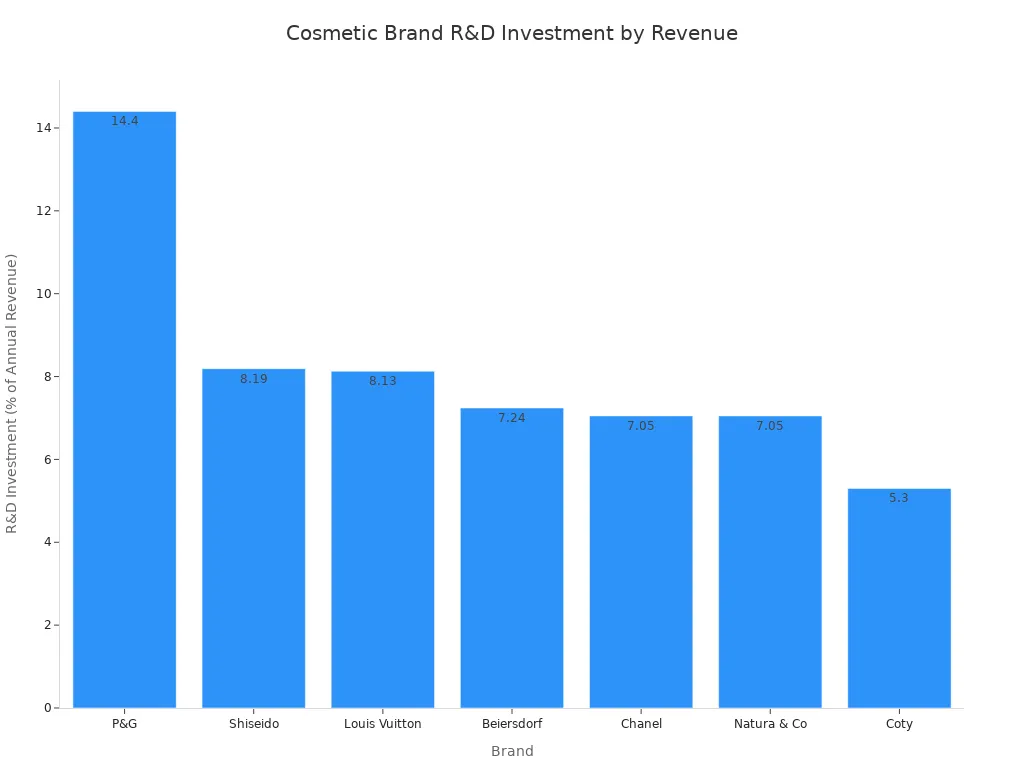
| Brand | R&D Investment (% of Annual Revenue) |
|---|---|
| P&G | 14.4 |
| Shiseido | 8.19 |
| Louis Vuitton | 8.13 |
| Beiersdorf | 7.24 |
| Chanel | 7.05 |
| Natura & Co | 7.05 |
| Coty | 5.3 |
Before any cosmetic product reaches the market, it must undergo rigorous testing. Stability and safety tests are non-negotiable steps that protect consumers. These tests add to the development cost and, consequently, the final price. The pricing of all cosmetic products must account for these essential safety measures.
- Preservative Efficacy Testing (PET): This test costs approximately $600 per sample.
- Batch Testing: This costs around $30-$40 per test.
These tests ensure the product quality and safety of makeup and skincare products. The associated price is a necessary part of bringing a safe and effective product to the market. The final price reflects this commitment to quality and safety. The overall pricing strategy for new cosmetic products must absorb these R&D expenses.
Business and Market Cost Drivers Explained
The physical product is only one part of the pricing puzzle. Business operations and market dynamics are powerful cost drivers explained in this section. A brand’s reputation, its sales channels, and global trade rules all add layers to the final price a consumer pays. Understanding these factors reveals why two similar cosmetic products can have vastly different price tags.
Brand Value and Marketing
A brand is more than a name; it is a promise of quality, luxury, and experience. This perceived value is a cornerstone of a brand’s pricing strategy. Luxury brands invest heavily to build and maintain a prestigious reputation. This investment becomes a substantial portion of the cost passed on to the consumer. A higher price often signals higher value in the consumer’s mind, a perception that brands carefully cultivate. This strategy helps a brand position itself in a competitive market.
Marketing and advertising are essential for creating this brand value and driving market demand. A brand’s marketing budget directly influences its product pricing. These costs include:
- Celebrity endorsements
- Social media campaigns
- Lavish launch events
- Print advertisements in major magazines
Placing a single advertisement in a top fashion magazine represents a massive financial commitment. This spending is a key pricing consideration for any major brand. The price of these ads shows the high cost of reaching the target market.
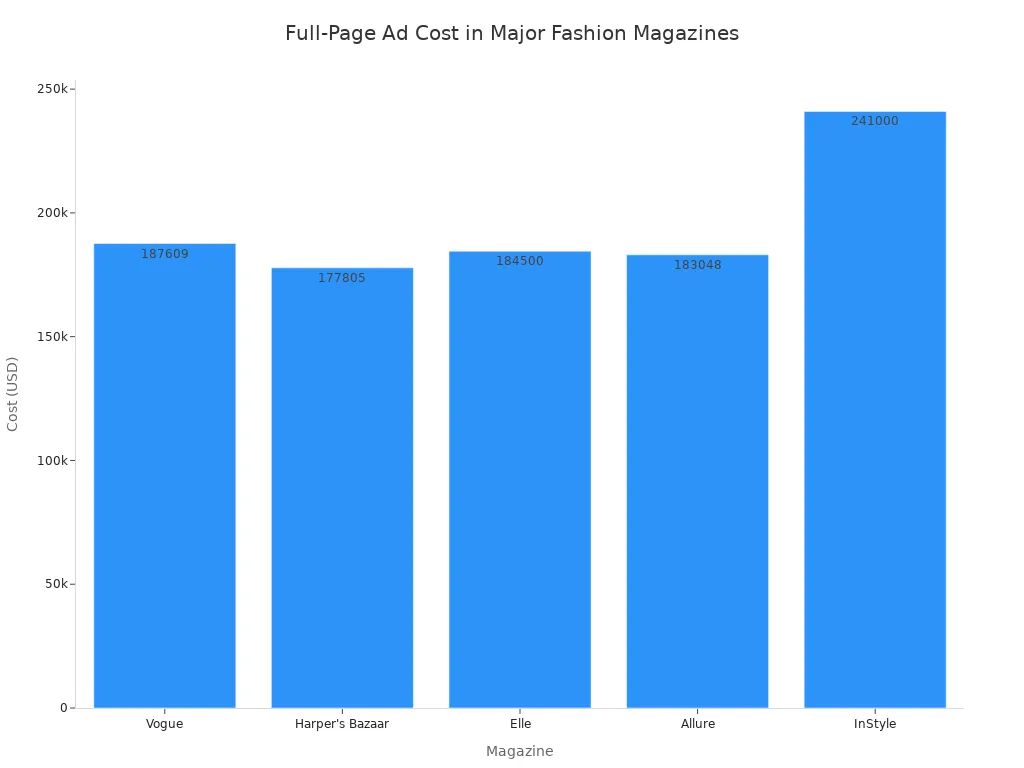
The price for a full-page ad demonstrates the scale of these marketing investments. A brand must recover these expenses through its sales.
| Magazine | Full-Page Ad Cost |
|---|---|
| Vogue | $187,609 |
| Harper’s Bazaar | $177,805 |
| Elle | $184,500 |
| Allure | $183,048 |
| InStyle | $241,000 |
This value-based pricing strategy links the product’s price to its perceived value, not just its production cost. The brand sets a price that reflects its status in the market. Strong market demand, fueled by advertising, supports this higher pricing. The competition in the luxury market is fierce, and a strong brand image is a key differentiator. A brand’s pricing strategy must account for the intense market competition. The final price of luxury cosmetic products includes the cost of the story, the prestige, and the aspirational lifestyle the brand sells.
Distribution as a Pricing Consideration
Where a customer buys cosmetic products is a critical pricing consideration. The distribution channel—whether a physical department store or an online website—dramatically affects the final price. Each channel has a unique cost structure that influences the brand’s pricing strategy.
Selling cosmetic products in traditional retail stores involves many extra costs. Department stores and specialty retailers like Sephora take a significant cut of the sales price. This is known as the retail markup.
- The average markup on premium cosmetic products is 78%.
- Some skincare products can be made for just $2 but sell for $300 in a store.
- Other cosmetic products might cost 50 cents to produce and have a retail price of $2.
Beyond the markup, brands often pay “slotting fees.” These are fees paid to retailers for a guaranteed spot on the shelf. These fees can range from thousands to millions of dollars, adding another layer of cost to the product’s price. This pricing strategy ensures visibility but increases the price for the consumer. The competition for shelf space is high, driving up the price of placement.
Direct-to-consumer (DTC) e-commerce offers an alternative pricing strategy. By selling online, a brand can avoid retailer markups and slotting fees. This often results in a lower price for the consumer or higher profit margins for the brand. However, the DTC model has its own set of costs. The brand is fully responsible for marketing, logistics, and customer service. The competition for online attention is intense, leading to high customer acquisition costs.
| Характеристика | E-commerce | Traditional Retail |
|---|---|---|
| Overhead Costs | Generally lower (no store rent) | Higher (rent, utilities for space) |
| Staffing Costs | Potentially lower (fewer physical staff) | Higher (sales associates, managers) |
| Profit Margins | Higher (no retailer cuts) | Lower (due to retailer cuts) |
| Customer Data | Direct access to first-party data | Limited control over customer data |
| Logistics | Full responsibility for shipping | Often handled by retailers |
Ultimately, the choice of distribution channel is a core part of a brand’s pricing strategy. A brand must weigh the wide reach of retail against the higher margins of online sales. This decision shapes the brand’s structure, its relationship with its customer, and the final price of its cosmetic products. The market demand and competition within each channel also guide this important strategy.
Global Sourcing and Tariffs
The beauty industry operates on a global scale. Ingredients, packaging, and finished cosmetic products travel across borders before they reach the consumer. This global supply chain introduces another set of cost drivers explained by taxes and duties. Tariffs, which are taxes on imported goods, directly increase a product’s price.
When a brand imports finished cosmetic products or raw materials, it must pay these tariffs. For example, as of August 2025, the U.S. imposes a 15% tariff on most imported EU goods, including many cosmetic products. This is a significant increase from the zero percent tariff that some European producers previously enjoyed. This change in global tariffs forces a brand to adjust its pricing strategy to absorb the new cost. The brand often passes this increased price directly to the consumer to protect its sales margins.
Trade wars and geopolitical tensions create pricing instability. Shubhangini Prakash, Founder of Feather & Bone, notes she gets “hit twice with tariffs” on both raw materials and sustainable packaging from China. This uncertainty makes price setting difficult for any brand.
Fluctuations in international freight costs and tariffs on raw materials also impact the final price. Many brands source unique ingredients and packaging from Asia.
- Mary Hanna, CEO of Phytoskin, anticipates up to a 50% increase in packaging costs from Asia.
- A survey showed that 49% of DTC operators saw their costs rise due to new tariffs.
- In response, 53% of these brands raised their product price.
This shows a direct link between global tariffs and the price a customer pays. The pricing of cosmetic products must account for this volatile market. A brand’s pricing strategy must be flexible to handle sudden changes in tariffs. The competition in the global market is intense, and managing these costs is crucial for survival.
To manage these international costs, brands adopt specific strategies. This is a key pricing consideration for any brand with global sales. One common strategy involves the “de minimis” value, which is the maximum value of a shipment that can be imported duty-free.
- Brands may price products just below this threshold to avoid tariffs. For example, a brand might set a price of $89 for a product shipped to a country with a $92 de minimis value.
- This strategy helps a brand offer a more competitive price in the international market.
- It also helps avoid customs delays, which lowers shipping costs.
This careful price setting is part of a broader strategy to navigate the complexities of global trade. The final price of a product reflects not just its quality or brand value, but also the intricate web of global tariffs and logistics. A smart pricing strategy is essential for a brand to thrive in the global market and manage the impact of tariffs on its sales and market demand. The final purchase price reflects all these complex market forces.
A product’s final price is a complex mix of tangible cost and intangible value. The price a brand sets reflects its pricing strategy. This pricing includes ingredients, packaging, and marketing cost. A brand’s pricing determines the final price.
A smart consumer understands these cost drivers explained. The consumer can choose a brand based on personal values. A consumer might prefer a brand with a lower price or a brand with luxury packaging. The price reflects the brand’s focus. This knowledge transforms a consumer. The consumer becomes a savvy buyer. The brand’s pricing is no longer a secret. The final price makes sense. The brand’s price is a clear signal. The brand’s price is a choice. The brand’s price is a statement. The brand’s pricing is a message. The brand’s pricing is a tool. The brand’s pricing is a statement. The brand’s price is a signal. The brand’s price is a choice. The brand’s price is a statement.
ЧАСТО ЗАДАВАЕМЫЕ ВОПРОСЫ
Are expensive cosmetic products always better?
Not always. A high price can reflect premium ingredients or extensive research. However, it can also show high marketing costs. A smart purchase considers the ingredients list. Consumer demand often influences the market price. A good purchase decision depends on personal needs. The market offers quality at various prices.
How much does marketing affect the final purchase price?
Marketing significantly impacts the final purchase price. Brands spend heavily to create demand. This advertising cost becomes part of the product’s price. High market demand allows for higher prices. A consumer’s purchase often includes this marketing expense. The market for cosmetic products is very competitive, driving this demand.
Why do some brands have a higher market demand?
Strong market demand comes from brand reputation, effective marketing, and perceived quality. A successful marketing strategy builds high demand. This demand allows a brand to command a higher price in the market. A consumer’s purchase decision is often influenced by this market perception and overall demand.
How can a consumer make a smart purchase?
A smart purchase involves research. Consumers should read ingredient lists and reviews. Understanding the market helps. This knowledge guides a better purchase. It allows a consumer to find cosmetic products that meet their needs and budget. High demand does not always equal the best purchase for everyone.
Does high demand for a product guarantee its quality?
High demand does not guarantee quality. Popularity can come from trends or marketing, not just performance. The market has many options. A wise purchase looks beyond the demand. Consumers should check reviews for cosmetic products. This strategy helps ensure a satisfactory purchase. The market demand is a complex signal.

 Русский
  English
  Français
  Deutsch
  Español
  Português
  日本語
日本語