
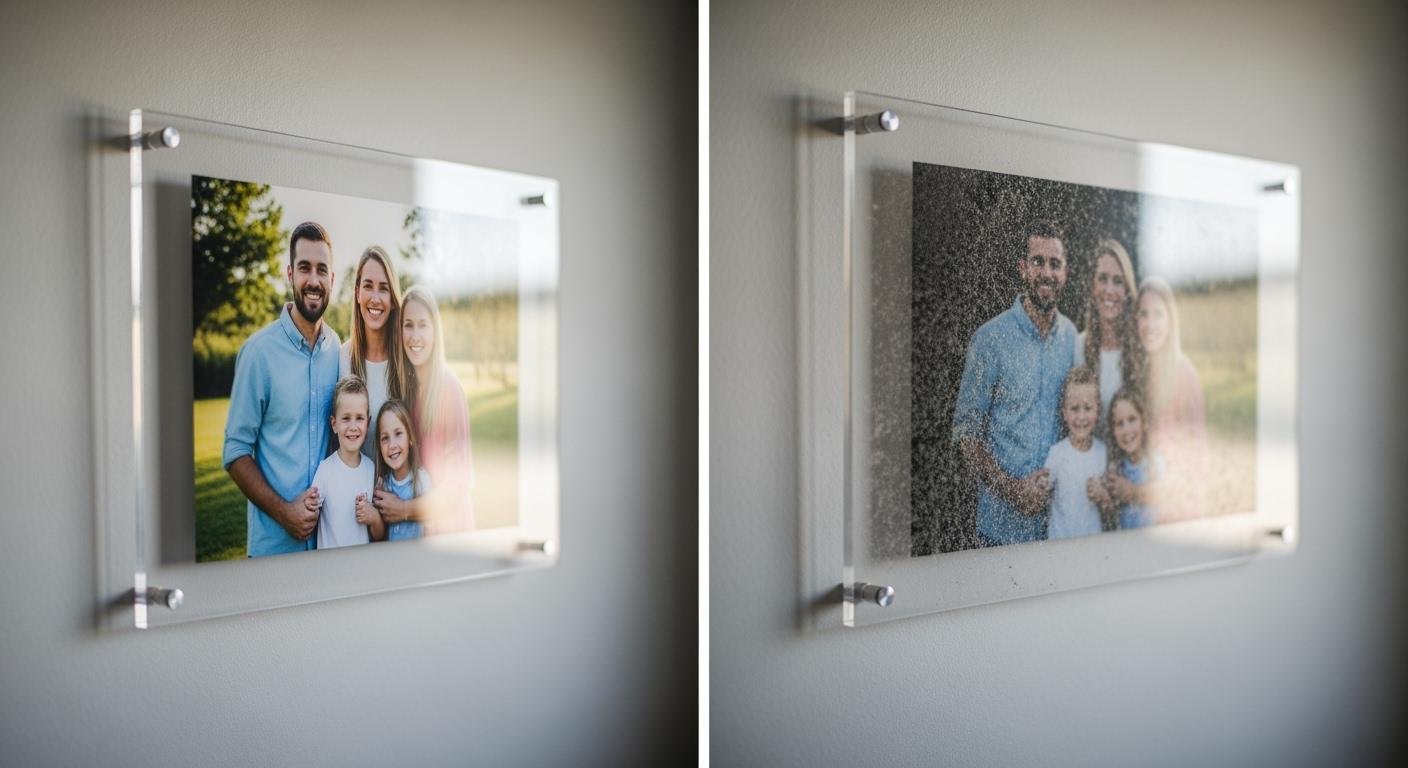
Acrylic frames are a popular picture frame choice over traditional glass. This acrylic option presents clear benefits and disadvantages for displaying your art.
You get superior durability and enhanced UV protection with an acrylic sheet, also known as plexiglass. However, this plexiglass comes at a higher cost and scratches more easily than glass.
This guide helps you decide if the benefits, like added protection for your art, outweigh the drawbacks for your specific art.
The Benefits of Acrylic Frames
You may wonder what makes acrylic frames a superior choice for your art. The benefits extend beyond a simple modern look. They offer advanced protection and viewing quality. Let’s explore the key advantages of choosing an acrylic picture frame.
Shatter-Resistant Durability
Accidents happen, especially in busy homes or high-traffic areas. An acrylic sheet, or plexiglass, provides incredible shatter-resistant protection. This material is significantly stronger than glass. Its unique molecular structure absorbs impact, preventing dangerous shattering. This durability makes acrylic a safer option around children and pets.
Did You Know? An acrylic sheet is about 17 times more impact-resistant than glass of the same thickness. This strength offers peace of mind for your valuable art.
The table below shows how much more impact standard acrylic can handle compared to glass.
| Материал | Falling Ball Impact Strength (ft-lbs) |
|---|---|
| 0.250″ Thick Plate Glass | 1.0 |
| 0.250″ Acrylic Sheet | 18.1 |
| 0.250″ Thick Tempered Glass | 15.5-29.1 |
Lighter Weight for Easy Hanging
Have you ever struggled to hang a large, heavy picture frame? Acrylic solves this problem. It weighs about 50% less than glass. This significant weight reduction offers two major benefits.
- Easier Installation: You can hang oversized art pieces with less effort and simpler hardware.
- Lower Shipping Costs: Galleries and artists often choose plexiglass because it makes shipping large art more affordable and safer.
A standard sheet of acrylic is much lighter than an equivalent glass sheet, as shown here:
| Material (4′ x 8′ at 1/4″ thickness) | Weight (pounds) |
|---|---|
| Glass Sheet | 96 |
| Acrylic Sheet | 46 |
Exceptional Clarity for Your Art
You want your art to be the star of the show. Acrylic glazing helps you achieve this. It offers exceptional optical purity. Standard glass often has a slight green tint that can alter the colors of your art. High-quality acrylic is virtually colorless. It allows up to 92% of light to pass through, making your art appear more vibrant and true to life.
The clarity of acrylic comes from its lower refractive index compared to glass. This means light bends less as it passes through the plexiglass, resulting in less distortion. Your view of the art is clearer and more accurate, especially when looking at it from an angle.
UV Protection for Framed Art
Sunlight and even indoor lighting can permanently damage your cherished art. The ultraviolet (UV) rays in light cause colors to fade, paper to turn yellow, and materials to become brittle. This is where the UV protection for framed art becomes essential.
Many acrylic frames come with built-in UV protection that blocks up to 99% of harmful rays. This feature is crucial for art preservation. It acts as a powerful shield, ensuring the long-term preservation of your piece. Choosing acrylic with UV protection is a wise investment in the longevity of your art. These are some of the key benefits of using acrylic.
Common types of UV damage include:
- Fading: Colors, especially reds and ink signatures, lose their vibrancy.
- Discoloration: Paper and other materials can yellow over time.
- Brittleness: The chemical bonds in paper and canvas break down, making the art fragile.
Using acrylic with UV protection is one of the most effective ways to safeguard your art from these irreversible effects. This protection is one of the greatest benefits of acrylic.
The Downsides of an Acrylic Frame
While acrylic offers many modern advantages, you should also consider its drawbacks. Understanding these disadvantages helps you make a fully informed choice for your framing needs. Let’s look at the potential issues you might face with an acrylic picture frame.
Susceptibility to Scratches
One of the main trade-offs with acrylic is its softness compared to glass. This material is more prone to scratches from improper handling or cleaning. On the Mohs scale of hardness, glass has a rating of 5 or 6. In contrast, acrylic typically rates between 3 and 4, making it much easier to damage the surface.
Cleaning Tip: Proper care is essential to keep your acrylic looking its best. Always use the right tools to avoid creating fine scratches on the plexiglass surface.
Follow these cleaning guidelines for the best results:
- Use a soft, non-abrasive cloth. A microfiber or soft cotton cloth is ideal. Avoid using paper towels, as their fibers are abrasive and will scratch the acrylic.
- Choose the right cleaner. You can use a mild soap and water solution or a cleaner made specifically for plexiglass, like NOVUS #1. Never use glass cleaners like Windex or any product containing ammonia or vinegar, as they can permanently damage the acrylic.
- Wipe gently. Use long, sweeping strokes to remove dust. For polishing, use short, circular motions. This prevents you from grinding dirt into the surface.
Static Charge Attracts Dust
Have you ever noticed how some surfaces seem to be magnets for dust and lint? Acrylic can have this effect. It naturally carries a static charge, which attracts airborne particles. This issue can be more noticeable in homes with dry air or active air conditioning systems. The constant need to dust your acrylic frames can become a minor chore.
For most art, this is just a small inconvenience. However, for delicate media, this static can be a real problem.
- Friable Media: For art made with charcoal or pastels, the static charge can lift pigment particles off the paper and onto the glazing.
- Textiles: The static can pull at loose threads in delicate embroideries or fabrics.
Fortunately, you can find premium anti-static acrylic, such as Optium Museum Acrylic®. This specialized plexiglass is designed to be anti-static, making it a safe choice for protecting delicate art.
Higher Initial Cost
A significant factor for many buyers is the price. High-quality acrylic is more expensive than standard glass. This higher initial cost can be a barrier if you are framing multiple pieces or working on a tight budget.
However, you should view this cost as an investment in long-term protection. The durability and UV-filtering properties of acrylic safeguard your valuable art from damage over many years. Its superior clarity also ensures your art is displayed beautifully without color distortion. While standard glass is cheaper upfront, acrylic provides a better return on investment by preserving the life and look of your piece.
Potential for Bowing in Large Sizes
Acrylic is more flexible than glass. This flexibility is a benefit for impact resistance, but it can become a problem in very large frames. A large, thin sheet of acrylic may bow or warp within the frame over time. This is especially true for pieces larger than 40×60 inches that use a thin 3mm sheet of acrylic.
Changes in heat and humidity can also cause bowing. Acrylic expands and contracts more than glass, and it will often bow toward the more humid side. To prevent this, you can take a few precautions:
- Choose a thicker sheet. For a large piece of art, select an acrylic sheet that is at least 5mm thick to provide more rigidity.
- Use spacers. Spacers create a small gap between the art and the glazing. This allows for air to circulate, which helps prevent bowing caused by humidity changes.
- Add support. For very large frames, adding cross bars or support wires can help maintain the frame’s structural integrity and keep the acrylic flat.
Acrylic vs. Glass: A Head-to-Head Comparison

Choosing between acrylic and glass depends on your specific needs. You must weigh factors like safety, weight, and cost. This direct comparison will help you decide which material is right for your art.
Safety and Durability
Safety is a top priority, especially in certain environments. Acrylic, or plexiglass, is the clear winner for durability. It is shatter-resistant, making it the ideal choice for high-traffic areas or homes with children. Studies on pediatric injuries show that broken glass is a common cause of accidents at home. The strength of plexiglass provides peace of mind and essential protection for both your family and your art.
Glass, on the other hand, can be extremely dangerous when it breaks. Accidental impacts with glass doors or frames can lead to severe injuries, highlighting the risks associated with this material in busy spaces.
While glass is more resistant to surface scratches, its tendency to shatter upon impact is a major drawback.
Weight and Handling
The weight of your picture frame affects everything from shipping to hanging. Acrylic is about 50% lighter than glass. This makes a huge difference, especially for oversized art.
- Hanging Large Pieces: A lighter frame is easier to hang and puts less stress on your walls and hardware. You can mount large acrylic frames on standard walls without needing heavy-duty anchors.
- Доставка: Galleries and artists prefer acrylic because it lowers shipping costs and reduces the risk of damage during transit.
Heavier glass frames often require stronger moulding and may need to be anchored directly into wall studs, which can limit your placement options.
Visual Clarity and Aesthetics
You want your art displayed with the best possible clarity. High-quality acrylic offers a crystal-clear view. It allows up to 92% of light to pass through without the green tint often seen in standard glass. This ensures the colors of your art remain true and vibrant. Many acrylic options also include UV protection, which is one of the greatest benefits for preserving your piece long-term.
Glass can provide a clear view, but standard options may slightly alter colors. While premium anti-reflective glass exists, it often comes at a much higher price point than even high-end acrylic.
Cost and Value
Your budget plays a key role in your decision. Standard glass is typically cheaper than acrylic, making it a good choice if you are framing on a tight budget. However, you should think about the long-term value.
Consider the higher initial cost of acrylic an investment. Its durability and protective qualities can save you money over time by preventing the need for replacements due to breakage.
For valuable or irreplaceable art, the investment in museum-grade acrylic is standard practice. The superior protection it offers makes it the best choice for preserving important pieces.
Choosing your picture frame involves a trade-off between cost and protection. You should choose acrylic frames for valuable art, large pieces, or displays in busy areas. This plexiglass offers superior UV protection, ensuring the best art preservation. While glass is scratch-resistant and cost-effective, its production requires more energy. Glass remains a good option for smaller art or when you have a tight budget. Your final choice ensures the best display and preservation for your art.
ЧАСТО ЗАДАВАЕМЫЕ ВОПРОСЫ
How do you clean an acrylic frame?
You should use a soft microfiber cloth and a cleaner made for acrylic. Never use paper towels or glass cleaners like Windex. These products contain ammonia or other chemicals that can permanently damage the surface of your frame.
Is plexiglass the same as acrylic?
Yes, they are essentially the same material. Plexiglas is a popular brand name for an acrylic sheet. Think of it like how you might call all tissues “Kleenex.” Both terms refer to the same durable, lightweight plastic used in frames.
Does all acrylic offer UV protection?
No, not all acrylic provides this benefit. Standard acrylic offers minimal UV filtering. You must select a special UV-protective acrylic sheet to get up to 99% protection. Always check the product specifications before you buy.
When should you definitely choose acrylic over glass?
You should choose acrylic for three key situations:
- 🖼️ Framing valuable or irreplaceable art.
- 📏 Hanging very large or oversized pieces.
- 👨👩👧👦 Displaying art in high-traffic areas or homes with children.
See Also
Acrylic Aquariums: Understanding Their Nature, Benefits, and Uses
Exploring Acrylic Blocks: Their Definition, Characteristics, and Versatile Uses
Acrylic Risers Explained: Defining Their Purpose, Traits, and Functions
Impact-Modified Acrylic: A Look at Its Definition, Properties, and Uses
Premium Acrylic Stand Tables: Design Insights and Material Composition


 Русский
  English
  Français
  Deutsch
  Español
  Português
  日本語
日本語