
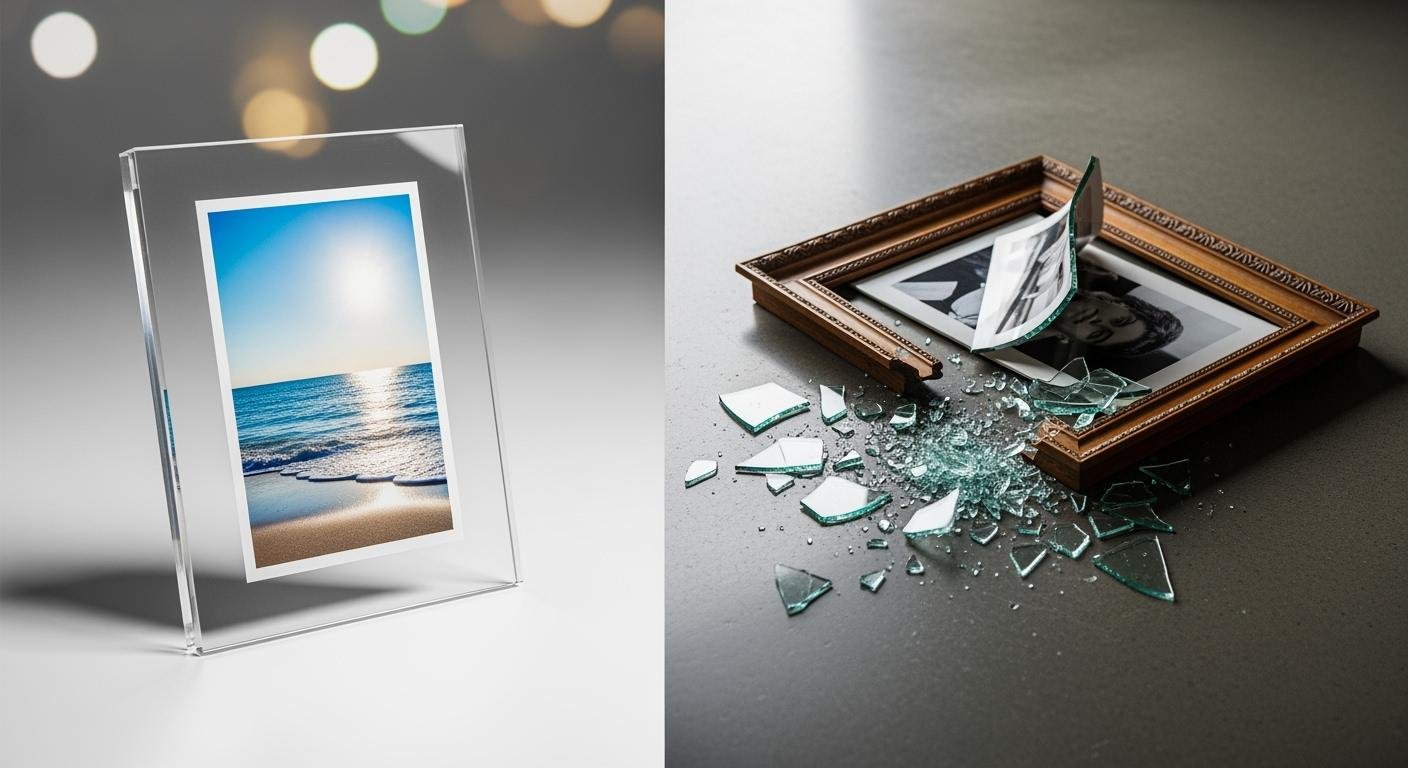
You want the best protection for your artwork and your family. For this reason, acrylic glass frames are the safer choice. This material provides superior safety through two primary benefits.
Acrylic is shatter-resistant and significantly lighter than traditional glass.
These features make acrylic the preferred choice for framing. You gain peace of mind in any environment, from active homes with children to high-traffic commercial spaces.
Why Acrylic Glass Frames Are Shatter-Resistant

The primary safety advantage of acrylic glass frames is their incredible resistance to shattering. Unlike glass, which breaks into many sharp, dangerous pieces, acrylic behaves very differently upon impact. This material has a toughness that allows it to flex under stress. If it does break, it fractures into large pieces with dull edges, significantly reducing the risk of injury.
Preventing Injury from Broken Shards
You gain significant peace of mind with acrylic. Its high impact strength means it does not shatter like glass. Imagine a frame falling off the wall during cleaning. A glass frame would create a hazardous mess of sharp shards. An acrylic frame, however, is far more likely to remain intact or break cleanly without creating a dangerous situation. This superior resistance to shattering makes your home a safer place.
Protecting Art from Accidental Damage
Your artwork also receives better protection. Acrylic is 10 to 20 times stronger than standard glass. This impressive strength guards your art against accidental damage.
Consider a playroom scenario: a stray ball hits a framed picture. A glass cover would likely shatter, potentially tearing or scratching the art inside. Acrylic frame covers, on the other hand, can absorb the impact, providing a durable shield for your treasured photos and prints.
This durability ensures your art is safe from everyday mishaps.
Safety in Active Homes and Public Spaces
The safety benefits of acrylic extend beyond the home. In busy public spaces, safety is a top priority. Building codes often require safety glazing materials that meet standards like ANSI Z97.1 in high-traffic areas. This is because the risk of impact is much higher. The exceptional impact resistance of acrylic makes it an ideal choice for these environments. Its strength and shatter-resistant nature provide reliable protection for everyone.
The Safety of Lightweight Acrylic
Beyond its strength, acrylic offers another significant safety advantage: it is incredibly lightweight. This characteristic makes your framed art easier to manage and more secure once it is on the wall. A lighter frame puts less stress on your wall, hooks, and wires, directly lowering the risk of a mounting failure that could lead to a fall.
Reducing Wall-Mounting Failures
You can hang your art with greater confidence. Acrylic weighs less than half as much as glass, a difference that becomes more important as frame size increases. This dramatic weight reduction means your wall anchors and hanging hardware are under far less strain.
Weight Comparison: 1/4″ Thick Sheet | Material | Weight (lbs/ft²) | | :— | :— | | Standard Glass | 2.9 | | Acrylic Sheet | 1.5 |
This simple fact makes a lightweight frame a more secure choice, reducing the chance of accidents caused by hardware failure.
Easier and Safer Handling
You will find hanging, moving, and cleaning your frames to be a much safer task. Since an acrylic sheet has a density of about 1.19 g/cm³ compared to glass at 2.5 g/cm³, you are lifting significantly less weight. This makes the frame easier to control, reducing the likelihood of accidental drops that could damage the frame, the art, or you. The ease of handling provides practical, everyday safety.
Benefits for Large and Oversized Frames
For oversized artwork, acrylic is the superior and often necessary choice. Traditional glass becomes extremely heavy and fragile in large sizes, making it a poor option for any piece bigger than 30 inches.
Using standard glass for large art presents major challenges. It is often too heavy and fragile, making framing impractical and risky.
This is where acrylic glass frames truly excel. The lightweight nature of acrylic makes it possible to safely create and hang large, impressive displays without needing specialized, heavy-duty wall supports. This makes a lightweight frame the go-to solution for statement art pieces, ensuring they are both beautiful and secure.
Acrylic vs. Glass: A Direct Comparison
When you choose a frame, you are deciding between two very different materials. Understanding the key differences between acrylic and glass helps you make the best choice for your art and your home. This comparison will guide you through durability, clarity, maintenance, and UV protection.
The Durability of Acrylic vs. Glass
You need a frame that lasts. The durability of a material involves both its strength and its lifespan. Acrylic excels in impact resistance, being 10 to 20 times stronger than glass. This strength prevents breakage from accidental bumps or falls.
High-quality acrylic also resists yellowing over time. Some brands, like PLEXIGLAS®, have a molecular structure that is naturally stable against UV radiation. They even offer a 30-year guarantee that the material will not yellow and will maintain its transparency. This ensures your frame looks new for decades.
While the initial cost of acrylic material can be higher than glass, its lighter weight often leads to lower shipping costs. This is especially true for large frames, making acrylic glass frames a more economical choice when ordering online.
Clarity and Visual Appearance
You want to see your art perfectly. Acrylic offers exceptional high optical clarity, often surpassing that of standard glass. Museum-grade acrylic provides a viewing experience with virtually no distortion or tint.
The difference in light transmission is significant. More light passing through the glazing means you see truer colors and sharper details.
| Material | Light Transmission |
|---|---|
| Standard Clear Glass | 90-92% |
| Museum-Grade Acrylic | > 99% |
Glare can also affect how you see your art. While standard clear acrylic can have reflections, you can get versions with anti-reflective coatings. These advanced coatings are nearly invisible and reduce glare without making the image hazy. This allows you to enjoy your art with maximum clarity, even in bright rooms.
Scratch Resistance and Maintenance
You should handle your frame with care. This is one area where glass has an advantage. Glass is harder than acrylic, with a Mohs hardness rating of about 6 compared to acrylic’s rating of 3. This means glass is naturally more resistant to scratching.
However, you can manage this trade-off. Many manufacturers offer acrylic with special scratch-resistant coatings to improve its surface hardness. If a minor scratch does occur on standard acrylic, you have options.
- Commercial Polishes: You can use products made specifically for acrylic to buff out light scuffs.
- DIY Pastes: A simple paste of baking soda and water can gently polish away a minor scratch.
Honest handling of this trade-off is important. You gain immense safety from shattering in exchange for needing to be more careful about scratching.
UV Protection for Framed Art
You must protect your art from fading. Light, especially invisible ultraviolet (UV) light, causes irreversible damage to photos and artwork. This is where the right glazing provides crucial preservation.
Standard glass blocks very little UV radiation. In contrast, UV-filtering acrylic is a core component of conservation framing. It is designed to block UV rays effectively.
| Material | UV Blocking Capability |
|---|---|
| Regular Glass | Blocks ~25-30% of UV |
| UV-Blocking Acrylic | Blocks up to 99% of UV |
Museums and galleries rely on this level of UV protection for framed art to preserve valuable collections. The UV absorbers are mixed into the liquid acrylic before it is formed, so the protection is built-in and will not wear off. Choosing acrylic with UV filtering is the best way to ensure the long-term safety and vibrancy of your treasured pieces.
Ideal Uses for Acrylic for Picture Frames

Certain situations demand a higher level of safety for your framed art. You will find that acrylic is the perfect material for these specific needs. Its unique properties make it the superior choice in environments where glass would be a liability.
In High-Traffic Hallways
You want to protect your art and your family in busy areas of your home. Hallways and entryways see constant foot traffic, increasing the chance of accidental bumps. While commercial buildings have complex fire-rated glazing codes for corridors, your main concern at home is impact. An acrylic frame provides the durability needed to withstand accidental contact without the risk of shattering.
In Children’s Rooms and Playrooms
You can create a safer space for your children. Safety guidelines for kids’ rooms often focus on non-toxic materials and furniture with soft, rounded corners to prevent injury. Using acrylic for picture frames aligns perfectly with this safety-first mindset.
Its shatter-resistant quality gives you peace of mind. You do not have to worry about dangerous glass shards if a frame is knocked over during playtime.
For Shipped or Transported Artwork
You need to ensure your art arrives safely when you move or ship it. Professional art shippers take many precautions, such as taping glass, to prevent breakage. You can simplify this process by using acrylic.
- It is far less likely to break during transit.
- Its lighter weight can reduce shipping costs.
- It eliminates the risk of broken glass damaging your artwork.
This makes an acrylic frame the most reliable option for any art that needs to travel.
In Earthquake-Prone Regions
You can reduce hazards if you live in an area with seismic activity. Safety recommendations for earthquakes often involve securing heavy objects to the wall. Because acrylic is so much lighter than glass, it puts less strain on wall hooks. A lighter frame is less likely to fall during a tremor. This simple switch helps you follow seismic safety practices and protects your home from the danger of falling, broken glass.
When safety is your priority, acrylic is the superior framing material. You gain peace of mind from its key advantages.
- Shatter Resistance: Acrylic flexes or cracks without creating dangerous shards.
- Lightweight: It is safer to handle and reduces strain on your walls.
Choosing acrylic glass frames is a modern, responsible decision. You give your valuable art and your loved ones excellent protection from preventable accidents. This choice represents a logical investment in preservation and safety.
FAQ
Is acrylic really as clear as glass?
You will find that high-grade acrylic offers superior optical clarity. It can transmit more light than standard glass. This means you see the truest colors and sharpest details of your artwork without any green tint.
How do I clean an acrylic frame?
You should use a soft, microfiber cloth to avoid scratches. For cleaning, you can use a special acrylic cleaner or a simple solution of mild soap and water. Avoid ammonia-based cleaners, as they can damage the surface.
Is acrylic an eco-friendly option?
Yes, you can make an environmentally responsible choice. Many types of acrylic are recyclable. Choosing a durable material that lasts for decades is also a sustainable practice, reducing waste over time and making it an eco-friendly option.
Will acrylic turn yellow over time?
You do not need to worry about yellowing with quality acrylic. Reputable brands manufacture acrylic with built-in uv protection. This feature prevents the material from discoloring, ensuring your frame remains crystal clear for many years.
See Also
Simplified Guide: Glass or Acrylic Coffee Tables for Your Home?
Elevate Your Decor: Styling Clear Acrylic Trays in Modern Spaces
Discover the Unique Appeal of Acrylic and Glass Coffee Tables
Essential Care Guide: Maintaining Your Acrylic Glass Coffee Table
Understanding Impact-Modified Acrylic: Features, Definitions, and Practical Uses


 English
  Français
  Русский
  Deutsch
  Español
  Português
  日本語
日本語