Définition en une phrase
Chemical resistance is the ability of a material to withstand exposure to chemicals without significant degradation or change in its properties or appearance.[1]
Explication détaillée
Chemical resistance describes how well a material can maintain its structural integrity, function, and look when exposed to various chemicals, such as acids, bases, solvents, and cleaning agents. For acrylic (PMMA) products, this property is crucial in environments where frequent cleaning or contact with chemicals is expected. The degree of resistance depends on the material’s molecular structure, the type and concentration of the chemical, temperature, exposure time, and any mechanical stress present.[2]
Acrylic is generally resistant to diluted acids, bases, salts, and most household cleaning agents, but it is sensitive to strong solvents like acetone, esters, and aromatic hydrocarbons. Industry standards such as ASTM D543 and ASTM D1308 are commonly used to test chemical resistance in plastics.
Key Components of Chemical Resistance
- Molecular Structure: Determines how chemicals interact with the material.
- Type of Chemical: Some chemicals (e.g., acetone, benzene) can quickly damage acrylic, while others (e.g., soap, diluted alcohol) are safe.
- Concentration & Temperature: Higher concentrations and temperatures usually increase the risk of damage.
- Exposure Time: Longer exposure can lead to more severe effects.
- Mechanical Stress: Stressed or scratched acrylic is more vulnerable to chemical attack.
Practical Applications: Acrylic in Everyday Use
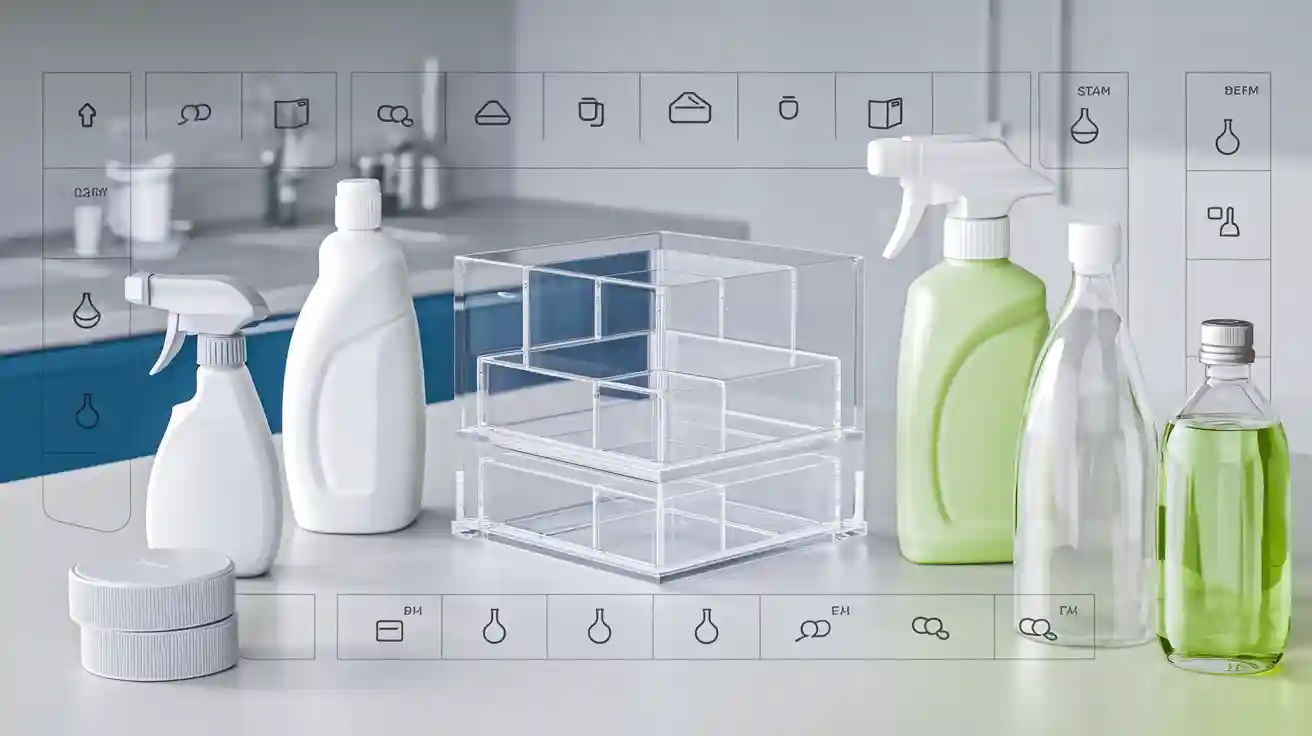
Acrylic products—like display stands, storage boxes, and protective covers—are widely used in homes, offices, retail, and healthcare settings. Their chemical resistance ensures they can be cleaned and disinfected regularly without losing clarity or strength. For example, TOYIN’s acrylic storage boxes can be safely wiped with diluted alcohol or mild soap solutions, making them ideal for environments requiring frequent sanitation.
Common Cleaners and Acrylic Compatibility
| Cleaner/Disinfectant | Acrylic Compatibility |
|---|---|
| Mild soap & water | Safe |
| 3% Hydrogen peroxide | Safe |
| Diluted isopropyl alcohol (≤30%) | Safe |
| Ammonia-based cleaners | Safe |
| Acetone, MEK, strong solvents | Not safe |
| Bleach (diluted, short contact) | Usually safe |
| Vinegar (diluted) | Safe |
| Benzene, toluene | Not safe |
Always test cleaners on a small area first and avoid prolonged exposure to harsh chemicals. For more details, see the Acrylic Chemical Compatibility Chart.
Case Example: TOYIN Acrylic Products
TOYIN’s acrylic display racks and storage solutions are designed for high chemical resistance, making them suitable for retail, office, and healthcare environments where regular cleaning is essential. Their products maintain clarity and durability even after repeated cleaning with safe agents, supporting both hygiene and aesthetics.
Concepts connexes
- Heat Resistance: The ability to withstand high temperatures without deformation.
- Impact Resistance: The ability to absorb shock without cracking.
- Weather Resistance: The ability to resist damage from sunlight, moisture, and outdoor conditions.
- Chemical Stability: Sometimes confused with chemical resistance, but refers to a material’s tendency not to react chemically under normal conditions.
Learn More & Get Custom Acrylic Solutions
For high-quality, custom acrylic products with excellent chemical resistance, visit Toyin Acrylic Products Co., Ltd. (TOYIN). Get a fast quote and discover solutions tailored to your needs.
References:

 Français
  English
  Русский
  Deutsch
  Español
  Português
  日本語
日本語